
Khaire! Hello!Welcome to the Greek God Epithet Database. Here we have collected every epithet we could find for the gods along with their meanings.This was a collective effort from the members of the Empyrean Village Discord Server. We all love the gods and wanted to help other HelPols by creating this database!All sources are included in each page. Credits are also included for those who helped create this database.★ This site is best viewed on a desktop.
General credits!
Notes :
Epithets that only give a location of worship are not included in this database. This means that we are excluding “there was a sanctuary here. That’s it end tweet” titles
Gods will be added based on request (or submission) as we focus on gathering epithets outside of theoi for the gods already added! Please contact Ace, Nell, or join the server (if over 18) to request and/or share any epithets.
You may notice another gods' page referenced on a page (ex. Apollon on Hermes's page) this is because theoi seems to like hiding information or epithets on another god's page.
Find us on Discord!
Daimons & Hora
Olympians
Rustic Gods
Titans
Underworld Gods
TITLES & EPITHETS
| Greek Name | Transliteration | Translation |
|---|---|---|
| Ἀκραία | Akraia | ⮞ "Of the Heights" (1) ⮞“She of the Peak/High Point”(2 p. 118, 151) ⮞“Of the promontory”(7 p.251)(16 Corinth Ch. 32 Sec.6) ⮞May refer to the fact that her famous cult statue was placed high upon a bluff or promontory overlooking the sea(2 p. 118) |
| Αμβολογηερα | Ambologêra | "Postponer of Old Age"(1)(16 Laconia Ch. 18 Sec.1)(19) |
| Ἀναδυομένη | Anadyomenê ⮞Anaduomenê | "Risen from the Sea"(1) ⮞“Rising from the Sea”(2 p. 67,77,151)(7 p.330) ⮞“Rising”(7 p.24) |
| ἀνδροφόνος | Androphonos | "Killer of Men, man-slaying" (19 pg. 81) |
| ... | Anosia | "the Unholy" (19 pg. 81) |
| Απατουρος | Apatouros | "Deceptive One"(1) |
| Αφρογενεια ★ Αφρογενης | Aphrogeneia ⮞ Aphrogenês | "Foam-Born"(1)(2 p.3,26, 151) |
| Αποστροφια | Apostrophia | ⮞ "Averter of (Unlawful Desires)"(1) ⮞“Averter of Evils”(4 p.119) |
| Αρεια | Areia | "Of Ares, Warlike"(1) ⮞May not have indicated a martial aspect, but a joint cult with Ares as “conflicting yet connected forces”(2 p.51-2) ⮞ ‘We have no way of knowing if Areia herself was armed, was thought to go into combat, or was simply a companion to her more martial consort.’(7 p.96) |
| ἀργυρόπεζ᾽ | argyrópeza | "Silver-footed" (10 Ode 9 Ln. 9) |
| Βασιλίς | Basilis | "Queen”(4 p.119)(19) |
| δέσποινα | déspoină | "Lady, mistress" (13 Ln. 522)(19) |
| Δια | Dia | ⮞ "Divine, Shining"(1) ⮞ "Heavenly, god-like"(3)(Il.3.389)(Il.3.413) |
| Διωναια | Diôniaia | "Daughter of Dione", "Daughter of Zeus"(1) |
| δόλιος | dólĭos | "Deceitfful, deceptive" (10 Ode 17 Ln. 116) |
| δολοφράδμων | dolophradmon | ⮞ Unclear (15 Book 4 Ln. 68) ⮞ Topostext translates it as "Tricky-minded" |
| Δωριτις | Dôritis | "Bountiful"(1) |
| Διος θυγατηρ | Dios thugatêr | "Daughter of Zeus"(1)(2 p.3, 14-7, 151)(Il.3.374)(Il.5.131) |
| ἐλεήμων | Eleemon | "The Merciful" (19) |
| ἐν κήποις | en Kepois | “In the gardens”(7 p.25, 216, 221)(19) |
| Ἔγχειος | Enkheios ⮞Encheios | “Spear-bearing”(7 p.83) |
| Ἐνόπλιος | Enoplios ⮞Enoplion ⮞Enoplon | ⮞“Armed”(4 p.119)(7 p.88)(19) ⮞Statue type(4 p.119) |
| Ἐπήκοος | Epekoos | “Who hears (the prayers)”(6 p.66) |
| Ἐπιλιμενία | Epilimenia | “She of/at the Harbor”(2 p.108, 151)(4 p. 123)(7 p.127) |
| Επιστροφια | Epistrophia | "She who Turns to (Love)"(1) |
| Ἐπιτυμβίδια | Epitymbidia | "She Upon The Graves" (19) |
| Ευπλοια | Euploia | ⮞ "Fair Voyage"(1) ⮞ “She of the Smooth Sailing”(2 p.3, 76, 108, 151) ⮞“Of Good Sailing”(4 p. 123)(7 p.127, 218, 233) ⮞“Good navigation”(6 p.84, 86)(7 p.251) |
| Ευστεφανος | Eustephanos | "Richly-Crowned, Well-Girdled"(1)(2 p.64)(Od.8.267) |
| Γαλήνη | Galênaiê | “She of the Calm Sea”(2 p.108, 151) |
| Γενετυλλις | Genetyllis | "the protectress of births" (8) "Of One's Birth-Hour" (19) |
| ἁλὸς θυγάτηρ | hălós thŭgắtēr | "Daughter of the Brine" (15 Book 4 Ln. 118) |
| Ἡγεμόνη | Hegemonê | “Leader”(7 p.80, 92) |
| ἑλικοβλέφαρος | helikoblépharos | "Quick-glancing" (9 Ln. 16)(11 Ode 6 Ln. 1) |
| Ἡρη | Hêrê | "Of Hera (of Marriage)"(1)(19) |
| ἑταίρα | Hetaira | Name when patroning expensive, well-educated prostitutes that were usually self-employed and sometimes provided sex to their customers (19) |
| Ὡπλισμενη | Hôplismenê | "Armed"(1)(7 p.80) |
| ἰοστέφανος | Iostephanos | “Violet garlanded”(2 p.64)(HH. 6.18) |
| καλὴν | kā̆lḗn | "Beautiful" (Hom. H. 6 Ln. 1) |
| Καλλίπυγος | Kallipugos ⮞Kallipygos ⮞Callipugos ⮞Callipygos | ⮞“Beautiful Buttocks”(2 p.77, 151)(17 Book XII Ch. 80)(19) ⮞Statue type(2 p.77) |
| Καστνία | Kastnia | 'derived from the act of touching through desire.' ^(14 1234) |
| Κατασκοπια | Kataskopia | ⮞ "Spying, Peeping"(1)(16 Corinth Ch. 32 Sec.3) ⮞ “She Who Observes”(4 p.124) |
| Ακραια | Kêpois | "Of the Gardens"(1) |
| Χρυσεη ★ χρυσέης | Khruseê ⮞Khryseê ⮞Chruseê ⮞ Chryseê | "Golden"(1)(2 p.56, 67, 69-71, 151)(6 p.219)(Od. 4.14, 8.337, 8.342)(19) *Interesting dive into this epithet - 2 p. 67-71 |
| Χρυσοστέφανος | Khrusostephanos ⮞Khrysostephanos ⮞Chrusostephanos ⮞Chrysostephanos | “Gold-crowned”(2 p.70) |
| χρυσήνιος | khrysênios | "with reins of gold" (12 Ln. 694) |
| Κυπρια ★ Κυπρις | Kupria/Kupris ⮞ Kypria/Kypris ⮞ Cupria/Cupris ⮞Cypria/Cypris | ⮞ "Of Cyprus"(1)(7 p.167)(Il. 5.330, 5.422, 5.760) ⮞ A name for Aphrodite. |
| Κυπριγένεια ★Κυπρογενής | Kuprogenês ⮞ Cuprogenês ⮞ Kyprogenês ⮞ Cyprogenês | "Cyprus-Born"(1)(2 p.27) |
| Κύπρου βασιλίς | Kuprou basilís ⮞ Kyprou basilís | “Queen of Cyprus”(7 p.167) |
| Κύπρου δέσποινα | Kuprou despoína ⮞ Kyprou despoína | “Princess of Cyprus”(7 p.167) |
| Κυθέρεια | Kuthereia ⮞ Kythereia ⮞ Cythereia ⮞ Cuthereia | ⮞ “Of Cytheria”(2 p.27)(Od. 8.288) ⮞ Aphrodite is sometimes referred to as just this epithet, similarly to Phoebus for Apollon or Pallas for Athena. |
| Λιμεναρχίς | Limenarkhidos ⮞Limenarchidos | “Ruler of the shores”(7 p.244) |
| Λιμενια | Limenia | "She of/at the Harbor"(1)(2 p.3, 108, 151)(7 p.15, 20, 127) |
| λυσιμελοῦς | lusimeloûs | "Limb-relaxing" (18 Book 11 Ch. 414) |
| Μαχανιτις | Makhanitis | "Deviser, Contriver"(1) |
| Μελαινις | Melainis | "Black (of Night)"(1)(19 pg. 80) |
| Μιγωντις | Migôntis | "Union (Marital)"(1)(16 Laconia Ch. 22 Sec.1) |
| Μορφω | Morphô | ⮞ "Of Shapely Form"(1)(19) ⮞ “The Beautiful One”(4 p.119) ⮞ Statue(4 p.119) ⮞ "She of Various Shapes" (19) |
| Ναύαρχις | Nauarkhis ⮞ Nauarchis | “Commander of the ships”(7 p.127) |
| Νικηφορος | Nikêphoros | ⮞ "Bringer of Victory"(1) ⮞ “Victory bearer”(7 p.89) ⮞ ‘Aphrodite Nikephoros is associated with marriage and law, not battle’(7 p.101) |
| Νυμφια | Numphia/Nymphia ⮞ Numphe/Nymphe | ⮞ "Bridal"(1)(4 p.125)(7 p.214) ⮞ “Protectress of the nymphê”, which denotes both the young woman of marriageable age and the young wife prior to the birth of her first child(3 p.315) |
| Ουρανια | Ourania | "Heavenly, Divine (Love)"(1)(2 p.114, 151)(4 p.116)(7 p.20, 22,216,219, 221) |
| Πανδημος | Pandêmos | ⮞ "Common to All People (Love)"(1) ⮞ “She who Belongs to all the People”(2 p.3, 35, 38, 151) ⮞“Of All the People”(3 p.79)(4 p.117)(7 p.22) ⮞ “Common”(7 p.22) ⮞ As patroness of marriage(7 p.214) |
| Πασιφάεσσα | Pasiphaessa | "The Far-Shining" (19) |
| Πελαγία | Pelagia | “She of the Open Sea”(2 p. 3, 108, 151)(7 p.127) |
| Περσέφαεσσα | Persephaessa | When invoked as the Queen of the Underworld |
| Φιλομμειδης ★ Φιλομειδης | Philommeidês ⮞ Philomeidês | ⮞ "Laughter-Loving"(1) ⮞ “Smile loving”(2 p. 3, 39-40, 151)(Il. 3.424, 4.10, 5.375) |
| Φιλομμηδης | Philommêdês | "Genital-Loving" (1) |
| Φιλοστέφανος | Philostephanos | “Loving garlands”(2 p.64)(HH. 2.102) |
| πολύχρυσος | Polukhrusos ⮞ Polykhrysos ⮞ Poluchrusos ⮞ Polychrysos | “Very, intensely golden”(2 p. 70-1, 151) |
| Ποντια | Pontia | ⮞ "Of the Sea"(1)(4 p. 123)(5 p239)(7 p.14, 127) ⮞ “of the Deep Sea”(2 p. 108, 151) |
| Ποθων Μητηρ | Pothôn Mêtêr | "Mother of Desire"(1) |
| Πότνια Κύπρου | Potnia Kuprou ⮞ Potnia Kyprou | “Lady of Cyprus”(7 p.167) |
| Πόρνη | Porne | Name when patroning cheap street prostitutes that were typically owned as slaves by wealthy pimps (19) |
| Πραξις | Praxis | "Action (Sexual)"(1) |
| Ψιθυριστης | Psithyristês | "Whispering"(1) |
| ... | Pudica | ⮞ “Modest”(7 p.330) ⮞Latin epithet for an iconographical type(7 p.330) |
| ῥοδόχροος | rhodóchroos | "Rose-colored, Rosy" (15 Book 12 Ln. 111) |
| σκοτία | Skotia | "the dark one" (19 pg. 80) |
| Στρατεία | Strateia | ⮞“Of the Army”(5 p239)(7 p.125) ⮞ “Capmaigner”(7 p.80) |
| Στρατηγίς | Stratêgis | “Of the Commanders”(7 p.125) |
| Συμμαχια | Symmakhia | "Ally (in Love)"(1) |
| Ταύχειρα | Tauxeira | 'derived from the act of touching through desire.' ^(14 1234) |
| Θαλασσία | Thalassia ⮞Thalassaie | “She of the Sea”(2 p. 108, 151)(15 Book 6 Ln. 308) |
| Τυμβωρύχος | Tymborychos | "the Gravedigger" (19 pg. 81) |
| Ἄνασσα | Wanassa | ⮞ “The Lady”(4 p.115) ⮞ Mycenean title(4 p.115) which is related to the greek ‘Anassa’ |
| Ξενια | Xenia | "Of the Foreigner"(1) |
CREDITS
SOURCES
Cyrino, Monica - Aphrodite
Ogden, Daniel - A Companion to Greek Religion
Larson, Jennifer - Ancient Greek Cults
Mikalson, Jon D. - Ancient Greek Religion
Corinne Bonnet - The Names of the Gods
Amy C. Smith and Sadie Pickup - Brill’s Companion to Aphrodite
Hesiod - Theogony
Bacchylides - Dithyrambs
Pindar - Pythian Odes
Sophocles - Oedipus in Colonos
Euripides - Hippolytus
Tzetzes - Ad Lycophronem
Nonnus - Dionysiaca
Pausanias - Description of Greece
Athenaeus - Deipnosophists
Greek Anthology
Kerenyi, Karl - Gods of the Greeks
*The Iliad (Il.), The Odyssey (Od.), Homeric Hymns (Hom. H) and Orphic Hymns (Orph.H.) are cited ‘in-text’
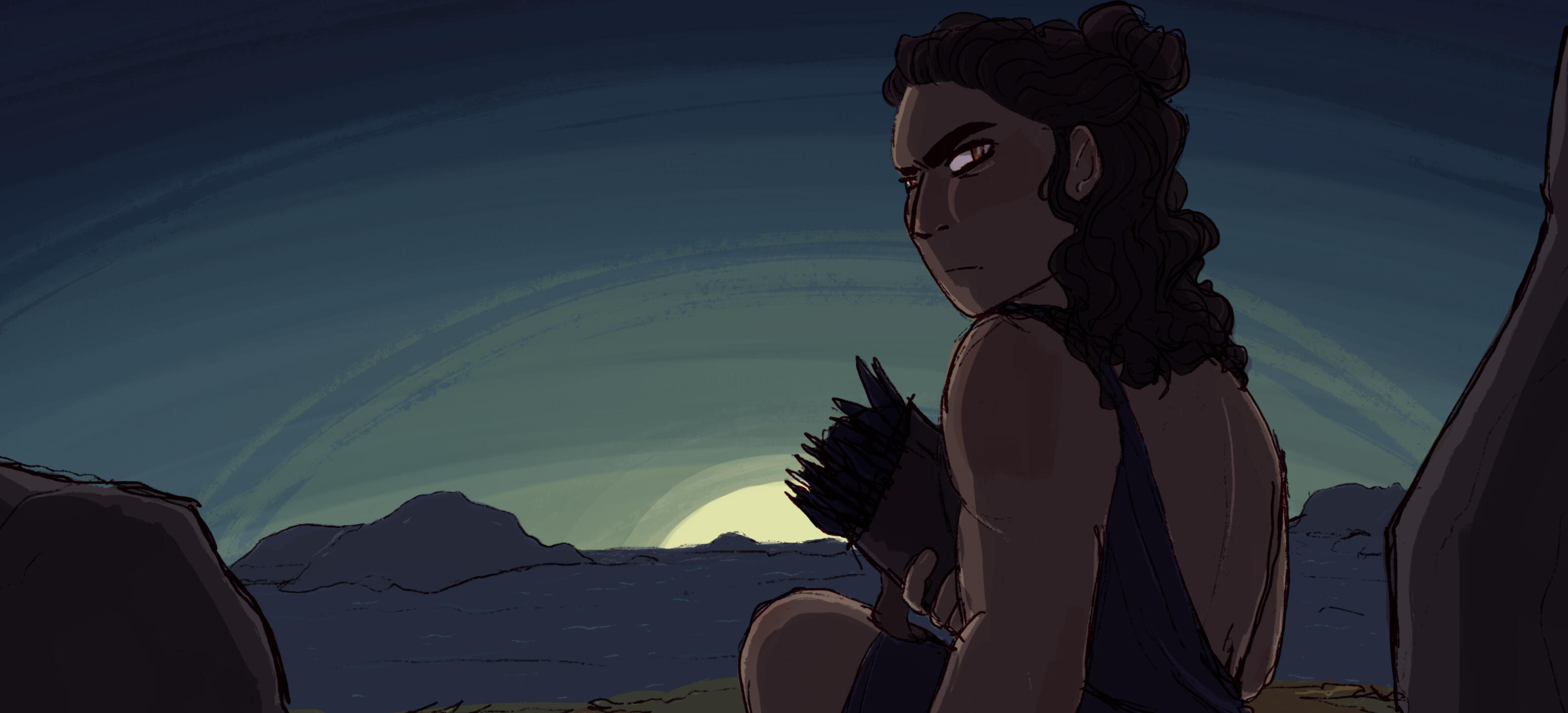
TITLES & EPITHETS
| Greek Name | Transliteration | Translation |
|---|---|---|
| ἀγωνίας | Agônios | Used in the sense of “helper in struggles and contests”(1) |
| Αγραιος | Agraios | ⮞“The Hunter/Of the Hunt” ⮞He had a temple under this name in Megara, built after he killed the lion of Cithaeron.(1) |
| Ἀγυιεύς | Agyieus ⮞Agyieus | ⮞“Protector of the streets and public places,”(1)(2 p.269-70) worshipped at Acharnae(1), Mycenae(1), Tegea(1)(2 p.269-70) ⮞“Guardian of the House Door”(3 p.103) ⮞“Of the street”(4 p. 87)(5 p.59) who protected travelers(4 p. 87) |
| Αιγλητος | Aiglêtos ⮞ Aiglêtês | “Radiant/Shining”(1)(3 p.112) |
| Ἀκερσεκόμης | Akersekomês | “With the uncut hair” (1)(3 p.85)(Il. 20.39) |
| Ακεσιος | Akesios | “The averter of evil / Of Healing”(1) In Elis(1) |
| Ἀκέστωρ | Akestôr | ⮞ "Healer" (24 Ἠλιακῶν Β Ch. 24 Sec.6) ⮞ “A surname of Apollo which characterises him as the god of the healing art, or in general as the averter of evil, like akesios.”(1) |
| Ἀκταῖος | Aktaios ⮞Epaktaios ⮞Epaktios | “Of the Coast/Foreshore”(1) |
| Ἀλήιος | Aleios | “the Wanderer” at Krimissa(6 p.488) |
| Αλεξικακος | Alexikakos | “The averter of evil” in Athens(1)(3 p.36,76) |
| Ἄναξ | Anax | “Lord,” “Master,” or “King”(Il. 7.23, 7.37, 15.253, etc.)(Od. 8.323, 8.334, 8.339,etc.)(LSJ) |
| Ἀφήτωρ | Aphêtôr | “Archer”(Il. 9.404) |
| Ἀποτρόπαιος | Apotropaios | “The averter of evil”(4 p.88)(5 p.155)(7 p.157)(8 p.254) |
| Αργυιευς | Argyieus ⮞Argyieus | “Of the streets”(1) |
| ἀργυρότοξʼ | Argurotoxos ⮞Argyrotoxos | “Of the Silver Bow”(Hom.H 3.140, 3.178)(Il. 1.37, 1.451, 2.766, etc.)(Od. 7.64, 15.410) |
| Ἀρχηγέτης.. | Arkhêgetês ⮞Archêgetês | ⮞“Founder”(1)(4 p.95) or “First Leader”(4 p.95)(7 p.286)(12 Ode 5 Ln. 60) ⮞ Refers to his role as a divine founder, patron and protector of colonies(7 p.286) ⮞ Either the leader and protector of colonies, or as the founder of towns in general (1) |
| ἀρότριος | Arotrios | ⮞ "Agrarian" (Orph.H. 34 line 3) He who presides over husbandry, the cultivator of crops and animals. |
| Βοηδρομιος | Boêdromios | ⮞ "Rescuer" (24 Βοιωτικά Ch. 17 Sec. 2) ⮞“The helper in distress” at Athens(1) |
| Δαφναῖος | Daphnaios | “Of the Laurel”(1) |
| Δαφνηφόρος | Daphnephoros | “(Bay)Laurel Bearer”(4 p.97)(8 p.137) |
| Δήλιος | Delios | “Of Delos”(1) A common epithet and thus included here |
| Δελφινιος ★ Δελφιος | Delphinios | ⮞“Of the Dolphin”(3 p.26,88)(4 p.88)(13) ⮞The Greeks believed that his name came from their word for dolphin (delphis), but the real etymology is unknown, and is most likely non-Greek(4 p.88) ⮞“Of Delphi”(5 p.155) ⮞ Derived either from his slaying the dragon Delphine/Delphyne (usually called Python) who guarded the oracle at Pytho, or from his having shewn the Cretan colonists the way to Delphi, while riding on a dolphin or metamorphosing himself into a dolphin.(1) |
| δία κεφαλή | dĭ́ă kephălḗ | "Blest Godhead" (15 Ln. 226) |
| δίκρως | Dikeros | "two-horned" (Orph.H. 34) |
| Διονυσοδότης | Dionysodotês | ⮞“Bestower of Dionysus”(1) ⮞ “Given by Dionysos”(8 p.386) |
| Επιβατηεριος | Embaterios | “of the Embarkation” - who protects those who set out to the sea(3 p.12) |
| Ἐπιβατήριος | Epibatêrios | ⮞ “the god who conducts men on board a ship”(1) ⮞ "Seafaring, embarking" (24 Κορινθιακά Ch. 32 Sec. 2) |
| Επικουριος | Epikourios | ⮞ “The Helper”(1)(2 p.268)(8 p.254) ⮞“Of Allies”(4 p.99) ⮞ He had received this surname in Bassae in Arcadia because he had at one time delivered the country from a pestilence(1) |
| Ερυθιβιος | Erythibios ⮞ Erysibios ⮞Erysibios | “Of Mildew”(1) or “Of Corn Rust”(8 p.368) |
| εὐλύρας | eulýras | "Skilled in the lyre" (16 Ln. 570) |
| εὐρυσθενής | eurysthenḗs | "Mighty, powerful" (14 Ode 1 Ln. 18) |
| εὔσκοπος | eúskopos | "Shooting well, fair-aiming" (20 Book 5 Ch. 61 Sec 1) |
| φορμικτής | formiktís | "Lyre -player" (21 Ln. 231) |
| Γαλάξιος | Galaxios | ⮞“Milk” According to Plutarch, because “abundance of milk indicated his helpful presence.(3 p.99) ⮞ From the stream Galaxius(1) |
| ἁγνός | hăgnós | "Sacred, holy" (12 Ode 6 Ln. 63) |
| ἑκάεργον | Hekaergos | “Worker from afar”(1)(Il. 1.147, 1.474, 1.479, etc.) |
| Ἑκατηβόλος | Hekêbolos ⮞ Hekabolos | “Far-Shooting”(Il. 1.14, 1.21, 1.96, 1.110, etc.) |
| Ἑκατος | Hekatos | “Shooter from Afar”(1)(9a,9f)(Il. 1.385, 7.83) |
| Ἑκηβόλος | Hekêbolos ⮞Hekatebolos | “Far-Shooting”(9b,9c,9e)(Il. 5.444) |
| ἑώϊος | heō̂ios | ⮞ "Of the morning" (17 Book 2 Ln. 700) ⮞ ToposText translates this as "Lord of Dawn." |
| Ὁριος | Horios | “Boundaries, Of Borders”(1) |
| Ὑλάτης | Hulatês ⮞Hylatês | “Of the Grove”(4 p.97) |
| ὑπερδέξιος | hyperdéxios | "Victorious" (23 Ch. 7 Sec. 2) |
| Ἰατρός | Iatros | “Doctor”(3 p.68) |
| ... | Intonsus | ⮞“Unshorn” refers to the long uncut hair of young Greek men (1) ⮞ *Latin version of akersekomes |
| Καρνειος | Karneios | ⮞ “Of the Ram”(1)(2 p.193)(3 p.94)(4 p.90)(7 p.194) ⮞“Of the Cornel-Tree”(1)(2 p.49)(7 p194.) ⮞ Possible syncretism with a previous god(2 p.49)(7 p.194) |
| Καταιβάτης | Kataibatês | Apollo was invoked by this name to grant a happy return home (katabasis) to those who were travelling abroad(1) |
| Καθάρσιος | Katharsios | “Purifier” |
| Κερεάτας ★Κεραιΐτας | Keraïtas ⮞Kereatas | “Horned”(2 p.271)(3 p.112)(7 p.333) As a protector of flocks(2 p.271) |
| Κερδύλας | Kerdylas | "God of Property" (18 Sec.1092) |
| Χρυσάωρ | Khrusaôr ⮞Chrysaôr | "With the golden sword or arms”(1)(Hom. H 3.123, 3.395)(Il. 5.509, 15.256)(Hes. WD 771) |
| χρυσότοξος | Khrysótoxos | "with bow of gold" (11 Ode 14 Ln. 10) |
| Χρυσοκόμης | Khrusokomês ⮞Chrysokomês | “Golden-haired”(Eur. Sup. 975)(12 Ode 2 Ln. 16) |
| κιθαραοιδός ★ κιθαρῳδός | kitharaoidos ⮞ kitharodos | ⮞ "Singer of the Lyre" (13) ⮞ Relates to him as a god of music(3 p.41) |
| Κληδωνες | Klêdônes | “Omen in Words and Sounds” (1) |
| Κληριος | Klêrios | “Distributing by lot”(1) |
| Κλυτότοξος | Klutotóxos | “Famous archer”(Il. 4.101, 15.55)(Od. 17.494, 21.267) |
| Κτίστης | Ktistes | “Establisher (of colonies)”(4 p.95) |
| Κυνήειος | Kynēeios | "Belonging to dogs, Guardian of the shephard dogs" (Suda Κ.2706) |
| Κυπάρισσος | Kyparissius ⮞Cyparissius | “Of the Cypress Grove”(3 p.79) |
| Λατωιος | Latôios | “Son of Leto”(1)(9 Ln. 479) |
| Λαοσσόος | Laossoos | “Rousing or stirring the nations”(Il. 20.79) |
| Λοίμιος | Loimios | “The deliverer from plague”(1)(3 p.68) |
| Λοξίας | Loxias | ⮞ A name for Apollon. (10 Ln. 1211) ⮞ derived by some from his intricate and ambiguous oracles (loxa), but it is unquestionably connected with the verb Legein, and describes the god as the prophet or interpreter of Zeus(1) |
| Λυκηγενής | Lukêgenês ⮞Lycêgenês | ⮞ Uncertain(3 p.11) ⮞“Born in Lycia”(1)(3 p.11)(6 p.143) ⮞“Born of or in light”(1) |
| Λυκιος | Lukeios ⮞ Lukios ⮞Lyceius | ⮞ Uncertain(1)(3 p.99)(6 p.143) ⮞ Possibly wolf-related, “Of the wolf” or “Wolf-like” or “wolf-slayer” (from lukos, “wolf”)(1)(3 p.98-9)(4 p,88)(5 p.155)(6 p.143)(8 p.198) ⮞or “light-giver” (from lukê, “light”)(1) ⮞or “The Lycian” (from Lycia)(1)(3 p.39)(6 p.143) ⮞(Source 3 contradicts itself, initially saying that ancient and modern scholars understood it as ‘From Lycia’(3 p.39) and then later claiming they understood it as ‘Wolf Apollo'(3 p.98-9)) |
| Λυκοκτόνος | Lukoktonos ⮞Lykoktonos | “Wolf-killer”(1)(3 p.99) as the protector of the Argive sheep against wolves(3 p.99) |
| μάντις | mắntĭs | "Seer" (10 Ln. 1202)(19 Book 13 Ln. 82) |
| μαρμάρινος | Marmarinos | “God of marble” (1) ⮞ a surname of Apollo, who had a sanctuary in the marble quarries at Carystus(1) |
| Μελίαι | Meliai | “Of the Ash-Trees”(1) |
| Μοιραγέτης | Moiragetês | “Guide or leader of fate/Leader of the Moirae”(1)(5 p.118) |
| Μουσηγετης | Mousêgetês ⮞ Musegetes | “Leader of the Muses”(1)(3 p.95)(5 p.56) |
| μύστης | mŭ́stēs | "one initied" (26 Book 2 Sec. 70) |
| νηοσόος | nēosoos | "Protecting ships, Savior of Ships" (17 Book 2 Ln. 927) |
| Νουμήνιος | Noumenios | “Of the New Moon”(3 p.111) |
| Νόμιος | Noumios | ⮞"of Shepherds" (17 Book 4 Ln. 1218) ⮞ a surname of divinities protecting the pastures and shepherds(1) ⮞ “Herdsman” - a protector of sheep and cattle(3 p.99) |
| Νυμφαγέτης | Numphagetês ⮞Nymphagetês | “Leader of the Nymphs”(3 p.85)(5 p.59) |
| ὀψοφάγος | Opsophagos | "Fish-eater" (25 Book 8 Ch.36) |
| Ουλιος | Oulios | ⮞“Provider of Health”(3 p.68) ⮞“Of sound health”(1) |
| Ὀρχιεύς | Orchieus | ⮞ "Dancer" (18 Sec. 562)(25 Book 1 Ch. 40) ⮞ Laconian title for Apollon |
| Παιαν ★ Παιων | Paian ⮞ Paiêôn ⮞ Paiôn ⮞ Paean | “The Healer”(1)(3 p.14)(5 p.155) The physician of the Olympians, perhaps an older deity syncretised with Apollon(1) |
| παντοθαλής | Pantothalēs | "All-flourishing" "causing all things to bloom and grow" (Orph. H 34 Line 16) |
| πανόψιος | panópsios | "All-seeing" (19 Book 9 Ln.276) |
| Παρνοπιος ★Πορνοπιων | Parnopios ⮞ Pornopiôn | “The expeller of locusts”(1) |
| Πatrῷos | Patrôos ⮞Patrôios | “Of the Fathers, Ancestral”(1)(3 p.88)(4 p.93)(5 p.198) |
| Φιλήσιος | Philesios | “Loving” relates to a story about Apollon bestowing prophetic ability on a mortal he fell in love with(4 p.96) |
| Φοῖβος | Phoibos ⮞Phoebus | “The Shining/Bright”(1)(6 p.142)(Il. 1.43, 1.64, 1.73)(Od. 13.279) |
| Φύξιος | Phuzios | “The god who protects fugitives”(1) |
| Προόψιος | Proopsios | “Foreseeing”(1) |
| προπύλαιος | Propýlaios | ⮞“Guardian of the Gates” - to keep out evil from the city(3 p.76) ⮞“Before the gate”(4 p.87) |
| Προστατηριος | Prostatêrios | ⮞“Protector”(4 p.87)(22 Speech 21 Sec. 52) ⮞“Standing Before (the Entrance)”(1) |
| Πύθιος | Puthios ⮞ Pythios | ⮞ “The Pythian/Of the Python”(1) ⮞ As a god of answers to questions (pyth-, to question)(2 p.50) |
| σκιαστής | Skiastes | ⮞ "Shadow-caster" (18 Sec.562) ⮞ Laconian title for Apollon |
| Σμινθεύς | Smintheus | Of the mouse/Of mice”(1)(2 p.50)(3 p.126)(4 p.87)(6 p.521)(8 p.368)(Il. 1.39) ⮞ In this case, Apollo is an averter of a very specific “evil”(4 p.87) ⮞In the temple of Apollo at Chryse there was a statue of the god by Scopas, with a mouse under its foot, and on coins Apollo is represented carrying a mouse in his hands. Temples of Apollo Sminthens and festivals (Smintheia) existed in several parts of Greece(1) |
| σωτήρ | sōtḗr | "Savior, deliverer" (22 Speech 43 Sec. 66) |
| σπερμεῖος | spermeios | "of the seed" "presiding over seeds" "generative" (Orph.H 34 Line 3) |
| Σπόδιος | Spodios | ⮞ “Of Ashes” (24 Βοιωτικά Ch. 11 Sec. 7) ⮞ derived from spodos, ashes, because his altar consisted of the ashes of the victims which had been sacrificed to him(1) |
| Στεφανηφόρος | Stephanêphoros ⮞Stephanophoros | “Crown Wearer”(5 p.248) |
| Θεαριος | Thearios | “Of the Oracle”(1) |
| Θερμιος | Thermios | ⮞“Of Law”(5 p133.) ⮞“Of Lupine Flowers"(1) |
| Θεοξενιος | Theoxenios | “God of Foreigners”(1)(24 Ἀχαικά Ch. 27 Sec. 4) |
| Θυραῖος | Thuraios ⮞ Thyraios | “Of the Door”(4 p.87) |
| Τιτυοκτόνος | Tityoktónos | "Slayer of Tityos" (Orph.H Orphic Hymn 34.1) |
CREDITS
SOURCES
Ogden, Daniel - A Companion to Greek Religion
Graf, Fritz - Apollo
Larson, Jennifer - Ancient Greek Cults
Mikalson, Jon D. - Ancient Greek Religion
Hard, Robin - The Routledge Handbook Of Greek Mythology
Larson, Jennifer - Understanding Greek Religion
Burkert, Walter - Greek Religion
Hesiod - Shield of Heracles
Aeschylus - Agamemnon
Pindar - Olympian Odes
Pindar - Pythian Odes
Kerenyi, Karl - Gods of the Greeks
Pindar - Isthmean Odes
Euripides - Rhesus
Euripides - Alcestis
Apollonius Rhodius - Argonautica
Tzetzes - Ad Lycophronem
Nonnus - Dionysiaca
Herodotus - The Histories
Aristophanes - Frogs
Demosthenes - Against Midias
Plutarch - Aratus
Pausanias - Description of Greece
Athenaeus - Deipnosophists
Artemidorus - Oneirocritica
*The Iliad (Il.), The Odyssey (Od.), Homeric Hymns (Hom. H) and Orphic Hymns (Orph.H.) are cited ‘in-text’
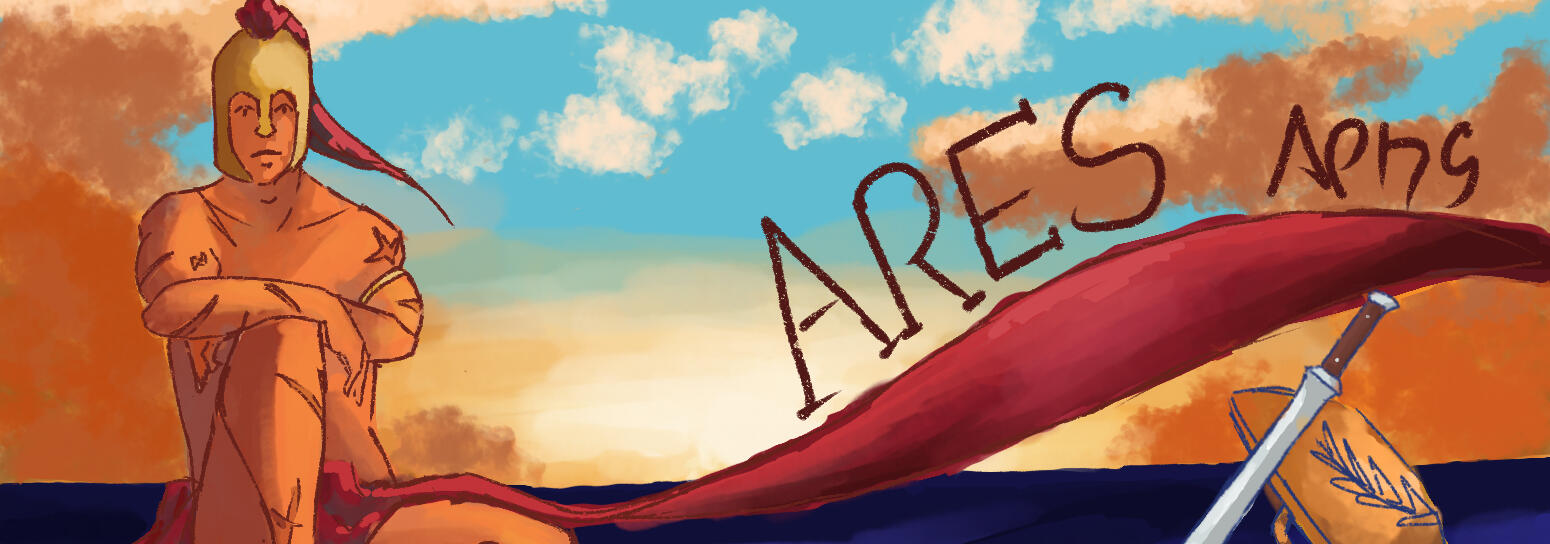
TITLES & EPITHETS
| Greek Name | Transliteration | Translation |
|---|---|---|
| Αατος πολεμοιο | Aatos polemoio | "Insatiate of Fighting, War"(1)(Il. 5.388) |
| ἀμόγητος | amógētos | "Untiring" (3 Line 4) |
| Ανδρειφοντης | Andreiphontês | "Manslaying, Destroyer of Men"(1)(Il. 2.651)(4 Line 98) |
| αντιβιος τυραννις | antibios tyrannis | "Stern governor of the rebellious" (3 Line 5) |
| Αφνειος | Aphneios | ⮞"Abundant"(1)(2 pg. 156) ⮞ The giver of food or plenty. Mostly used in hops that he would increase the spoils of war. (2 pg 156) |
| Ἀρεία | Areia | ⮞ “Warlike”(2 pg. 157) ⮞ Typically used alongside Athena Areia (2 pg 157) |
| βιατὰς | biatás | "Powerful, mighty" (6 Ode 1 Line 10) |
| βλοσυρός | blosŭrós | "grim, fierce" (4 Line 191) |
| βρισάρματος | brisármatos | "Chariot-pressing" (3 Line 1) |
| Βροτολοιγος | Brotoloigos | "Manslaughtering"(1) |
| βροτῶν ἐπίκουρε | brotôn epíkouros | "Helper of Men" (3 Line 9) |
| χρυσοπήληξ | chryseopḗlēx | "gold-helmed" (3 Line 1) |
| Δεινος | Deinos | "Terrible, Fearsome"(1) |
| δορισθενής | dorysthenēs | "Mighty with the spear" (3 Line 4) |
| Ενχεσπαλος | Enkhespalos | "Spear-Brandishing"(1) |
| ἠνορέης σκηπτοῦχε | ēnoréē skēptoûchos | "Sceptred King of manliness" (3 Line 6) |
| Ενυαλιος | Enyalios ⮞ Enualios | "Warlike"(1) |
| Γυναικοθιονας | Gynaikothoinas | ⮞"Feasted by Women"(1) ⮞ In reference of the war of the Tegeatans that women helped win and celebrated without men(1) |
| Ἱππιος | Hippios ⮞ Hippia | "Of the Horses"(1) |
| ὑπερμενέτα | hypermenétēs | "exceedingly mighty" (3 Line 1) |
| καρτερόχειρ | karterokheir | "Strong handed" (3 Line 4) |
| Χαλκεος | Khalkeos | "Brazen, Of the Bronze"(1)(5 Ode 10 Line 15) |
| Χαλκοκορυστης | Khalkokorustês | "Armed with Bronze"(1)(3 Line 2) |
| χρυσήνιος | khrysênios | "with reins of gold" (Od. 8.285) |
| Χρυσοπελεξ | Khrysopêlêx | "Of the Golden Helm"(1) |
| Λαοσσοος | Laossoos | "He Who Rallies Men"(1) |
| Μιαιφονος | Miaiphonos | "Blood-stained, Bloody"(1)(Il. 5.455) |
| Οβριμος | Obrimos | "Strong, Mighty"(1) |
| ὀβριμόθυμος | obrĭmóthūmos | "Strong hearted" (3 Line 2) |
| οὔλιος | oloós | "Deadly" (4 Line 192) |
| Οχυς | Oxus | "Sharp, Piercing"(1)(Il. 2.440) |
| φέρασπις | phérăspĭs | "shield-bearing" (3 Line 2) |
| Πολεμιστης ταλαυρινος | Polemistês talaurinos | "He Who Fights Under the Shield's Guard"(1) |
| Ρινοτορος | Rhinotoros | "Shield-, Flesh-Piercing"(1) |
| στυγερῷ | Stygerós | "Hateful" (Il. 2. 385) |
| συναρωγὲ Θέμιστος | synarōgós Themis | "Ally of Themis" (3 Line 5) |
| ταλαύρινον | Talaúrinos | "Bearing a shield of bull's-hide" (Il. 5.289) |
| Θηριτας | Thêritas | "Beastly, Brutish"(1) |
| Θοος | Thoos | "Swift, Fleet"(1)(Il. 5.430) |
| Θουρος | Thouros | "Violent, Furious"(1)(Il. 5.30) |
CREDITS
Ares header by Bees
Ares's Epithets were collected and shared by Ace
SOURCES
Larson, Jennifer - Ancient Greek Cults
Homeric Hymn to Ares
Hesiod - Shield of Heracles
Pindar - Olympian Odes
Pindar - Pythian Odes
*The Iliad (Il.), The Odyssey (Od.) and Orphic Hymns (Orph.H.) are cited ‘in-text’
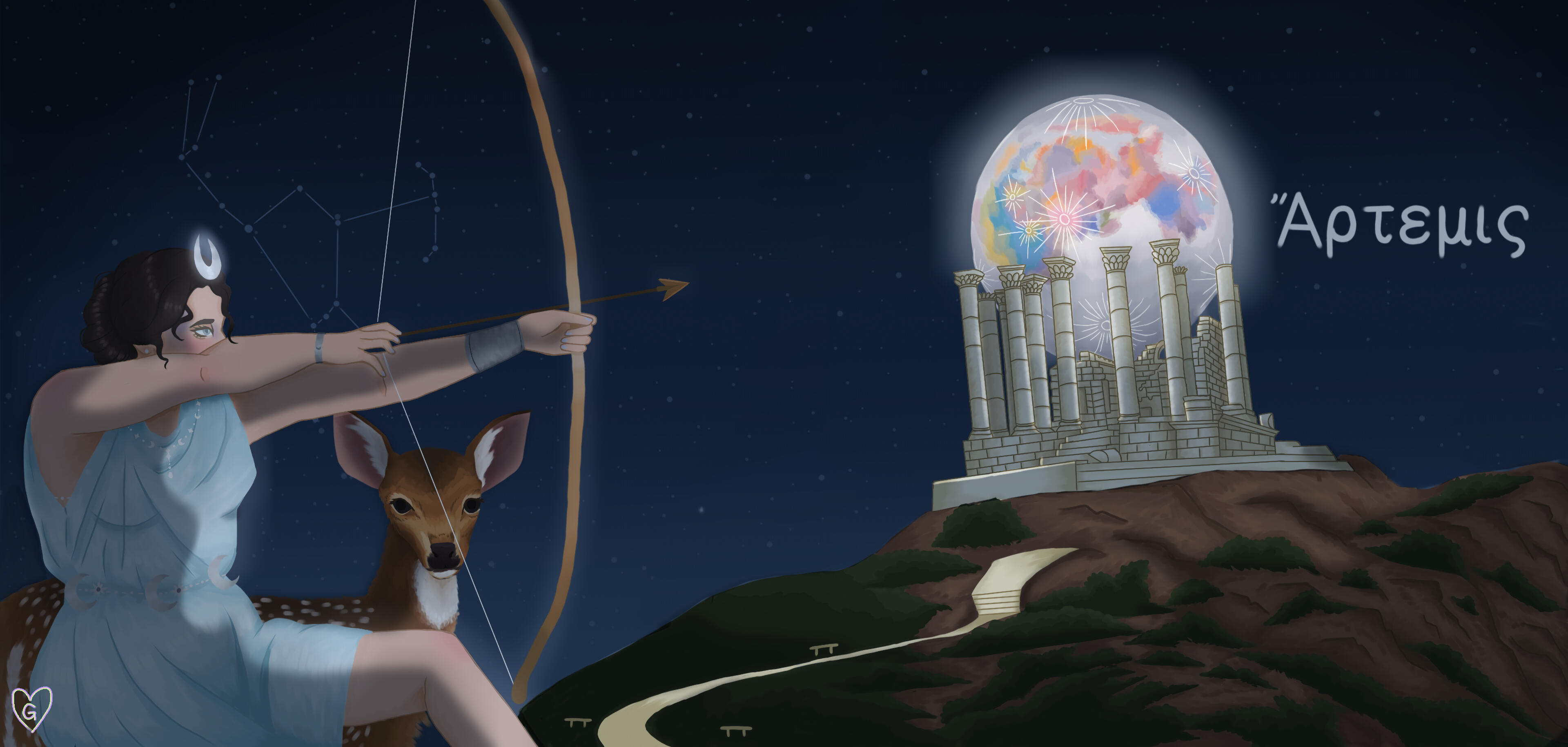
TITLES & EPITHETS
| Greek Name | Transliteration | Translation |
|---|---|---|
| Αγοραια | Agoraia | "Of the Market-Place" (1)(5 p.133) |
| ἀγρότα | Agrota | “Wild”(2 p.57) |
| Αγροτερα | Agrotera | ⮞"Of the Hunt, Huntress"(1)(6 p.244) ⮞“Wild One”(2 p.55) ⮞“Wild”(2 p.57,59) ⮞“Rustic”(2 p.59) ⮞“Of the Wilds”(4 p.100)(5 p.133) |
| Αγροτερη | Agroterê | "Of the Hunt, Huntress"(1) |
| ἀγροτις | Agrotis | “Huntress”(6 p.244) |
| Αιδοιος παρθενος | Aidoios Parthenos | "Revered Virgin"(1) |
| ἀμφιπυρον | Amphipyron | “With Fire in Both [Hands]” or “With a Torch in Both [Hands]”(2 p.65) |
| ἄγγελος | Angelos | “Messenger”(6 p.253) |
| Απανχομενη | Apankhomenê ⮞ Apanchomenê | "Strangled / Hanged "(1)(2 p.41)(3 p.271) ⮞ ‘However, it is now interpreted as a reference to the goddess’s virginity.’(2 p.41) |
| ἀργυρόπεζ᾽ | argyrópeza | "Silver-footed" (9 Book 34 Ln. 47) |
| Αριστη | Aristê | "Best, Excellent"(1) |
| ἀριστοβούλη | Aristoboulê | “Best Counsel”(2 p.62) |
| ἀρχεγετις | Arkhegetis | “Founder”(6 p.250) |
| Αστρατεια | Astrateia | "Stayed the Advance"(1) |
| ἄσυλος | Asulos | ⮞ “Asylum”(6 p.250) ⮞“Inviolable”(6 p.250, 253) |
| ... | Baïane | “Palm-tree”(2 p.58) |
| Βασιλεις | Basileis | "Princess, Royal"(1) |
| βατραχίς | Batrakhis | “Froggy”(2 p.58) |
| βολαῖα | Bolaia | “Violent”(6 p.244) |
| ... | Bolosia | “Killer”(6 p.244) |
| βουλαῖα | Boulaia | “Of the Concil”(6 p.250) |
| βραυρόνια | Brauronia | Associated with an ancient cult and girls’ initiation/fertility ritual at Brauron(3 p.290-1)(4 p.107-8)(5 p.72-4) |
| Δαφναιη | Daphnaiê ⮞ Daphnia | ⮞ "Of the Laurel-Tree"(1) ⮞ “Of Laurel”(2 p.58)(3 p.52) "Laurel-Maiden" (10) |
| δέσποινα | Despoina | “Mistress”(6 p.253)(6 p.245) |
| Δικτυνναια | Diktynnaia | "Of the Hunting Nets"(1) |
| δρηνεία | Dreneia | “Powerful”(6 p.253) |
| Εἰλείθυια | Eileithyia | ⮞ “Of childbirth”(2 p.99-102) ⮞ Syncretism with the individual deity Eileithuia(2 p.99-102)(4 p.107) ⮞ May have also had associations with freed slaves(2 p.148) |
| εἰνοδία | Einodia | ⮞ “In the road”(2 p.120) ⮞ Referring to Iphigenia/Iphimede who was made immortal by Artemis and became Artemis Enodia(2 p.120) ⮞ Syncretized with Hekate(2 p.120) |
| Ελαφιαια | ⮞ Elaphiaia ⮞ Elaphia | "Of Deer"(1)(3 p.52)(6 p.245) ⮞ Of Elaphius (hero Elis)(1) ⮞ “Deerish”(2 p.57-8) |
| Ελαφηβολος | Elaphêbolos | "Deer-Shooting"(1)(2 p.2, 19, 52, 58) ⮞ “Shooter of stags”(4 p.103) ⮞ “Kills deer”(6 p.245) |
| Ἐλευθέρα | Eleuthera | ⮞ “Freedom”(2 p.145) ⮞ “Liberator”(6 p.254) |
| ἐπήκοος | epḗkoos | ⮞ “Who listens”(6 p.250) ⮞“Attentive”(6 p.254) |
| ἐπίσκοπος | Episkopos | “Who Watches”(6 p.254) |
| Ευκλεια | Eukleia | ⮞ "Of Good Repute"(1) ⮞ “Fair Fame”(3 p.79) ⮞ “Of Glory”(4 p.113) |
| εὐλοχία | Eulokhia | “Of (Good)Parturition”(2 p.98,102) |
| εὐπραξία | Eupraxia | “Good work”(2 p.94) |
| Ευρυνωμη | Eurynômê | "Of Broad Pastures"(1) |
| Ευστεφανος | Eustephanos | "Well-Girdled, Sweet-Garlanded"(1) |
| Γενετυλλις | Genetyllis | "the protectress of births" (8) |
| Ἁγνη | Hagnê | "Chaste, Pure"(1) |
| Ἡγεμονη | Hêgemonê | ⮞ "Leader (of Dance, Choir)"(1) ⮞ “Leader”(2 p.66) ⮞ "Queen" (10) ⮞ May be in the context of her role in the care of the young, rather than as a military role(2 p.66-7) |
| Ἑκαεργε | Hekaerge | ⮞ "Worker from Afar"(1) ⮞ “Strikes from far away”(6 p.245) |
| Ἑκατη | Hekatê | "Far-Shooting, Shooter from Afar, or Worker from Afar"(1) |
| Ἑκατηβολος | Hekatêbolos | "Far-Shooting, Far-Darting, or Hundred-Shots"(1) |
| Ἑλεια | Hêleia | "Of the Marshes"(1)(2 p.58) |
| ἑλλοφόνος | Hellophonos | “Fawn-killer”(6 p.245) |
| Ἡμερασια | Hêmerasia | "She who Soothes"(1) |
| Ἑυριππα | Heurippa | "Horse-Finder"(1) |
| Ἱερεια | Hiereia | "Priestess"(1) |
| ἱππική | Hippikê | “Horsey”(2 p.57) |
| ὡραῖα | horaia | “Ripe,” “In the bloom of youth,” or “Bringing to fruition”(2 p.102) |
| Ὑμνιη | Hymniê | "Of the Hymns"(1) |
| Ιοχεαιρα | Iokheaira | ⮞ "Of Showering Arrows or Delighting in Arrows"(1) ⮞ “Throws arrows”(6 p.245) |
| Καλλιστη | Kallistê | "Very Beautiful"(1) |
| καπροφάγος | Kaprophagos | “Boar-eater”(2 p.58)(4 p.102)(6 p.245) |
| Καρυαι ★ Καρυατις | Karyai ⮞ Karyatis | "Of the Nut-Tree"(1)(2 p.58)(4 p.106) Rejoices in the dances of the girls of the nut-tree villages of Karyai (10) |
| Κεδρεατις | Kedreatis | "Of the Cedar-Tree"(1)(2 p.58) |
| Κελαδεινος | Keladeinos | "Strong-Voiced"(1) |
| Κελαδεινη | Keladeinê | "Lady of Clamours"(1) |
| χελῦτις | Khelytis | “Tortoise”(2 p.58) |
| Χρυσεη ★ χρυσέης | Khruseê ⮞Khryseê ⮞Chruseê ⮞ Chryseê | “Golden”(6 p.250) |
| Χρυσαλακατος | Khrysalakatos | "With Shafts of Gold"(1) |
| Χρυσηλακατος | Khrysêlakatos | "Of the Golden Distaff"(1) |
| Χρυσηνιος | Khrysênios | "Of the Golden Reins"(1)(Il. 6.205) |
| Χρυσοθρονος | Khrysothronos | "Of the Golden Throne"(1) |
| κλυτότοξος | Klytotoxos | ⮞ “Bow-famous”(2 p.58) ⮞ “Famous archeress”(6 p.245) |
| Κολαινις | Kolainis | "Hornless, Docked (Animal)"(1) |
| Κορδαξ | Kordax | "Of Cordax Dance"(1) |
| Κορυθαλία | Korythalia | ⮞ “Blooming Youth”(2 p.70) ⮞ "Laurel-maiden" at Sparta (10) |
| κυναγός ★ κυνηγός | Kynagos | “Huntress”(6 p.245) |
| Κυπαρισσία | Kyparissia | “Cypress”(2 p.58) |
| κυρία | Kyria | ⮞ “Sovereign”(2 p.145) ⮞ “Mistress”(6 p.250, 253) |
| Λαφρία | Laphria | Perhaps “The Devouring”(3 p.52) |
| Λητωις ★ Λατωια ★ Λητωιας | Lêtôis ⮞ Latôia ⮞ Lêtôias | "Daughter of Leto"(1) |
| Λευκοφρυηνη | Leukophrynê ⮞ Leukophrys | ⮞ "Of the White-(Bird?)"(1) ⮞ “Gleaming White”(2 p.145) |
| Λιμναιη ★ Λιμνατις | Limnatis ⮞ Limnêtis ⮞ Limnaia | ⮞ "Of the Lake"(1)(5 p.171) ⮞ “Wetland”(2 p.57-8) ⮞ “Of the Marsh”(4 p.106) ⮞ Her cult sites were often located near rivers in wetlands(2 p.57) |
| λιμνηνοσκόπος | Limnênoskopos | “With a view of wetlands”(2 p.58) |
| λόχια ★ εὐλόχια | Lokhia ⮞ Eulokhia | ⮞ “Of (Good)Parturition”(2 p.98,102) ⮞ “Of the Child-Bearing Bed”(5 p.169) |
| Λυσίζωνος | Lusizônê | "the goddess who loosens the girdle" (8) |
| Λυγοδεσμη | Lygodesma | ⮞ "Willow-Bound"(1) ⮞ “Bound with agnus castus”(2 p.58) |
| Λυκειη | Lykeiê | ⮞ "Of the Wolves"(1) ⮞ “Wolfy”(2 p.58) |
| λυσαῖα | Lysaia | ⮞ “Releaser”(2 p.109) ⮞ ‘Probably relating to her her function as goddess of childbirth.’(2 p.109) |
| ... | Maloessa | “Sheepy”(2 p.57) |
| μεσόπολις | mesopolis | “Center-City”(2 p.144) |
| μονογενής | Monogeneia | “Only-child”(2 p.123) "One and only, Unique" (7) |
| Ορσιλοχια | Orsilokhia | "Helper of Childbirth"(1) |
| Ορθια | Ortheia ⮞ Orthia | ⮞ "Of the Steep"(1) ⮞ Syncretism with an indigenous goddess who was named Worthasia(2 p.4, 24-31)(3 p.237-8) |
| Παιδοτροφος | Paidotrophos | ⮞ "Nurse of Children"(1) ⮞ “Child-nurturer”(2 p.70) |
| παραλία | Paralia | ⮞ “By the Sea”(2 p.57) ⮞“Seaside”(2 p.58) |
| Παρθενος | Parthenos | "Virgin, Maiden"(1)(6 p.250) |
| Πατρωια | Patrôia | "Of the Fathers, Ancestral"(1) |
| Πειθω | Peithô | "Persuasive"(1) |
| φακελίτις | Phakêlitis | “Reed bundle”(2 p.58) |
| φιλαγρέτις | philagretis | “Loving the wild”(2 p.57)(6 p.244) |
| Φιλομειραξ | Philomeirax | "Friend of Young Girls"(1) |
| Φεραια | Pheraia | "Of the Beasts"(1) |
| Φοίβη | Phoíbē | "Bright" |
| Φωσφορος | Phôsphoros | "Light-Bringer"(1)(2 p.63, 65-6) |
| φυλακεία | phulakeia | “Guardian”(6 p.254) |
| πώλο | Polo | “Young foal”(2 p.57) |
| πολυβοία | Polyboia | “Many flocks”(2 p.57) |
| ποτάμια | Potamia | ⮞ “Rivery”(2 p.58) ⮞ “Of the River”(4 p.107) |
| πότνια | Potnia | “Mistress”(6 p.250, 253) |
| Ποτνα Θεα | Potna Thea | "Goddess Queen"(1) |
| Πωτνια Θερων | Pôtnia Therôn | ⮞ "Queen of Beasts"(1) ⮞ “Mistress of Animals”(4 p.100) |
| Προπυλαιη | Propylaiê ⮞ Propylaia | "Of the Gate"(1)(4 p.75)(6 p.250) |
| προσκόπα | Proskopa | “Anticipates”(6 p.254) |
| Προστατηρια | Prostatêria | "Standing Before, Guardian"(1) |
| Προθυραία | Prothyraia | "She Before the Door" (Orph. H. 2) |
| Πρωτοθρονιη | Prôtothroniê | "Of the First Throne"(1) |
| Σελασφορος | Selasphoros | "Light-Bringer"(1)(12 Ἀττικά Ch. 31 Sec. 4) |
| Σωτειρα | Sôteira | "Saviour"(1)(2 p.65, 67)(5 p.249)(6 p.250) |
| ταυρώ | Tauro | “Bullish”(2 p.57) |
| ταυροφάγος | Taurophagos | “Bull-eater”(2 p.58) |
| ταυροφόνος | Taurophonos | “Bull killer”(6 p.245) |
| ταυροπόλος | Tauropolos | ⮞ “Bull-tamer”(2 p.57, 121) ⮞ “Bull-herder”(2 p.121) ⮞ “Bull Tender”(4 p.104) ⮞ “Bull-slayer”(6 p.250) |
| θέρμαια | Thermaia | “Hot springs”(2 p.58) |
| θηροφόνος | thērophónos | "Killing wild beasts" (11 Ln. 320) |
| Θηροσκοπος | Thêroskopos | "Hunter of Wild Beasts"(1) |
| τόξια | Toxia | “Of the bow”(2 p.58)(6 p.245) |
| τοξῖτις | Toxitis | “Archeress”(6 p.245) |
| τοξόδαμνος | toxodamnos | “Subduing with a bow”(2 p.58) |
CREDITS
SOURCES
Artemis - Stephanie Budin
Ogden, Daniel - A Companion to Greek Religion
Larson, Jennifer - Ancient Greek Cults
Mikalson, Jon D. - Ancient Greek Religion
Corinne Bonnet - The Names of the Gods
Nonnus - Dionysiaca
Kerenyi, Karl - Gods of the Greeks
Aristophanes - Thesmophoriazusae
Pausanias - Description of Greece
Aeschylus - Seven Against Thebes
Pindar - Nemean Odes
Sophocles - Oedipus Tyrannus
Sophocles - Electra
Sophocles - Trachiniae
Euripides - Medea
Euripides - Hippolytus
Euripides - Iphigenia in Aulis
Callimachus - Hymn to Artemis
Apollonius Rhodius - Argonautica
*The Iliad (Il.), The Odyssey (Od.) and Orphic Hymns (Orph.H.) are cited ‘in-text’

TITLES & EPITHETS
| Greek Name | Transliteration | Translation |
|---|---|---|
| ἀγελεία ★ ἀγελείς ★ ἀγελείη | ageleia ⮞ ageleis ⮞ ageleiē | ⮞“Leader or protectress of the people”(7) ⮞“the goddess who gives the battle-spoil and to whom tithes of the spoil are dedicated”(2 p.350) ⮞“Driver of the spoil”(Il. 4.128, 5.765, 6.269, 6.297, 15.210, 15.213)(Od. 13.359, 16.207)(Suda, A 185) |
| ἀγχίπτολις | agkhiptolis | "dwelling near the city" (14 Line 501) |
| Άγλαυρος | Aglauros | ⮞ A cult-name for Athena relating to the founding of Athens (Suda, A 268) ⮞ The name comes from the daughter of Kekrops, an Egyptian man who founded Athens (Suda, K 1272) ⮞ According to Kerenyi, “indicated a darker, tragic, Persephone-like aspect of the Goddess.” (9 p. 127) |
| ἀγοραία ★ Ἀγόριος | Agoraia ⮞ Agorios | ⮞“Of the marketplace” (3 p55)(10 3.11.9) ⮞“Of the assemblies”, ‘associated with legal institutions and the power of persuasion’(2 p.305) ⮞As patron of the agora(6 p.239)(7) |
| Ἀγρίσκα | Agriska | ⮞ Unclear (15 1152) ⮞ Potentially “wild”, from agrios (άγριος) |
| αγροίκος | Agroikos | "country-dwelling" (31 yr 1994/95 p. 362) |
| ἀΐδηλος | Aidēlos | “Destructive” (Il. 5.880, 5.897) |
| αἰολόμορφος | Aiolomorphos ⮞Aiolomorphe | “Shapeshifter,” “Of changing form” (Orph.H. 32.11) |
| αἴθυια | aithyia | ⮞“Diver” (7) ⮞“Seagull” (5 p.153)(10 1.42.4) ⮞May refer to a diving bird, such as a shearwater or gannet, or potentially refers to Athena teaching ship-building or navigation as ‘aithuia’ more figuratively refers to a ship. |
| ἄχραντος | akhrantos | "undefiled, immaculate" (16 47.417) |
| Ἀλαλκομενηῒς ★ Ἀλαλκομενηῒς ★ Ἀλαλκομενη | Alalkomeneia ⮞Alalkomeneis ⮞ Alalkomene | ⮞“She Who Wards Off”(1 p.124) ⮞“Protectress”(1 p.124)(7) (Il., 4.5, 5.905) ⮞“Helper in Battle”(2 p.350)(5 p.157) ⮞“She Who Protects”(3 p.50) ⮞“Of Alalkomenae”(7) ⮞“Powerful Defender”(7) ⮞Could also be from the Boeotian village of Alalkomenae where she was believed to have been born.(7) |
| Άλκις | Alkis | “The Strong”(7) |
| Ἀλκιδήμος | Alkidēmos | “Defender of the people”(2 p.350) |
| ἀλκήεις | alkieis | "valiant, courageous" (Hom.H 28 Line 3) |
| ἀλκίμαχος | alkimaxos | "mighty in battle, defender in the fight" (Suda, A 1281) |
| Ἀλοῖτις | Aloitis | "avenger" (LSJ) (15 936) |
| Αλεα | Alea | ⮞“Shelter” or “Asylum”(1 p.130-1) ⮞“Bright Warmth”(5 p.154) ⮞“Refuge”(6 p.270-1)(7) ⮞The temple of Athena Alea at Tegea, which was the oldest, was said to have been built by Aleus, the son of Apheidas, from whom the goddess probably derived this surname. It was an ancient and revered asylum, and the names of many persons are recorded who saved themselves by seeking refuge in it.(7) ⮞It may also be syncretism with an earlier local goddess, Alea.(3 p.52)(6 p.270-1) |
| ἀλέκτωρ | Alektōr | “Rooster”(7) |
| Ἀλεξίκακος | Alexikakos | “Averter of evil”(5 p.161) |
| ἀμήτορος | ametoros | "motherless, without a mother" (16 38.72) |
| Αμβουλια | Amboulia | ⮞“Of Counsel”(3 p.55)(6 p.239)(7)(10 3.13.6) ⮞Uncertain, perhaps “Delayer of Death”(7) |
| Ἄνασσʼ | Anassa | ⮞“Queen,”(Od. 3.380)(Aesch. Eum. 228, 235, 443) or “Lady”[Logeion] ⮞ Generic Epithet for goddesses |
| Ἀνεμῶτις | Anemôtis | ⮞“The subduer of the winds”(7)(10 4.35.8) ⮞Tied to a sanctuary believed to have been built by Diomedes, because in consequence of his prayers the goddess had subdued the storms which did injury to the country.(7) |
| ἀνύμφευτος | anympheutos | "unwedded" (16 2.106) |
| Ἀπατουρία | Apatouria | ⮞ “Of Deceit,” “Deceiver,” “The Deceitful”(7)(10 2.33.1) ⮞ Tied to an island near Corinth, and a custom there of young women dedicating their girdles to Athena. ⮞ May also be connected to the Athenian festival of Apatouria (Suda, A 2940) |
| ἀποτρόπαια | Apatropaia | “Averter of Evil”(5 p.161) |
| άφρόνως | aphronos | ⮞"crazed, frantic" (Il. 5.875, 5.880)(11 p. 35) ⮞ A descriptor used by Ares when complaining about her to Zeus, trying to contrast Athena’s usual wise composure with her “terrifying force in battle.” (Kerenyi) |
| Ἀρεία | Areia | ⮞ “Warlike”(2 p.350)(7) ⮞“Of war”(7) ⮞“Of Ares”(3 p.157) ⮞ ‘Her worship under this name was instituted by Orestes after he had been acquitted by the Areiopagus of the murder of his mother. It was Athena Areia who gave her casting vote in cases where the Areiopagites were equally divided. From these circumstances, it has been inferred, that the name Areia ought not to be derived from Ares, but from ara, a prayer, or from areô or areskô, to propitiate or atone for.’(7) ⮞ Athena Areia’s name was used alongside Ares’ in the signing of formal oaths in Athens(5 p.157) |
| ἀρχηγέτης | Arkhēgetēs ⮞Archēgetēs | Invoked under this epithet as founder of Athens(1 p.78-9)(4 p.50) |
| ἀρσενόθυμος | arsenothumos | "man-minded" (23 Line 3) |
| Ἀτρυτώνη | Atrutonē ⮞Atrytonē | “The Unwearying"(Il. 2.157, 5.115, 5.714, 10.284, 21.420)(Od. 4.762, 6.324)(Suda, A 4395) |
| αὐτόγονος | autogonos | "self-born, self-produced" (16 8.103) |
| Αξιοποινος | Axiopoinos | ⮞“Of Deserved Vengeance”(3 p.53) ⮞“The Avenger”(7) ⮞‘Returning Vengeance”(7)(10 3.15.6) ⮞ Under this name Heracles built a temple to the goddess, after he had chastised Hippocoon and his sons for the murder of Oeonus.(7) |
| Ἀζησία ★ Αὐξησία | Azesia ⮞ Auxesia | ⮞ Unclear ⮞ a name of Demeter that also appears as an epithet of Athena (31 yr 2003, #156) |
| βασίλεια | Basileia | “Queen”(Orph.H. 32.14) |
| Βερεκυνθία | Berekynthia | ⮞ "of Mount Berekynthus" (31 yr 1994/95, p. 337) ⮞ A syncretic epithet, as this is a title of the Phrygian goddess Kybele, shared also with Rhea. |
| βωτιάνειρα | botianeira | "nurse of heroes" (23 Line 23) |
| Βούδεια | Boudeia | ⮞ Unclear ⮞ seems to be connected to the arts of farming and a role Athena holds as protector of marriage in Thessaly (15 359) |
| Βουλαία | Boulaia | ⮞ “Of the Council (Boule)”(1 p.79)(6 p.222) ⮞“Of Counsel”(3 p.55) ⮞ Invoked under this epithet in Council meetings (2 p.225)(4 p.60) |
| δαΐφρων | daiphron | "warlike; wise" (17 12.377) |
| δεινός | deinos | "dread, terrible; clever, skillful" (Hom.H. 11 Line 2) |
| Δέσποινα | Despoina | ⮞ “Lady, Mistress”(5 p.136)(Suda, A 768) ⮞ A title often used by servants who refer to the Mistress of the house (4 p.17)(5 p.148) |
| δίας | dias | "godlike, divine" (18 Line 757) |
| Διογενής | Diogenes | "sprung from Zeus, Zeus-born" (18 Line 91) |
| Διὸς ἐκγεγαυῖα | Dios ekgegauia | “Zeus-born”(1 p.18)(Od. 6.229) |
| δορυσσόος | dorussόos | "charging with the lance" (23 ln. 3) |
| δράκαινα | Drakaina | ⮞“She-snake”(5 p.148) ⮞“She-Dragon”(Orph.H. 32.11) |
| ἐγρεμάχης | egremakhes | "rousing the fight" (Hom.H to Demeter Line 424) |
| ἐπήκοος | Epēkoos | “Listening to prayer”(5 p.159) |
| ἐπίρροθος | epirrothos | "rescuer, helper" (Suda, E 2550) (Iliad, 4.390) |
| Εργανη | Ergane | ⮞“Worker”(1 p.51)(2 p.57-8)(6 p.222)(7) ⮞“Of Labors”(3 p.45)(10 1.24.3, 3.17.4, 8.32.4) (Suda, E 2901) ⮞Refers to Athena’s patronage of weaving and garment making(2 p.225)(3 p.45) |
| ἐρικυδής | erikudes | "very famous, all-glorious, splendid" (Hom.H. 3 Line 308) |
| Ἐριῶπις | Eriopis | “Strong-eyed”(5 p.160) |
| Ερυμα | Eruma ⮞Eryma | “Defender”(7) |
| Ἐρυσίπτολις | Erusiptolis ⮞Erysiptolis | “City protector”(Hom.H. 11 Line 1)(Hom.H. 28 Line 3)(Il. 6.305) |
| εὔκομος | Eukomos | ⮞“Fair-haired”(Il. 6.92, 6.273, 6.303) ⮞ Epithet of goddesses and noble women(Logeion) ⮞ The same epithet uses the Greek word euplokamos (έυπλόκαμος) in the Odyssey (7.41) |
| εὐπάλαμος | eupalamos | "handy, skillful, inventive" (16 6.142) |
| εὐπήληκος | eupelekos | "well-helmeted" (Suda, E 3652) |
| εὑρεσίτεχνος | eurestitekhnos | “Inventor of the Arts”(Orph.H. 32.14) |
| εὐθωρηκος | euthorekos | "well-mailed" (16 39.78) |
| Γιγαντολετειρα ★ Γιγαντολετις | Gigantoleteira ⮞Gigantoletis | “Destroyer of Giants”(7)(Suda, G 263) |
| γλαυκῶπις | Glaukōpis | ⮞ “Gleaming-eyed”(1 p.26) ⮞“Darting-eyed”(1 p.26) ⮞“Blue-eyed”(1 p.26) ⮞“Grey-eyed”(1 p.26) ⮞“Owl-eyed”(1 p.26)(2 p.269)(5 p.151) ⮞“Bright-eyed”(5 p.151) ⮞Glaukos denotes a quality of gleaming or shining brightness. It can also refer to the little owl (glaux). |
| Γοργο | Gorgo | “Gorgon-like”(5 p.159) |
| Γοργολόφας | Gorgolophas | ⮞ “Gorgon-Crested”(7)(Suda, G 394) ⮞“Gorgon-Plumed”(4 p.26) |
| Γοργοφόνος | Gorgophonos | “Gorgon-killer”(Orph.H. 32.8) |
| γοργῶπις | gorgōpis | ⮞ “Gorgon-eyed”(2 p.269)(5 p.158) ⮞ "fierce-eyed" (Suda, G 398) |
| Ἥφαιστεία | Hephaisteia | “Of Hephaistos”(1 p.52) |
| Ἑλλωτίς | Hellotis | ⮞ “Bright Warmth”(5 p.154) ⮞Relates to a myth about the maiden Hellotis who was burned to death (5 p.154)(7) ⮞ "broad-faced" (9 p. 128) ⮞ May refer to a particular wreath worn in Hellotia (Logeion), or an association with the moon (Kerenyi). ⮞ Referenced by Pindar as associated with athletic games (Olympian Odes, 13.40) |
| ἱππελάτειρα | Hippelateira | “Driver of horses”(Orph.H. 32.12) |
| Ἱππια | Hippia | ⮞“Of Horses”(1 p.48)(3 p.55)(7)(10 1.30.4, 5.15.6)(19 13.82) ⮞“(War)horse-goddess”(2 p.350)(10 8.47.1) ⮞Refers to Athena as a horse goddess in the particular sense of the skill of horsemanship and charioteering ⮞ In the Suda (I 542), Athena Hippia is the daughter of Poseidon and Polyphe or Koryphe. |
| ὁπλοχαρής | Hoplokharēs ⮞Hoplocharēs | “Delighting in arms”(Orph.H. 32.6) |
| ὁπλοφόρος | Hoplophoros | ⮞ “Warrior”(12 pg.9) ⮞ This epithet was associated with armed dances of young soldiers, and as the chief military deity in Macedonia. |
| Ὁρμάστειρα | Hormasteira | “One who urges on”(Orph.H. 32.9) |
| Ὑγίεια | Hugeia ⮞Hygieia | ⮞ “Of good health”(1 p.5)(6 p.222)(7) ⮞As a protector of health(2 p.139) |
| Ὑπερδεξία | Huperdexia ⮞Hyperdexia | “Protector of the people”(1 p.124) |
| ἰστοτέλειας | istoteleias | "skilled with weaving the web" (16 6.154) |
| Ιτονία | Itonia | ⮞ "maid of Iton" (13 pg 3)(10 1.13.2, 9.34.1) ⮞ indicates the Thessalian origin of Athena(8) ⮞ Athena at Iton, in Thessaly, where she was a chthonic goddess. This epithet spread outside Thessaly to include Boeotia and the islands of Naxos, Samos, and Amorgos. (13 p. 3) Associated with athletic games in Callimachus. (20 Line 74) |
| Κάμειρας | Kameiras | ⮞ "of Kamira" (31 yr 1991, p. 217) ⮞ A syncretic epithet on Rhodes; Kamira was a Rhodian mythological figure, a daughter of Danaus, the mythological king of Libya. |
| καθαρης | kathares | "pure, clean, unsoiled" (16 36.249) |
| Κελεύθεια | Keleuthia | “of paths, Of the Road”(3 p.53)(7)(10 3.12.4) |
| Χαλινιτις | Khalinitis ⮞Chalinitis | ⮞“of bridling, of the bridle”(7)(10 2.4.1) ⮞ “Tamer of Horses by means of the bridle”(7) ⮞ Refers to Athena’s giving of a bridle to Bellerophon (2 p.155) |
| χαλκίοικος | Khalkioikos ⮞Chalkioikos | ⮞“Of the Bronze House”(1 p.127)(3 p.53)(6 p.239)(7)(10 3.17.2) ⮞Referring to the bronze plating in her temple at Sparta, and the bronze statue of her inside. Title held alongside Polioukhos. (6 p.239) or refers to patronage of metalworkers. May also have a link with protection and ‘the clanging sound of the bells’(1 p.127) ⮞May be the Spartan equivalent of ‘Polias’(4 p.35) |
| χαριέργος | khariergos | "gracefully-working" (Suda, KH 107) |
| Χιτώνη | Khitone | ⮞ Unclear ⮞ a name of Artemis where she is a huntress in a short chiton. For Athena, it’s referenced in a Milesian cult by Hellenistic poets. (31 yr 2003, #46) |
| χρυσαιγίς | khrysaigis | "with golden shield" (31 yr 1988, p. 288) |
| Χρύση | Khryse | ⮞ "golden" (11 p. 34) ⮞ Both the name of a nymph and an aspect of Athena |
| χρυσόλογχος | Khrusolonkhos ⮞Chrysolonkhos | “Golden-speared”(4 p.61)(LSJ) |
| χρυσολόφα | Khrusolopha ⮞Chrysolopha | ⮞ “Golden-plumed”(4 p.45) ⮞ May be reserved for martial deities(4 p.45) |
| χρυσεοπήληξ | khrysopelex | "golden-helmeted" (21 ln. 43)(23 Line 4) |
| Κισσαία | Kissaia | “Of the Growing Ivy”(7) |
| κλυτᾱς | klutas | " renowned, famous, glorious" (22 17.7) |
| Κορία ★ Κορησια | Koria ⮞ Koresia | "goddess of young girls" (11, p. 55) |
| Κορώνια | Koronia | ⮞ "of Korone, of crows" (10 4.34.6) ⮞ The statue of Athena at Korone in Messenia depicts her holding a crow in her hand. Crows were a common symbol of wisdom or oracular capacity. |
| κορυφαγενής | Koruphagenēs ⮞Koryphagenēs | “Born of the Head”(7) |
| Κορυφασια | Koruphasia ⮞Koryphasia | “Of the Head”(1 p.143)(7) |
| κορυθαιόλος | korythaiolos | "with glancing helm, flashing helm" (16 20.55) |
| κούρῃ / κόρη | Korē ⮞Kourē | ⮞ “Maiden”(4 p.60-1)(7)(Od. 24.518) ⮞May refer to an aspect of hers associated with the lives of girls(2 p.86) ⮞ In Arcadia^(2 p.86) |
| κούρη Διός | koure Dios | "Daughter of Zeus" (Od. 2.296) |
| κουροτρόφος | Kourotrophos | ⮞ “Child nurturer”(2 p. 86) ⮞ The link to this epithet is less than direct. It appears that Athena at Lindos (Athena Lindia) and at Stymphalos had a kourotrophic aspect, as she is depicted with children; but there is no written record of the name “Athena Kourotrophos.” The “Kourotrophos” on the Acropolis appears to have been a separate deity. |
| Κραναία | Kranaia | ⮞ Unclear ⮞ tied to both a sanctuary in Phokis and the second king of Athens after Kekrops, who was named Kranaos. (10 10.34.7) (31 yr 2006, #122) |
| Κτήσια | Ktesia | "of the home, belonging to property" (11 p. 30) |
| κυδρός | kudros | "glorious, illustrious, noble" (Hom.H. 28 Line 1) |
| Κυπαρισσία | Kyparissia | ⮞ "Cypress Goddess" (7) (10 3.22.9) ⮞ Primarily regarded as a location name, but it is occasionally translated in this section of Pausanias with a descriptive meaning. |
| λαοσσόος | Laossoos | “Rousing/Stirring the nations,” “Rouser of hosts”(Il. 13.128)(Od. 22.210)(Logeion) "people-saver, people-saving" (Suda, L 112) |
| Λαφρία | Laphria | "she who brings the spoils of war" (15 356) |
| ληῖτις ★ ληῖτιδος | leitis ⮞ leitidos | ⮞ "distributor of war-booty" (7) (Il. 10.460) (Suda, L 431) ⮞ "goddess of plunder" (2 pg. 107, 350) |
| Λινδία | Lindia | ⮞ "of Lindos" (32 B 9) ⮞ A location name, but indicative of a large and unique cult of Athena on Rhodes, particularly at Lindos |
| λόχιος ἀνειλείθυια | loxios aneileithyia | "birthed without the aid of Eileithyia" (24 ln. 452-453) |
| μάκαρ | makar | "blessed" (24 ln. 457) |
| Μαχανιτις | Makhanitis | “Contriver (of Plans and Devices),”(7)(10 8.36.5) |
| Μάμερσα | Mamersa | ⮞ Unclear (15 1417) ⮞ An old epithet of Athena (LSJ) |
| μεδέουσα | Medousa | ⮞“Queen”(5 p.158) ⮞Poetic title associated with a patron goddess of a city(4 p.11) ⮞Cult title in several islands(4 p.11) |
| μεγαλοσθενής | megalosthenes | "exceedingly strong" (23 ln. 3) |
| μεγάθυμος | Megathumos ⮞Megathymos | “Great-hearted”(Od. 8.520, 13.121)(Logeion) |
| μειλιχόβουλος | meilikhoboulos | "mild-counselling" (23 ln. 32) |
| μεμαώς | memaos | "eager" (Od. 24.487) |
| μήτηρ | Mētēr | ⮞“Mother”(2 p.86)(5 p.137)(7) ⮞ In Elis(2 p.86)(5 p.137) ⮞ Surname at Elis for women seeking to quickly secure their position by bearing heirs (10 5.3.2) |
| ⮞Chrysolonkho.. | ||
| μητέρα βίβλων | metera biblon | "mother of books" (23 ln. 23) |
| μωνογένεια | monogeneia | "only-born" (31 yr 1999, p. 387) |
| μορία | Moria | ⮞ “The Fateful”[5 p.149] ⮞Used in relation to Athena’s protection of the sacred olive trees, the moriai.(1 p.78-9)(2 p.225) ⮞ The Suda (M 1248) suggests this may refer to the sacred olive trees of Athena, the oil of which was a prize for victory in the Pathathenaia. |
| μουσική | Mousikē | ⮞“Musician”(2 p.59) ⮞ From a fragmentary late Attic inscription |
| Μυκεσίη | Mukesie | ⮞ "mooing" (31 yr 1990, p. 303) ⮞ An epithet on Thasos, theorized to place her as patroness of cows on the island. |
| Ναρκαία | Narkaia | ⮞ "of Narkaios" (7) (10 5.16.7) ⮞ Tied to a sanctuary set up near Elis by Narkaios, son of Dionysos. According to Pausanias, the sanctuary was built in tribute to his success in battle. |
| Νικη | Nikē | “Victory”(1 p.5)(2 p.350)(3 p.44)(5 p.157)(6 p.222)(7)(10 1.22.4, 1.42.4) |
| Νικηφόρος | Nikephoros | “Bringer of victory”[2 p.164][5 p.157] |
| ὀβριμοπάτρη | Obrimopatrē | ⮞ “Daughter of a mighty father” (4 p.31)(Il. 8.391)(Od. 1.101, 3.135, 24.540) ⮞Refers to her birth from Zeus’ head(4 p.31) |
| ὀμβριμόθυμε | Ombrimothume ⮞Ombrimothyme | “Strong-hearted,” “Strong of spirit” (Orph.H. 32.2]) |
| Ὄγκα | Onga | A Phoenician name for Athena used at Thebes (10 9.12.2) (14 ln. 501) |
| Ὀφθαλμῖτις | Ophthalmitis | ⮞ “Of the Eyes”(5 p.160)(7)(10 3.18.2) Ophthalmia was ‘the name of the eye disease which discharged foul humours, the last also being the method by which the Gorgon paralyzed its victims’(5 p.160) |
| Ὀπτιλῆτις | Optilētis | “Sightful”(5 p.160) |
| Ορεια | Oreia | ⮞ "of the mountains, mountain-loving (33) ⮞ An epithet in Anatolia, seeming to imply syncretization between the Greek and Anatolian traditions. |
| ὀρσίμαχος | orsimakhos | "stirring up battle, battle-rousing" (22 15.3) |
| Οξυδερκης | Oxuderkēs ⮞Oxyderkēs | ⮞ “With penetrating gaze”(1 p.128) ⮞“Clear-sighted”(1 p.1280 ⮞“Sharp-Eyes”(5 p.1600 ⮞“Sharp-sighted”(7)(10 2.24.2) ⮞ An epithet at Argos, dedicated by Diomedes (1 p.128) |
| Παιωνία | Paiōnia | “Healer, of healing”(7)(10 1.2.5) |
| Παλλάς | Pallas | ⮞a name or surname for Athena. May refer to the myth of Athena’s childhood friend Pallas, or of the giant named Pallas whom she slayed, or may come from the verb pallein, “to brandish,” or from the word pallas, for “maiden.”(3 p.48)(7) ⮞ Associated with protective military might(4 p.11) ⮞ Kerenyi suggests the name means something like “robust maiden,” from the masculine pallas/pallantes “robust young man.” (11 p. 41) |
| παμμάχος | Pammakhos | "victor in combat sports, warrior par excellence" (4 p.53) |
| Πανδροσος | Pandrosos | ⮞ A name for Athena, taken from a daughter of Kekrops (25 p. 127) ⮞ This epithet, in contrast to Aglauros, was a brighter aspect associated with the olive. (Kerenyi) |
| Παγκρατής | Pangkratís | ⮞ "All-powerful, all-mighty” (4 p.60-1) ⮞ An epithet to Athena found in lyric poetry. (Logeion) |
| Πανία | Pania | ⮞ Unclear ⮞ A name for Athena in Argos at the gymnasium of Cylarabes. (10 2.22.9) |
| παρεία | Pareia | ⮞ “Adder” (5 p.148)(10 2.22.9) ⮞ Refers to a statue on the road from Sparta to Arkadia. According to Pausanias, Pareias was a snake sacred to Asklepios. |
| Παρθενος | Parthenos | ⮞ “Maiden”(1 p.5)(4 p.64)(7) ⮞ “Virgin” (5 p.159)(7) |
| Πατρώια | Patroia | "of the ancestors, of the forefathers" (26 25) |
| περσέπολις | persepolis | "city-sacking, destroyer of cities" (Suda, T 490)(21 ln. 43) |
| Φημία | Phemia | ⮞ “The Oracular” (5 p.148) ⮞ An epithet found at Erythrae; divination via the casting of pebbles or dice seems to have an association with her. (5 p.148) |
| φέρασπις | pherastis | "shield-bearing" (23 ln. 3) |
| φιλόμολπος | philomolpos | "loving dance and song" (16 24.36) |
| φοβεσιστράτη | Phobesistratê | ⮞ “Router of armies”(4 p.26)(Ar. Eq. 1177) ⮞ An epithet connected to the terrifying power of the aegis ⮞ "she who alarms the army" (Suda, PH 557) |
| Φρατρία | Phratria | ⮞ “Of the Phratry” (1 p.79)(2 p.225) ⮞ As patron of the Athenian phratries (kinship groups)(3 p.55) ⮞ Refers to her role in overseeing young men’s entry to citizenship (3 p.21) |
| φυγόδημνιος | phugodemnios | "shunning the marriage bed" (Suda, PH 813) |
| πολέμαιγις | polemaigis | "with warlike aegis, shaker of the aegis" (22 17.7) |
| Πολεμηδοκος | Polemêdokos | “War-sustaining” (1 p.124)(3 p.50)(7) |
| πολεμοκλόνος | Polemoklonos | “Who raises the clamor of war” (Orph.H. 32.2) |
| Πολιας ★Πολιατις | Polias ⮞ Poliatis | ⮞ “Of the City” (1 p.5,128)(6 p.222,269)(7) ⮞ “Guardian of the City” (6 p.402)(7) ⮞ Athena was a protector of the city/urban space (1 p.5,128)(2 p.84,170) |
| πολιοῦχος | Polioukhos | ⮞ “Protectress Of the City” (1 p.127)(3 p.50,53)(4 p.45)(7) ⮞ "guardian of the city" (27 ln. 432) ⮞ “Holder of the City” or “Mistress of the City” (6 p.239) ⮞ A stock title for a deity as a city patron and protector. Found at Sparta (1 p.124), Athens (4 p.11), and others. (4 p.11,45) |
| πολύβουλος | Polyboulos | “Exceedingly wise,” “Much-counselling” (Il. 5.260)(Od. 16.282)(Logeion) |
| πολύλλιστος | polyllistos | "sought with many prayers" (23 ln. 35) |
| πολύμητις | Polymêtis | “Cunning in many ways” (1 p.5-6,30)(Hom.H. 28 ln. 2) |
| Ποντιη ★ Ποντια | Pontie ⮞ Pontia | "of the sea, of seafaring" (31 yr 1997, p. 150) |
| πότνια | Potnia | ⮞ “Queen” (5 p.136)(Il. 6.305)(Od. 13.391)(logeion) ⮞ “Mistress”(logeion)(8 p.29) ⮞ “Lady” (8 p.29) ⮞ ‘An ancient title of honor and respect reserved for mortal mistresses of the house and for certain goddesses’(4 p.29) ⮞ ‘title of honour, used chiefly in addressing females, whether goddesses or women’ (logeion) |
| Προμαχορμα | Promakhorma | ⮞ “Guardian of the anchorage” (1 p.48)(7)(10 2.34.8) ⮞ “The one who fights in the front” (2 p.350) ⮞ “Who Fights Before The Ranks” (5 p.157) ⮞ “Protector of the Bay” (7) |
| Πρόμαχος | Promakhos | ⮞ “Champion” (1 p.5)(6 p.222) ⮞ “Fighter at the front”(1 p.5) |
| πρόναια | Pronaia | ⮞"of the foretemple (10 9.10.2) (1 p. 132) (7) ⮞ A title held alongside Hermes at a sanctuary near the river Ismenus in Thebes; together, they were the Pronaoi. |
| Προνοια | Pronoia | ⮞ "of forethought" (10 10.8.6) ⮞ “The Prescient" (5 p.148) ⮞ A title for Athena at Delphi, where her statue in the foretemple is larger than the one in the temple itself. The Suda (P 2534) says the name comes from pro to naou, meaning “in front of the temple.” Alternatively, it could cite Athena's foresight that Leto would give birth (Suda, P 2535) |
| ψευδομένος | pseudomenos | "deceitful, beguiling" (16 40.35) |
| πτολίπορθος | ptoliporthos | "city-sacking" (27 ln. 390) |
| πυλαιμάχος | Pulaimakhos | “Fighter at the gate” (4 p.25) |
| Σάις | Sais | ⮞ Egyptian name for Athena (15 111) ⮞ Sais was a city in the Nile Delta that was associated with Athens as the home of its founder, Kekrops. The city of Sais worshipped the goddess Neith, who was syncretized with Athena because of shared warlike and weaving aspects. |
| Σάλπιγξ | Salpinx | “Of the war trumpet” (2 p.57)(7)(10 2.21.3) |
| σαόμβροτος | saōmbrotos | "preserving mortals" (23 ln. 32) |
| σαόφρονος | saōphronos | "sound-minded, wise" (16 47.365) |
| Σεβαστή | Sebaste | "venerable, majestic" (31 yr 2006, #115) |
| Σκιράς | Skiras | ⮞ Unclear ⮞ Something to do with harvest, a seer named Skiros who built a temple, or an old name for the island of Salamis (10 1.36.4) (28 8.49) ⮞ Refers to Athena at two sanctuaries: one on Salamis (in Herodotos) and one at Phaleron (in Pausanias). This epithet is associated with two holidays in Athens: the Skiraphoria and the Oskophoria. Both are harvest holidays. This, plus the popularity of farming on Salamis, leads us to believe this epithet had something to do with protecting the harvest. |
| Σκυλήτρια | Skyletria | "she who strips a slain enemy" (LSJ) (15 852) |
| Σωτείρα | Sōteira | ⮞ “Savior” (1 p.79)(7)(10 8.44.4) ⮞ “Salvation” (1 p.136) ⮞ As a deity who provides ‘good outcomes and safe voyages’ (2 p.224) |
| σθενιάς | Sthenias | ⮞ “Mighty” (5 p.159) ⮞ “Of Strength, Strong” (7)(10 2.32.5) |
| Στρατιά | Stratia | " of the army" (29 801e) |
| Συλήτειρα | Syleteira | "plunderer" (31 yr 2003, #56) |
| Ταυροβόλος | Taurobolos | "bull-striking, bull-slaughtering" (Suda, T 161) |
| θοῦρις | thouris | ⮞ "impetuous, rushing to the fight" (27 ln. 112) ⮞ "wild" (16 48.799) |
| Θρασώ | Thraso | "bold" (15 936) |
| θρασύς | thrasys | "bold, audacious" (30 3.50) |
| Τιθρωνη | Tithrone | Unclear (10 1.31.4) Appears in a list of other gods with descriptive epithets rather than location ones, which implies this has SOME sort of descriptive meaning. |
| τριγέννητος | trigennetos | ⮞ "thrice-born" (15 519) ⮞ Athena is called thrice-born for several potential reasons: because of a connection with the moon, and the moon appeared on the third day of each lunar month (which was sacred to Athena); because the Boeotians called the head “trito”, and she was born from the head of Zeus; because she is Tritogeneia; or because of a connection with the soul, which has three parts (the rational, the desirous, and the spirited). |
| τριτογένεια | Tritogeneia | ⮞ “Triton-born” (1 p.5)(3 p.50)(4 p.46) ⮞ May refer to her birth by the lake Tritonis in Libya or the river Triton in Boeotia, (2 p.13)(3 p.50)(4 p.46) or a reference to her birth from Zeus’ head (“tritô” signifying the head)(7) ⮞ Kerenyi suggests that this originally didn’t refer to a particular river or lake, but referred to being born of the water itself (25 pg. 128) |
| Τριτωνία | Tritonia | ⮞ "of Triton, or of the river Triton" (10 8.14.4) ⮞ Where Athena was said to have been born (10 8.26.6) |
| Τύχη | Tyche | "of luck" (2 p. 197) |
| Ξενια | Xenia | ⮞ “Of Hospitality,” “Of the Foreigner” (7)(10 3.11.11) ⮞ “Of Strangers” (3 p.55)(6 p.239) ⮞ Refers to her presiding over the laws of hospitality, and protecting strangers. (7) |
| Ζωστηρια | Zôstêria | ⮞ “Of the girdle” (1 p.132) ⮞ “Girder in Armour, girded for battle” (7) ⮞ ‘May recall the assistance that Athena gave Apollo’s mother Leto in childbirth.’ (1 p.132) ⮞ Pausanias cites Homer comparing Agamemnon to Ares “in respect of his girdle” to mean in respect of the fashion of his armor. |
CREDITS
Athena Itonia found by Leslie-Dean
SOURCES
Athena - Deacy, Susan
Athena in the Classical World - Deacy, Susan & Villing, Alexandra
Ancient Greek Cults - Larson, Jennifer
Athena’s Epithets: Their Structural Significance in Plays of Aristophanes - Anderson, Carl
Symbolic Elements in the Cult of Athena - Luyster, Robert
Ogden, Daniel - A Companion to Greek Religion
Goula - The Cult of Itonia Athena and the Human Conscience
Kerenyi - The Gods of the Greeks
Pausanias - Description of Greece
Kerenyi - Athene: Virgin and Mother in Greek Religion
Kravaritou - Cults and Rites of Passage in Ancient Thessaly
Gerald Lalonde - Athena Itonia: Geography and Meaning of an Ancient Greek War Goddess
Aeschylus - Seven Against Thebes
Tzetzes - Ad Lycophronem
Nonnus - Dionysiaca
Quintus Smyrnaeus - The Fall of Troy
Sophocles - Ajax
Pindar - Olympian Odes
Callimachus Hymn to Demeter
Callimachus Hymn to Athena
Bacchylides - Dithyrambs
Proclus Hymn to Athena
Euripides - Ion
Kerenyi - The Gods of the Greeks
Lindos - Chronicle of Lindos
Tryphiodorus - The Taking of Ilios
Herodotos - Histories
Plutarch - Political Precepts – Moralia
Pindar - Nemean Odes
Epigraphic Bulletin for Greek Religion
Chronicle of Lindos
Hamdi Şahin - “A new dedication to Athena from Diocaesarea”
*The Iliad (Il.), Homeric Hymns (Hom.H), The Odyssey (Od.), Suda, and Orphic Hymns (Orph.H.) are cited ‘in-text’
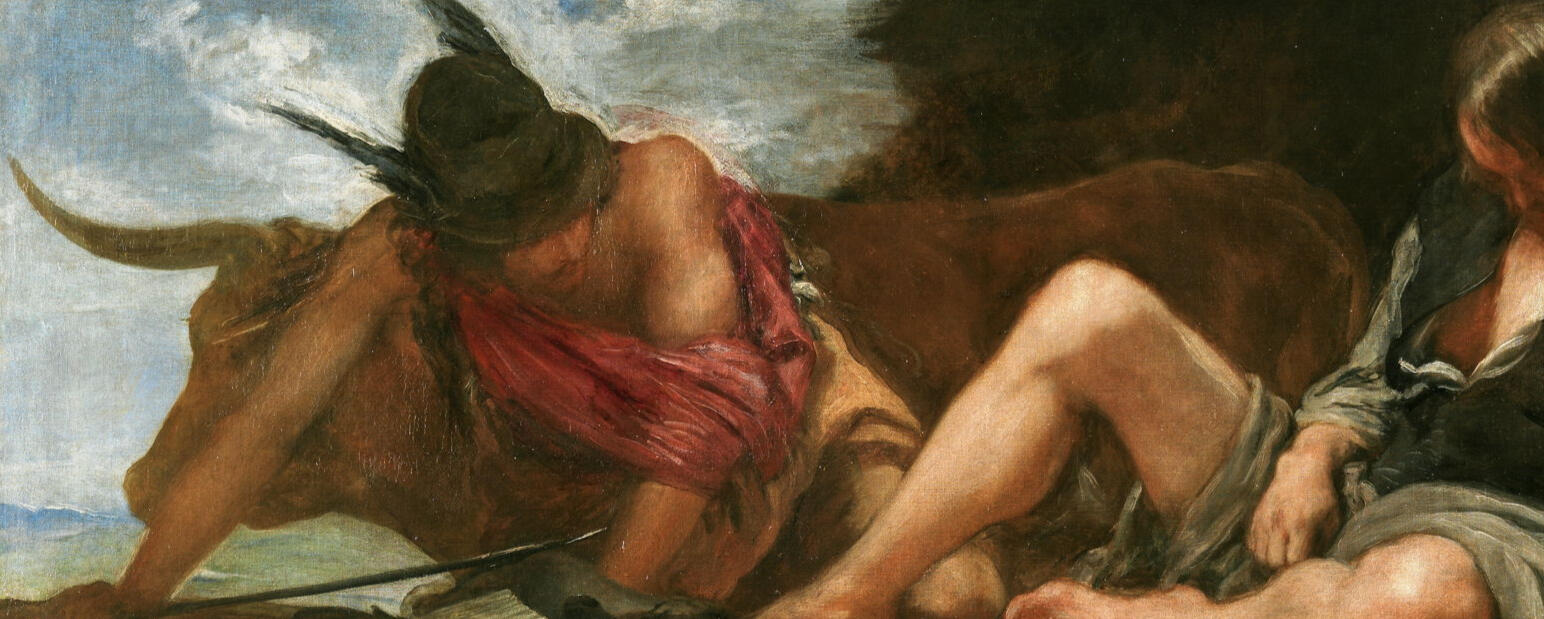
TITLES & EPITHETS
| Greek Name | Transliteration | Translation |
|---|---|---|
| Αγλαος | Aglaos | "Splendid, Bright, Glorious"(1) |
| ἀγωνίας | Agônios | ⮞ "who presided over the great games" (22 Ode 1 Ln. 60) ⮞ Used in the sense of "helpers in struggles and contests"(1) |
| Αγοραιος | Agoraia ⮞ Agoraios | ⮞ "Of the Market-Place"(1)(28 2.9.8) ⮞ Refers to Hermes as the god of commerce (1) |
| ἀγρότης | Agroter | Of the Field (8) |
| Ἀγυιεύς | Agyieus ⮞Agyieus | “Guardian of places and boundaries" (16 pg 29) |
| Ακακησιος | Akakêsios | ⮞ Of Acacesium (Arcadia)(1) ⮞ "The god who cannot be hurt", or "who does not hurt" (1) ⮞ equivalent to Soter |
| Ακακητα | Akakêta | ⮞ "Guileless, Gracious"(1)(Od.24.10) ⮞ "Unpolluted" "Inviolate" (2 pg. 58) ⮞ " Doing no wrong, benevolent" ^(15 pg. 145) |
| Ἀλεξίκακος | Alexikakos | "Averter of Evils" (2 pg. 31) |
| Ανγελος Αθανατων | Angelos Athanatôn | ⮞"Messenger of the Gods"(1) ⮞ "Messanger of the Deathless or Undying Ones" (2 pg. 39)(25 Book 3 Ln. 433) |
| Ανγελος Μακαρων | Angelos Makarôn | "Messenger of the Blessed Ones"(1)(2 pg. 39) |
| ἀραιός | ⮞ Araoia ⮞ Araios | "The Ram" (12) |
| ᾰ̓́ρειος | Areiās | "Warlike, Curser, or Defender/Protector"(4) |
| Αργειφοντης | Argeiphontês | "Slayer of Argos"(1)(Od.1.38)(Od.5.145)(Od.5.148)(Orph.H. 28 Line 3) |
| Αρχοσ Φηλητεων | Arkhos Phêlêteôn | ⮞ "Leader of Robbers", "Thieves"(1) ⮞ Epithet may not be used in cult worship. Title may fall under the general title of Hermes Dolios (2 pg. 25) |
| Αθανατος Δαικτορος | Athanatos Diaktoros | "Immortal Guide"(1) |
| Βουφονος | Bouphonos | ⮞ "Slayer of Oxen"(1) ⮞ Epithet may not be used in cult worship. Title may fall under the general title of Hermes Dolios (2 pg. 25) ⮞ Refers to the myth of Hermes stealing Apollon's cattle...even though Hermes does not kill any of the cattle.(2 pg. 25) |
| βοοσσόος | boûssóos | "Ox-driving" (25 Book 4 Ln. 31) |
| Δαις Ἑταιρος | Dais Hetairos | "Comrade of the Feast"(1)(Hom.H. 4 Ln. 435) |
| δαιμόνων λάτριν | daímōn lắtrĭs | "Servant of the Gods" (24 Ln. 3) |
| δειλακρίων | Deilakrion | ⮞ "Poor fellow" (1) ⮞ Ordinary meaning is "coward", comedy meaning is "poor fellow" ⮞ God of the greedy, lions, the devourer, the starving, the hungry, one that can't be contained or restrained |
| δενδρίτης | Dendrites | Of the Trees (6) |
| διάκτορος | Diaktoros | "Guide, Messenger"(1)(Od.1.84)(Od.8.335)(Od.12.390)(Orph.H 28 Line 3) |
| Διὸς ἄγγελος | Dĭós angélōi | "Messanger of Zeus" (23 Ln. 461)(Orph.H. 28 Line 1) |
| Δολιος | Dolios | ⮞ "Of Crafts, Of Wiles"(1)(Od.8.335) ⮞ "Crafty One" (2 pg. 24) |
| Δωτορ Εαων | Dôtor Eaôn | "Giver of Good Things"(1) |
| δρόμος | Dromios | Of the Stadium (4) |
| ἐμπολαῖος | empolaîos | ⮞ "Dealer" (2) ⮞ "Concerned in traffic" (26 Ln. 817) ⮞ Referencing Hermes as a God of Commerce |
| Εναγωνιος | Enagônios | ⮞ "Of the Games"(1)(21 Ode 2 Ln. 10)(28 5.14.9) ⮞ "President of Contests" (2) |
| Ἐνόδιος | Enodios | "Of the Roads", "Of the Wayside"(Orph.H.28.6) |
| ἐπικλοπίος ★ κλεψιφρόνος | ⮞ Epiklopios ⮞ Klepsiphronos | "the Stealthy-Minded" (8) |
| ἐπιχθόνιος | Epikthonios | "Dwelling on Earth/Earthly" (8) |
| Επιμηλιος | Epimêlios | "Keeper of the Flocks"(1)(2 pg. 61)(28 9.34.3) |
| Ερικυδης | Erikydês | "Famous, Glorious, Splendid"(1) |
| Εριουνης | Eriounês | ⮞ Uncertain ⮞ Possibly "Luck-Bringing, Ready-Helper"(1)(Hom.H. 4 Ln. 145)(Hom.H. 19 Ln. 28) |
| εὔφρων | eúphrōn | "of sound mind" (Orph.H. 28 Line 3) |
| ἐύρραπις | euryrappis | "of the beautiful staff" (25 Book 4 Ln. 1) |
| Ευσκοπος ★ πέμψαντες | Euskopos | "Keen-Sighted, Watchful"(1)(Od. 1.38) |
| ἡγεμόνιος | Hegemonios | ⮞ "Leader" (2) ⮞ Seems to refer to Hermes as the patron-god of Athens' cavalry commanders.(2. pg 4) |
| Ἑρμηνευτης | Hermêneutês | "Interpretor, Translator"(1) |
| ἐριούνης | Hierōsynē | ⮞"Helper"(Od. 8.322) ⮞"quick runner" and "benevolent helper"(3) |
| Ἵππιος | Hippios | Of the Horses (9) |
| Ἕρµιππος | Hippokourios | "Horse Tender" (9) |
| Καδμῖλος | Kadmilos | ⮞ Unclear ⮞ Kasmilos was associated with Hermes in explanations of the Samothracian mysteries. (17 1.917) |
| Κανδαύλης | Kandaules | ⮞ "The Dog-Throttler" or "Throttler of the Beast" (5) ⮞ A Lydian god, an epithet denoting religious syncretism.(5) |
| κᾰτᾰ́βᾰσῐς | Kataibatês | ⮞ "Who Leads Down" (8) ⮞ "Descending" ⮞ in relation to Hermes being a conductor of souls and in his function as an underworld deity. |
| κάτοχος | Katokhos | ⮞ "To bind or restrain" (8) ⮞ "Tenacious" (Logeion) |
| κεδρίτης | Kedrites | Of the Cedar Trees (6)(15 pg. 148) |
| κερδέμπορος | kerdémporos | "presiding over gain in traffic" (Orph.H. 28 line 6) |
| κῆρυξ | Kêryx | ⮞ "Herald of the Gods" (13) ⮞ "Crier" (13) ⮞ This epithet names Demeter (identified with Maia) as the mother of Hermes. In this, Hermes has special control over the daimonic winged Keres in-flight into and out of Demeter Pandora, personified wine-storage jars blamed for all of the ills of humans, where only Hope lingered at the rim (13) ⮞ Appears as φίλον κήρυκα (philon keryka // "Beloved Herald") in Agamemnon. (19) |
| Χαριδωτης | Kharidôtês | "Giver of Joy"(1) |
| Χαρμοπηρων | Kharmophrôn | "Glad-Hearted, Heart-Delighting" (Hom.H. 4 Ln. 127) |
| Χρυσορραπις | Khrysorrhapis | "Of the Golden Wand"(1)(Od.10.277)(Od.10.331) |
| χθόνῐος | khthonios | "Of the Underworld" (15 pg. 149)(20 Ln. 1) |
| Κλεπσιφρων | Klepsiphrôn | "Deceiver, Dissembler"(1)(2 pg. 24) |
| κορυφαῖος | Koryphaîos | ⮞ "Leader of the Chorus" (4) ⮞ In relation to his position with the many Nymphai (Nymphs), he was the deity most associated with them and stood between man and the Nymphai for their worship.(4) |
| κρηναῖος | krenaios | ⮞ "Of the Fountain."(4)(Logeion) ⮞ "Of Springs" (4)(Logeion) |
| Κρατυς ★ Κρατερος | Kratus ⮞ Krateros | "Strong, Mighty"(1) |
| Κριοφορος | Kriophoros | "Ram-Bearer"(1)(2 pg. 61)(28 9.22.1) |
| Κτησιος | Ktêsios | ⮞"The protector of property" (1) ⮞ "Of the House, Property" (1) |
| Κυλλήνιος | Kullênios ⮞ Kyllênios | ⮞ Of Mt Cyllene (Arcadia) ⮞ May also reference the circumstance of Maia having given birth to him on that mountain(1)(15 pg. 144) |
| κύδιμος | Kudimos | "Glorious" (1)(Hom.H. 4 Ln. 46)(2 pg. 40) "glorious, renowned" (Logeion) |
| λόγιος | Logios | ⮞ "of authoritative speech" (2 pg. 49) ⮞ "eloquent, well-spoken" (Logeion) ⮞ In reference to him as Patron of Orators (2 pg. 49) |
| Μαιάδος υἱός | Maiados Huios | "Son of Maia"(1)(Orph.H. 28 Line 1) |
| Μαστηριος | Mastêrios | "The Searcher, of Searchers" (1)(18 Ln. 920) |
| Μηχανιωτης | Mêkhaniôtês | "Trickster, Contriver"(1)(2 pg. 24) |
| Νόμιος | Noumios | ⮞ "of Shepherds" (27 Ln. 977) ⮞ Surname of divinities protecting the pastures and shepherds (1) |
| Οιοπολος | Oiopolos | "Sheep-Tending, Shepherd"(1)(2 pg. 61) |
| ὠκύπτερος | ōkŭ́pteros | "Swift-winged" (25 Book 35 Ln. 227) |
| ὀνειροπομπός | ⮞ Oneiropompos ⮞ Hegetor Oneiron | "Bringer of Dreams" (8)(15 pg. 150) |
| πανεπόψιος | Panepóptēs | ⮞ "All-Observing" (11) ⮞ Mainly found in the PGM |
| Περφεραῖος | Perpheraios | ⮞"Passed around" (2 pg. 58) ⮞Venerated in the city of Ainos. Refers to the people ritually carrying around a wooden image of Hermes (2 pg. 57) |
| Φηλητης | Phêlêtês | ⮞ "Thief, Robber, Rustler"(1) ⮞ Epithet may not be used in cult worship. Title may fall under the general title of Hermes Dolios (2 pg. 25) |
| φίλανδρος | philandros | "lover of men" (Orph.H. 28 Line 4) |
| ποικιλόβουλου | poikilóboulou | "of changeful counsel, wily-minded" (Orph.H. 28 Line 3) |
| Ποικιλομητης | Poikilomêtês | "Full of Various Wiles"(1)(2 pg. 23) |
| Πολυτροπος | Polytropos | "Wily, Many-Turning"(1)(2 pg. 23)(Hom.H. 4 Ln. 514) |
| Πονεομενος | Poneomenos | "Busy One"(1)(2 pg. 30)(Hom.H. 4 Ln. 436) |
| πόσις θηρῐ́ον | Potnios Theron | ⮞ "Master of Animals" (7) ⮞ A Minoan title for Hermes (7) |
| Προμαχος | Promakhos ⮞ Promachos | ⮞ "Champion"(1)(28 9.22.1) ⮞ "Battle-Ready" (15 pg. 148) |
| Προνοια ★ Προναος | Pronoia ⮞ Pronaos | ⮞“Before the temple”(2 p.59) ⮞“Of foresight”(1) ⮞“Of the Fore-Temple”(1)(28 9.10.2) |
| Προπυλαιος | Propylaios | "Of the Gateway"(1)(2. p.59) |
| Ψιθυριστης | Psithyristês | "Whispering" or "The Whisperer" (4)(8) |
| ψῡχοπομπός | Psykhopompos | "Conveyor of Souls" (8) |
| ψυχοστασία | Psykhostasia | ⮞ "Weigher of souls (lives)" (10) ⮞ "One who weighs souls (lives)" (10) |
| πτηνοπέδιλος | ptēnopédilos | "with winged sandals" (Orph.H 28 Line 4) |
| πτερόεις | pteróeis | "Winged" (25 Book 10 Ln. 337) |
| πυληδοκόν | Pyledokos | ⮞ "receiver at the door" or 'doorman' (2, pg. 59) ⮞ "The Door Watcher" (8) |
| στροφαῖος | Strophaios | "Hinge-Turner"(2 pg. 58)(29 Ln. 1153) |
| τανυαίπτερος | tanysípteros | "Long-winged" (25 Book 3 Ln. 433) |
| θεοξενίος | Theoxenios | ⮞ "the Strangers' God" (14) ⮞ Used for the festival of the Theoxenia (1) |
| θέσμιος | thésmios | "Lawful, lawgiver" (25 Book 33 Ln. 162) |
| Τρικεφαλος | Trikephalos | "Three-Headed (Of Road-Intersections)"(1) |
| Τύχων | Tychon | ⮞ "Lucky" (15 pg. 145) ⮞ Not a very common epithet for Hermes. Could be tied to the word Hermaia which stands for "unexpected goods / lucky finds" (15 pg. 145) |
CREDITS
Hermes's Epithets were collected and shared by Ace, June, & Royal Wren
Hermes Kadmilos found by Kitty
SOURCES
Hermes - Allan, Arlene
Langella - Hermes Ἐριούνιος: una nuova interpretazione. Historische Sprachforschung, 126
Miller - Tracking Hermes, Pursuing Mercury
Bolling - Kandaules.
Lebessi - Hermes as Master of Lions at the Syme Sanctuary, Crete.
Chittenden - The Master of Animals
Larson, Jennifer - Ancient Greek Cults
LABRYS - Hellenic Polytheism - Household Worship
Apollonius Rhodius - Argonautica
Aeschylus - Suppliant Women
Aeschylus - Agamemnon
Aeschylus - Libation Bearers
Pindar - Pythian Odes
Pindar - Isthmean Odes
Euripides - Electra
Euripides - Ion
Nonnus - Dionysiaca
Aristophanes - Acharnians
Aristophanes - Thesmophoriazusae
Pausanias - Description of Greece
Aristophanes - Plutus
*The Iliad (Il.), The Odyssey (Od.) and Orphic Hymns (Orph.H.) are cited ‘in-text’

TITLES & EPITHETS
| Greek Name | Transliteration | Translation |
|---|---|---|
| ... | Aethiops | ⮞ "the Glowing"(1) ⮞ "The Black(1)(2) |
| Αγοραιος | Agoraios | ⮞"Of the city-center"(3 pg 19) ⮞ "Of the Market-Place"(1) |
| ἄκραοις | Akraois | "of the Heights" (3 pg. 16) |
| Ἀλεξίκακος | Alexikakos | "averter of evil"(2) |
| Αμβουλιος | Ambulius ⮞ Amboulios | "Counsellor" (1)(2) |
| Αμμων | Ammôn | ⮞ Amun (Egyptian God)^(6 4.1)(7 1.13.1) ⮞ a syncretic form of Zeus with the Egyptian god Amun, typically depicted with distinctive ram’s horns |
| Απημιος | Apêmios | "Averter of Ills"(1) |
| Αφεσιος | Aphesios | "Releasing (Rain)"(1) |
| Απομυιος | Apomyios | "Averter of Flies"(1)(4 pg. 139) |
| Αρειος | Areios | of War(1)(2) |
| Αστραπαιος | Astrapaios | "Of the Lightning"(1) |
| βαρύκτυπος | barýktypos | "loud-thundering, heavy-sounding" (8 Line 334) |
| Βασιλευς | Basileus | ⮞"King" (2 p.72)(9) ⮞ "King, Chief, Ruler"(1) |
| Βουλαιος | Boulaios | "Of the Council"(1)(3 pg 19) |
| Δημήτριος | Dēmḗtrios | ⮞ “Of Demeter” (5 pg 77) ⮞ An aspect worshipped out of certain city-states in ancient Rhodes |
| Δικταῖος | Diktaios | ⮞ "Of Mt. Dikte" ⮞ 'Appears to be primarily a god of vegetative and procreative energies who is "born anew" every year.' (3 pg. 25) |
| Ελευθεριος | Eleutherios | ⮞ "Of Freedom"(1)(3 pg. 20) ⮞ Used 'when Greeks believed they had experienced divine deliverance from tyranny. (3 pg 20) |
| Επιδωτης | Epidôtês | "Giver of good"(1)(2) |
| Ευηνεμος | Euênemos | Of Fair Winds(1) |
| ἐξακεστήρ | Exakester | "of Making Amends" (3 pg. 24) |
| γαμήλιος | gamḗlios | "God of Marriage" (9) |
| Ἡραῖος | Hēraîos | "The Zeus of Hera" (9) |
| Ἑρκειος | Herkeios | ⮞ "Of the Courtyard"(1)(3 pg. 21) ⮞ "protector of the house/oikos" (2 p.81) |
| ... | Heyetios | "The Rain-God" (9) |
| Ἱκεσιος | Hikesios | ⮞ "Of Suppliants, Protector of Suppliants"(1)(9) ⮞ "the god of Ones who come" (3 pg. 23) |
| ὅρκιος | Horkios | "keeper of Oaths" (2 p.80)(3 pg. 24) |
| Ὑετιος | Hyetios | "Of the Rain"(1) |
| Ὑπατος ★ Ὑπσιστος | Hypatos ⮞ Hypsistos | ⮞ "Supreme"(2 p.3) ⮞ "the Highest" (3 pg. 27) |
| Ικμαιος | Ikmaios | "Of Moisture"(1)(3 pg. 16) |
| Καππώτας | Kappṓtas | ⮞ "The Downpourer" (9) ⮞ "that fell from heaven" (9) |
| Καταιβατης | Kataibatês | ⮞ "The Descender, Descending"(1)(9) ⮞ "Of Descending Lightning, descending in thunder and lightning" (3 pg. 27)(9) |
| Καθαρσιος | Katharsios | "Of Ritual Purification"(1)(3 pg. 24) |
| Κεραυνιος | Keraunios | ⮞ "Thunderer" (2 p.24) ⮞ "Of the Thunderbolt"(1) ⮞ "The Lightning" (9) |
| Κερδύλας | Kerdylas | ⮞ "God of Property" (11 Sec.1092) ⮞ Potentially related to the epithet Ktêsios (Theoi) |
| Χρυσαορευς | Khrysaoreus | Of the Golden Sword(1) |
| χθόνιος | Khthonios | "Of the Underworld" (3 pg. 27)(9) |
| Κλαριος | Klarios | "Of the Lots"(1) |
| Κονιος | Konios | "Of the Dust"(1) |
| Κορυφαιος | Koryphaios | "Chief, Leader"(1) |
| Κοσμητης | Kosmêtês | "Orderer"(1) |
| Κτησιος | Ktêsios | ⮞"Prosperity of the household" (2 p.81) ⮞ "Of the House, Property "(1)(3 pg 21) ⮞ "Protector of Property" (9) |
| κύδιστος | Kydistos | "most honored" (2 p.3) |
| Λαβρανδευς ★ Λαβραυνδηνος | Labrandeus ⮞ Labraundênos | ⮞ "Furious, Raging"(1) ⮞ Of Labranda (Caria)(1) |
| Λαοιτης | Laoitês | Of the people(1)(2) |
| λαφύστιος | Laphystios | "the Devourer" (3 pg. 16) |
| Λεχεατης | Lekheatês | Of the Childbed(1) |
| Λευκαιος | Leukaios | Of the White-Poplar Grove(1) |
| Λιμενοσκοπος | Limenoskopos | "Watcher of Sea-Havens"(1) |
| Λυκαιος | Lykaios | ⮞ Uncertain(1) ⮞ Possibly wolf-related, “Of the wolf” or “Wolf-like” or “wolf-slayer” (from lukos, “wolf”)(1) ⮞or “light-giver” (from lukê, “light”)(1) ⮞ Of Mt Lycaeus (Arcadia)(1) |
| Μαιμακτης | Maimaktês | "Boisterous"(1) |
| Μειλιχιος | Meilikhios | ⮞ "Gracious, Merciful"(1) ⮞ "the Mild" (3 pg 21) |
| Μηχανευς | Mêkhaneus | "Contriver"(1) |
| μειλίχιος | meilíchios | The god who could be appeased with honey & the kindly god of the depths & the protector of those who invoked him with propitiatory offerings, at Athens -- appeared in the shape of a serpent (9) |
| μητιέτης ★ μητίετα | mētietēs ⮞ mētieta | "of Good Counsel, Counsellor" (9) |
| Μοιραγέτης | Moiragetês | “Guide or leader of fate/Leader of the Moirae”(1) |
| Νάϊος | Naios | "the Flowing" (3 pg. 26) |
| νεφεληγερέτης | nephelēgeretēs | ⮞ "cloud-gatherer" (Il. Book 1, line 511)(9) ⮞ "Assembled Clouds" (9) |
| νικήτωρ | nikḗtōr | "Victorious" (2 p.78) |
| Ομβριος | Ombrios | "Of the Rain, the Rain-God" (1)(2 p.60)(3 pg. 16)(9)(10) |
| Παλαμναιος | Palamnaios | "(Punisher) of Murderers"(1) |
| Πανελληνιος | Panellênios | Of All the Greeks(1) |
| πατρωός | Patroos | "Ancestor" (3 pg. 20) "Stepfather" (9) |
| φράτριος | phratrios | "of or belonging to a brotherhood/clan/tribe" (9) |
| Φιλιος | Philios | "of Friendship" (1)(2 p.66) |
| Φυξιος | Phyxios | ⮞ Of Refuge(1)(2) ⮞ "Puts to Flight, Banishes"(1) |
| Πλουσιος | Plousios | "Of Wealth" (1) |
| Πολειυς | Poleius | ⮞ "Of the City-State" (1)(3 pg. 19) ⮞ "guardian of the City" (9) ⮞ Honored as the God of Communities (9) |
| Προστροπαιος | Prostropaios | "Turner of Pollution"(1) |
| Σημαλεος | Sêmaleos | "Giver of signs" (1)(2 p.60) |
| Σκοτιτας | Skotitas | ⮞ "Dark, Murky"(1) ⮞ Of the Dark (Oak-Forest) |
| Σωσιπολις | Sôsipolis | "City-Saviour"(1) |
| Σωτηρ | Sôtêr | ⮞ "Saviour, Deliverer"(1)(2 p.66) ⮞ "Patron of home and family" (3 pg. 20) ⮞ Used when disaster was averted or battles won, but also used as a god who saved individuals in times of trouble. (3 pg. 20) |
| Σθενιος | Sthenios | Of Strength, Strong(1) |
| Στρατιος | Stratios | Of War, Warlike(1) |
| Τελειος | Teleios | ⮞ Of Marriage Rites(1)(2) ⮞ "Giver of Completeness" (9) |
| Θεος Αγαθος | Theos Agathos | "The Good God"(1) |
| Τροπαιος | Tropaios | ⮞ "Turns to Flight, Defeats"(1) ⮞ " Of the Rout" (3 pg. 19) ⮞This epithet was used after a victory in battle. (3 pg 19) |
| Ξενιος | Xenios | ⮞ of Xenia/hospitality (2 p.66)(9) ⮞ Refers to him presiding over the laws of hospitality, and protecting strangers.(1) |
CREDITS
Zeus Header by MildredWerecat. If you're interested in commissioning MildredWerecat, you can find the link to their commissions here!
Zeus's Epithets were collected and shared by Bees, Terry, & Ace
Greek translations by June
Zeus Damatrios found by Minerva
SOURCES
Zeus - Dowden, Ken
Larson, Jennifer - Ancient Greek Cults
Mikalson, Jon D. - Ancient Greek Religion
Jameson et. al - A Lex Sacra from Selinous
Pindar - Pythian Odes
Diodorus Siculus - Library 1-7
Homeric Hymn to Demeter
Kerenyi, Karl - Gods of the Greeks
Lycophron - Alexandra
Tzetzes - Ad Lycophronem
*The Iliad (Il.), The Odyssey (Od.) and Orphic Hymns (Orph.H.) are cited ‘in-text’
TITLES & EPITHETS
| Greek Name | Transliteration | Translation |
|---|---|---|
| Αγλαοδωρος | Aglaodôros | "Bestower of Splendid Gifts" (1)(Hom.H. 2 Line 54) |
| Αγλαοκαρπος | Aglaokarpos | "Giver of Goodly Fruit"(1)(Hom.H. 2 Line 4) |
| ἀγλαόπαις | aglaopais | "Rich in fair children" (26 Book 13 Line 188) |
| ἁγνὴ | agní | "Pure" (16 Line 465) |
| αἰδοῖος | aidoîos | "Venerable, regarded with reverence" (16 Line 301) |
| ἀλωαίη | aloaiē | "She of the threshing-floor, one who works on a threshing-floor" (Orph.H 40 Line 5) |
| Αμαια | Amaia | ⮞Unclear ⮞ maybe from “ἀμάω” meaning To reap/to harvest (Suda s.v. Ἀζησία)(6 4.20)( Vol. 24) ⮞ appears in Greek proverbs: “Amaia looked for Azesia” (her search for Persephone) meant a long delay; “Amaia has found Azesia” meant something dearly sought was found. |
| ἀμαλλοφόρος | amallophóros | "Bringing sheaves, Sheaf-bringer" (26 Book 17 Line 153) |
| Ανασσα | Anassa | "Queen, Lady"(1)(Hom.H. 2 Line 75) |
| Ανησιδωρα | Anêsidôra | "She who Sends Forth Gifts"(1)(12 Ἀττικά Ch. 31 Sec. 4)(30 745a) |
| Ἀξίερος | Axieros | ⮞ Unclear ⮞ often linked to Greek axios ('worthy' or 'honored) (8 1.917) ⮞ In Samothracian tradition, Axieros was one of the principal secret names preserved by the mysteries. Ancient interpreters equated Axieros with Demeter |
| Βριμω | Brimô | "Angry, Terrible One" (1) |
| Χλόη | ⮞ Chloê ⮞ Khloê | “of the green shoots” "the blooming" (1) |
| Δηω | Dêô | "Of the Earth"(1) |
| Δια Θεα | Dia Thea | "Bright Goddess"(1) "Heavenly goddess" (15 Line 969)(Hom.H. 2 Line 56) |
| Δώσω | Doso | ⮞ "the giver" "she who gives" "I will give" (Hom.H. 2 Lines 122–123) ⮞ Name assumed by Demeter while disguised as an elderly nurse at Eleusis. Interpreted to foreshadow her gifts of agriculture and the sacred mysteries to Eleusis |
| δρεπανηφόρος | drepanēphóros | "Bearing a scythe, Scythebearer" (26 Book 6 Line 104) |
| Ἐλευσίνια | Eleusínia | ⮞ "Of Eleusis" "Eleusinian" (Orph.H 40)(9)(10)(11 1.163) ⮞ While derived from a sanctuary location, Eleusinia is included because Eleusis profoundly shaped Demeter's worship, mythology, and public perception through the Eleusinian Mysteries, one of the most popular and enduring cult traditions in the Greek world. |
| ἐπόγμιος | epogmios | "Of the Furrows"(1)(31 Book 6 Chap 258) |
| Ερινυς | Erinys | ⮞ "Fury, Wrath"(1)(12 Book 8 Chap 25 Sect 4) ⮞ "The Wrathful one" (2 pg. 80) ⮞ This epithet could be syncretic with the Mycenaean goddess Erinys (2 pg. 80) |
| Ερινυσ Τιλφωσα | Erinys Tilphôsa | "Fury of Thelpusa"(1) |
| εὔχλοος | eúchloos | "Fresh and green" (17 Line 1600) |
| εὔκαρπος | eúkarpos | "Fruitful" (31 Book 7 Chap 394) |
| Ευκομος | Eukomos | "Lovely Haired"(1)(Hom. H. 2 Line 1)(Hom.H. 13 Line 1) |
| Ευνοστος | Eunostos | ⮞ "Good Yield" (1)(13 pp. 214) ⮞ Goddess of flour mills, whose image was set up in mills, and who was believed to keep watch over the just weight of flour. It is unclear if she was a distinct deity or simply titles of the goddess Demeter |
| εὐπλόκαμος | eüplókămos | "Fair-haired" (Od. Book 5 Line 125) |
| εὐρύαλος | Eurúălos | "With wide threshing-floors" (26 Book 7 Line 82) |
| Ευστεφανος | Eustephanos | "Lovely Crowned, well-crowned, well-girdled"(1)(16 Line 300) |
| ἁγνός | hăgnós | "Pure, Chaste, Holy"(1)(4 Book 10 Chap 70) |
| Ἁγνεία Θεά | Hagneia Thea | "Pure Goddess" (2 pg. 70) |
| Ἑρκυνα | Herkyna | "Of the Stone Enclosure"(1) |
| ἑστιοῦχ᾽ Ἐλευσῖνος χθονὸς | hestioûch Eleusīnos khthonós | "Guardian of Eleusis" (20 Line 1) |
| Ὡρηφορος | Hôrêphoros | "Bringer of the Seasons"(1)(Hom.H. Line 54) |
| Καβειραιη | Kabeiraiê | "Of the Kabeiroi"(1) |
| καλλιγένεια | Kalligeneia | ⮞ “bearer of a fair offspring” (Logeion) ⮞ A name by which Demeter was invoked in the Thesmophoria (21 Sec. 299) |
| καλλιπλόκαμος | kalliplókamos | "With beautiful locks" (Il. Book 14 Line 326) |
| Καλλισφυρος | Kallisphyros | "Beautiful, Trim-Ankled"(1)(Hom.H. 2 Line 453) |
| Καλλιστεφανος | Kallistephanos | "Beautiful Crowned"(1)(Hom.H. 2 Line 237) |
| καρπολόχος | karpolóchos | "Bearing fruit, Fruit-bearer" (31 Book 12 Chap 225) |
| Καρποφορος | Karpophoros | "Bearer of Fruit"(1)(18 Line 964) |
| καρποφόρον βασίλειαν | karpophóron băsĭleíān | "Fruit-bearing queen" (27 Line 384) |
| Χαμύνη | Khamýnē | ⮞ "of the earth" (12 6.21.1) ⮞ "of the Chasm / Earth-Opening" (12 6.21.1) ⮞ An Olympian epithet of Demeter at Olympia in Elis. Pausanias records that it referred either to the earth opening for Hades' abduction of Persephone or to a local hero, Chamynus. |
| Χλόη | khlóē | "Of the green shoots" (12 Book 1 Chap 22 Section 3) |
| χλοόκαρπος | khloókarpos | ⮞ "Producing green fruits" (Orph.H 40 Line 5) ⮞ It stems from χλόη (chloē, meaning "green shoot, young vegetation, or grass") and καρπός (karpos, meaning "fruit, grain, or harvest") |
| Χρυσαορος | Khrysaoros | "Of the Golden Blade"(1)(Hom.H. 2 Line 4) |
| Χθονια | Khthonia ⮞ Cthonia | ⮞"Of the Earth"(1)(12 Book 3 Chap 14 Sect 5)(31 Book 6 Chap 31) ⮞ "Of the Underworld" (2 pg. 78) |
| Κιδαρία | Kidaría | ⮞ "She of the Kidaris" (12 8.15.3) ⮞ Arcadian mystery cult epithet of Demeter at Pheneos. Her priest donned the mask of Demeter Kidaria and ceremonially struck the "Underground Folk" (hypochthonioi) during the Greater Mysteries |
| κουροτρόφος | ⮞ kourotrófos ⮞ kourotrfo ⮞ kourotrpho ⮞ kourotrophos | "child nurturer" (3) |
| Κυανοπεπλος | Kyanopeplos | ⮞ "Dark Veiled, Cloaked"(1)(Hom.H. 2 Line 374) ⮞ of Demeter mourning Persephone |
| Κυδρη Θεα | Kydrê Thea | "Glorious, Noble Goddess"(1) |
| λαμπαδόεσσα | lampadóessa | "Torch-bearing" (Orph.H 40 Line 10) |
| Λουσιη | Lousiê | ⮞ "Bathing, Purifying"(1) ⮞ "Of Washing" (2 pg. 80) ⮞ This epithet refers to Demeter 'purifying herself in he river Ladon after intercourse with Poseidon & letting go of her anger' (2 pg. 80) |
| μάκαιρα | mákaira | "Happy one, Blessed one" (Orph.H Line 18) |
| Μαλοφορος | Malophoros | ⮞ "Bearer of Fruit"(1)(2 pg. 83) ⮞ "Bearing apples, Apple-bearer" ⮞ This is Doric but its an epithet specifically in that region of Greece (Megara) |
| Μεγαλα Μητερ | Megala Mêter | "Great Mother"(1) |
| Μεγαλα Θεα | Megalai Theai | "Great Goddess"(1)(2 pg. 70) |
| Μελαινα | Melaina | ⮞ "The Black"(1)(2 pg. 80)(12 Book 8 Chap 42 Sect 1) ⮞ Could be refering to her Underworld nature or her dressing in all black to mourn Persephone (2 pg. 80) |
| Μήτηρ Ἀνταία | Meter Antaia | ⮞"Mother Antaia" -"Cerulean Mother" (Orph. H 28) ⮞ No specific translation made for Antaia but is used as an epiteth for several protective and feminine goddesses and is sometimes considered to mean "She who meets" or "She who is prayed to" |
| Μάτηρ θεῶν | Matēr theōn | ⮞ "Mother of the Gods" (14 1301–1360) ⮞ Here she is identified with the Phrygian Kybele, and is called the Mountain-Mother of the Gods. She rides a chariot drawn by wild beasts and retreats to the snow capped peaks of Mount Ida in her grief. |
| νήστειρα | nḗsteira | ⮞ "One who is fasting" (28 Line 130) ⮞ Found in poem which describes various plants/animals/minerals and poisons/antidotes |
| Ὀλυμπία | Olympía | "Heavenly, Olympian" (4 Book 15 Chap 50) |
| ὄμπνιος | ómpnios | "Bountiful, relating to grain" (26 Book 11 Line 213) |
| Ὀρεία | Oreia | ⮞ "Of the mountains" (14 1301–1360) ⮞ "Mountain dwelling, Mountain dweller" (14 1301–1360) Here she is identified with the Phrygian Kybele, and is called the Mountain-Mother of the Gods. She rides a chariot drawn by wild beasts and retreats to the snow capped peaks of Mount Ida in her grief. |
| παιδοφίλη | paidophilē | "Lover of children" (Orph.H 40 Line 13) This ancient Greek epithet means "lover/nurturer of children" and has no connection to the modern, negative connotations of "pedophile". |
| Παναχαια | Panakhaia | "Of All the Greeks"(1) |
| πάντων ἄνασσα | pắntōn ánassa | "Queen of all" (19 Line 685) |
| φερέσβιος | pherésbios | "Life-giving, Life-bearing" (4 Book 9 Chap 53) |
| φερέσταχυς | pheréstakhus | "Bearing ears of grain, Grain-bearer" (26 Book 27 Line 338) |
| φιλόπυρος | philópyros | "Loving wheat" (31 Book 6 Chap 3) |
| φίλος | phĭ́los | "Beloved, dear" (4 Book 9 Chap 33) |
| φιλότεκνος | philóteknos | "Loving one’s children, Who loves their children" (26 Book 6 Line 90) |
| Πλουτοδοτειρα | Ploutodoteira | "Giver of Wealth" (1)(23 Book 1 Chap 12 Section 4) |
| πλούτου μητέρ | ploútou mḗtēr | "Mother of Ploutos" (4 Book 15 Chap 50) |
| πολύτροφος | polŭ́trophos | "Feeding in abundance" (22 Line 2) |
| πολυάνθεμος | polyanthemos | "Rich in flowers" (Orph.H 40 Line 17-18) |
| πολυμέδιμνος | polymédimnos | ⮞ "With many medimni" (22 Line 2) ⮞ Medimni (singular medimnos) are Ancient Greek units of measurement for dry goods, typically grain |
| Πολυφορβος | Polyphorbos | "All-Nourishing, Bountiful"(1)(15 Line 912) |
| πολυπότνια | polypótnia | ⮞ "Great mistress, queen" (Hom.H. 2 Line 211) ⮞ Strengthened form of “potnia” |
| πολύτεκνος | polyteknos | "Bearing many children, prolific in offspring, having many children" (Orph. H 40 Line 15) |
| πολυτίμητος | polytímētos | "Highly honored" (21 Line 286)(27 Line 337) |
| Ποτνια | Potnia | "Queen"(1)(Hom.H. 2 Line 54)(22 Line 49)(23 Line 1189) |
| Ποτνια Θεαων | Potnia Theaôn | "Queen Amongst Goddesses"(1) |
| προηροσίᾳ | proirosía | "Before the time of tillage" (29 158e) |
| Προμυλαια | Promylaia | ⮞ "Before the Mill" (1)(13 pg 1383) ⮞ Goddess of flour mills, whose image was set up in mills, and who was believed to keep watch over the just weight of flour. It is unclear if she was a distinct deity or simply titles of the goddess Demeter |
| Πρων | Prôn | "Of the Headland"(1) |
| Προστασια | Prostasia | "Patron, Leader"(1) "Standing in front, Protecting, Protector" (12 Book 2 Chap 11 Section 3) |
| Πυγαιη | Pylaiê | "Of the Gates"(1) |
| πυρφόρον θεὰν | pyrphóros theā́ | ⮞ "Fire-bearing goddess" (20 Line 260) ⮞ Probably comes from the torches used by her devotees |
| Ρεα ευκομος θυγατερ | Rhea eukomos thugater | "Daughter of rich-haired Rhea"(1)(Hom.H. 2 Line 75) |
| Σεμνη | semní | "Holy, August, Revered"(1)(Hom.H. 2 Line 1)(Hom.H. 13 Line 1) |
| Σιτώ | Sitō | ⮞ "Of the Grain" (4 10.416, 3.109)(5 1.27) ⮞ The epithet Sito may derive from a tradition reflected in the Mycenaean si-to-po-ti-ni-ja (“Mistress of Grain”), a possible predecessor of Demeter. |
| σωρῖτις | sōritis | "Giver of heaps [of grain]" (Orph.H 40 Line 5) |
| σπερμείη ★ σπερμεία | spermíē ⮞ spermēia | "Of the seed, presiding over seeds" (Orph.H 40 Line 5) |
| σταχυηκόμος | stachyēlógos | "Cultivating ears of grain" (26 Book 1 Line 104) |
| σταχυοστέφανος | stachyostéphanos | "Crowned with wreaths of grain" (31 Book 6 Chap 104) |
| σταχυοτρόφος | stachyotrophos | "She who nourishes the grain" (Orph.H 40 Line 3) |
| στεφανήφορος | stephănḗphoros | "Wearing a wreath or crown, Wreath- or crown-wearing" (4 Book 15 Chap 50) |
| Θερμασια | Thermasia | "Warmth, Heat"(1) |
| Θέσμιος | thesmós | "Of the Laws"(1)(12 Book 2 Chap 34 Sect 6, Book 8 Chap 15 Sect 4) |
| Θεσμοφορος | Thesmophoros ⮞ Thesmophoroi | ⮞ "Bringer of Law"(1) ⮞ "Bringer of Divine Law" (2 pg. 70) "Law-giving" (24 Book 1 Chap 14 Section 4)(25 Book 1 Chapter 134 Section 2)(12 Book 1 Chap 31 Section 1) ⮞ Referenced her and Persephone as a joint title, representing them as joined twinned goddesses |
| Ξανθη | Xanthê | "Blonde, Golden-Haired"(1)(Hom.H. 2 Line 302) |
CREDITS
SOURCES
Larson, Jennifer - Ancient Greek Cults
Beaumont, Lesley - Childhood in Ancient Athens
Athenaeus - Deipnosophistae
Aelian - Varia Historia
Zenobius - Proverbs
Collected Works of Erasmus: Adages II VII 1 to III III 100
Apollonius Rhodius - Argonautica
Steph. Byz. - Ethnica s.v. Ἐλευσίς
Cornutus De Natura Deorum 27
Virgil - Georgics
Pausanias - Description of Greece
Hesych. s. v.; Eustath. ad Hom.
Euripides - Helen
Hesiod - Theogony
Hesiod - Works and Days
Sophocles - Oedipus in Colonos
Euripides - Rhesus
Euripides - Phoenician Women
Euripides - Suppliants
Aristophanes - Thesmophoriazusae
Callimachus - Hymn to Demeter
Orphic - Argonautica
Diodorus Siculus - Bibliotheca Historica
Herodotus - The Histories
Nonnus - Dionysiaca
Aristophanes - Frogs
Nicander - Alexipharmica
Plutarch - Banquet of the Seven Wise Men
Plutarch - Quaestiones Convivales
Greek Anthology
*The Iliad (Il.), The Odyssey (Od.), Homeric Hymns (Hom.H.), and Orphic Hymns (Orph.H.) are cited ‘in-text’
TITLES & EPITHETS
| Greek Name | Transliteration | Translation |
|---|---|---|
| Ἀκραῖος | acraeus | "of the heights" (16 Book 2 Chapter 24 Section 1) |
| ἀερόμορφε | Aerómorphe | "Aeial-formed" (Orph. H. 16 Line 1) |
| Αιγοφαγος | Aigophagos | ⮞ "Goat-Eater" (1)(16 Book 3 Chapter 15 Section 9) ⮞Lacedemonians were the only Greeks to use this epithet |
| Ακραιη | ⮞ Akraiê ⮞ Akraia | ⮞ "Of the Heights" (1) ⮞ "of the Headland" (2 pg. 34) |
| Ανθεια | Antheia | "Of the Flowers"(1) |
| Αφροδιτη | Aphroditê | "Of Aphrodite"(1) |
| Αργωια | Argôia | "Of the Ship Argo" (1) |
| ἀθάνατος βασίλεια | Athắnătos Băsĭ́leiă | "Queen of Immortals" (6 Line 2) |
| Ατυαρωτη | Autorôtê | "Unbulled (Virginal)" (1) |
| βαρύθυμε | barýthymos | "Heavy in spirit, heavy hearted" (12) |
| Βοῶπις | Boṓpis | ⮞ "Cow-Eyed"(Il.1.551) ⮞ This epithet can reference to Hera's association as an fertility and earth goddess, it also likely that it is used to highlight her large, striking eyes, similar to the ones of a cow |
| χρυσοπέδιλος | chrysopédilos | "Golden sandaled" (Od. Book 5 Line 605)(3 Line 454, 953)(17 Book 5 Chap 69) |
| χρυσόπεπλος | chrysopeplos | "Golden-robed" (10 Ode 19 Line 22) |
| δεσπότις | Despótēs | "Queen" (14 Book 24 Line 282) |
| δύσμαχος | dýsmachos | "Invincible" (14 Book 20 Line 346) |
| Ἐλειθυιῶν μήτηρ | Eileithyia mḗtēr | "Mother of the Ilithyiae" ^(17 Book 6 Chap 244) |
| εὔκομος | eúkomos | "Fair-haired" (Il. Book 10 Line 5) |
| εὐνετις | Eunetis | "Wife of Zeus" (14 Book 4 Line 46) |
| Γαμηλια | Gamêlia | "Of the Marriage feast" (1)(19) "Great Goddess of Marriage" (19) |
| Ἡνιοχη | Hêniokhê | ⮞ "Of the Chariot" (1) ⮞"The Charioteer" (16 Book 9 Chapter 39 Section 5) |
| Ἱππια | Hippia | “Of Horses” (15 pg. 139) |
| Ὁπλοσμία | Hoplosmia | ⮞ "Bearing arms; well-prepared" (18 Section 594, 847) ⮞ A warlike epithet used at Elis, Triphylia, Crotone, Bruttium, and possibly Paestum. |
| Ὑπερχειρια | Hyperkheiria | "Whose Hand is Above" (1) |
| Χηρα | Khêra ⮞ Chera | "Widow" (1)(2 pg. 40)(19) "separated" (20 pg. 133) |
| χρυσόθρονος | khrūsóthronos | "Golden-throned, of the Golden Throne" (Il. Book 1 Line 610)(5 Line 305)(6 Line 1)(7 Ode 1 Line 37) |
| λευκώλενος | leukolene | "White-armed, of the White Arms." (Il. Book 1 Line 55)(2 pg. 34)(3 Line 314)(4 Line 7) |
| λιμηνία | Limenia | "Of the Harbor" (2 pg. 34) |
| μάκαιρα | Mákaira | "Blessed" (Orph. H. 16 Line 2) |
| νύμφα Διὸς | Nŭ́mphă Zeus | "Spouse of Zeus" (12) |
| Νυμφευομενη | Nympheuomenê | "Bethrothed Bride" (1)(2 pg. 39) |
| ὄμβρων μὲν μήτηρ | ómbros mén mḗtēr | "Mother of Rain" (Orph. H. 16 Line 4) |
| Οὐρανία | Ourănĭ́ā | "Heavenly" (14 Book 31Line 80) |
| Παις | Pais | ⮞ "Girl, Maiden"(1)(2 pg. 40)(19) ⮞ “The Child” (19) ⮞ TW: If you chose to look further into the meaning, please be cautious as it was found to have a second, more disturbing meaning. Try to avoid any Christian-influenced sources as this meaning was changed by past Christians. |
| παμβασίλεια | Pambasíleia | "Queen of all, All-powerful Queen." (Orph. H. 16 Line 2) |
| πανεπόψιος | panepóptēs | "All-seeing" (14 Book 9 Line 133) |
| παντογένεθλε | Pantogenele | "All-generating" (Orph. H. 16 Line 4) |
| Παρθενίαν | parthenia | "Virgin, maiden" (11 Ode 6 Line 88) |
| φαεσίμβροτος | phausímbrotos | "who brings light to mortals" (13 Line 234) |
| πολυώνυμε | Polyṓnymos | "Having many names" (Orph. H. 16 Line 9) |
| πότνια | Pótnĭă | "Mistress, lady, queen" (Il. Book 1 Line 551)(5 Line 309) |
| Προδρομια | Prodromia | "Of the Pioneer" (1)(16 Book 2 Chapter 11 Section 2) |
| ταυρώπιδος | tauropidos | "Bull-faced" (17 Book 9 Chap 189) |
| Τελεια | Teleia | ⮞ "Adult Woman" (1) ⮞ "the Fulfiller, perfect, complete" (2 pg. 38)(8 Line 214)(9 Book 5 Chapter 73 Section 2)(19) ⮞ Epithet used for both Hera and Zeus. Meaning is more likely to be 'The Fulfiller' rather then theoi's 'Adult Woman' ⮞ described based on "since marriage is in a special sense the goal and fulfillment of human life." (20 pg 133) |
| Διὸς παράκοιτις | Zeús părákoitĭs | "Wife of Zeus" (Il. Book 18 Line 184) |
| Διὸς σύγγαμος | Zeús sýngamos | "Consort of Zeus" (17 Book 9 Chap 248) |
| Ζυγια | Zugia | "Yoked (Married)" (1) "uniter" (20 pg 133) |
CREDITS
Hera's Header by Gray. If you're interested in commissioning Gray, you can find the link to their commissions here!
Hera Boṓpis found by Enny_thelove
Hera Hoplosmia found by Anon
SOURCES
Larson, Jennifer - Ancient Greek Cults
Hesiod - Theogony
Homeric Hymn to Dionysus
Homeric Hymn to Apollo
Homeric Hymn to Hera
Pindar - Nemean Odes
Aeschylus - Eumenides
Diodorus Siculus - Bibliotheca Historica
Bacchylides - Dithyrambs
Pindar - Olympian Odes
Callimachus - Hymn to Delos 215
Tryphiodorus - The Taking of Ilion
Nonnus - Dionysiaca
Mikalson, Jon D. - Ancient Greek Religion
Pausanias - Descriptions of Greece
Greek Anthology
Lycophron - Alexandra (Lyc.)
Kerenyi, Karl - Gods of the Greeks
Walter Burkert - Greek Religion
*The Iliad (Il.), The Odyssey (Od.) and Orphic Hymns (Orph.H.) are cited ‘in-text’
TITLES & EPITHETS
| Greek Name | Transliteration | Translation |
|---|---|---|
| Αγακλυτος | Agaklytos | "Very Famous, Glorious" (1) |
| Αιθαλοεις Θεος | Aithaloeis Theos | "Sooty God"(1) |
| αἰώνιος | Aionius | "Eternal" (Orph.H 66.3) |
| Αμφιγυηεις | Amphigyêeis | "Lame One, Halting in Both Feet"(1) |
| ἐργαστήρ | Ergaster | "Workman" (Orph. H 66.4) |
| ἥμερος | Hemeros | "Gentle/Kind" (Orph.H 66.11) |
| Χαλκευς | Khalkeus | "Bronze-, Copper-Smith"(1) |
| Κλυτομητις | Klytomêtis | "Famed for Skill, Crafts"(1) |
| Κλυτος | Klytos | "Renowed, Famed, Glorious"(1) |
| Κλυτοτεχνης | Klytotekhnês | "Famed Worker, for Crafts"(1) |
| Κυλλοποδιων | Kyllopodiôn | "Crooked-Foot, Dragging Feet"(1) |
| μεγασθενές | Megasthenes | "Having great strength" (Orph. H 66.1) |
| ὀμβριμόθυμος | Ombrimothymos | "Indomitable/Strong in spirit" (Orph. H 66.1) |
| Περικλυτος | Periklytos | "Very Famous, Glorious"(1) |
| φαεσίμβροτος δαίμων | Phaesimbrotos Daemon | "Light Bringer" (Orph. H. 66.2) |
| Πολυμητις | Polymêtis | "Resourceful, Of Many Crafts"(1) |
| Πολυφρων | Polyphrôn | "Ingenious, Inventive"(1) |
| Πολυτεχνης | Polytekhnês | "Of Many Crafts"(1) |
| ... | Sethcans | Etrsucan name for Hephaestus (2) |
CREDITS
SOURCES
Etruscan Myth, Sacred History, and Legend
*The Iliad (Il.), The Odyssey (Od.) and Orphic Hymns (Orph.H.) are cited ‘in-text’

TITLES & EPITHETS
| Greek Name | Transliteration | Translation |
|---|---|---|
| Αιγαιων | Aigaiôn | Of the Aegean Sea (1) |
| ἀλεξικάκῳ | Alexikakos | "Averter of evil" (18 Book 15 Chap 6) |
| ἄναξ | ắnăx | "Lord" (Il. Book 15 Line 8)(Hom.H. 22 Line 6) |
| ἀρχιθάλασσος | archithalassos | "Ruler of the sea" (16 Book 6 Chap 38) |
| Ασφαλιος | Asphalios | ⮞ "Secures Safe Voyage"(1) ⮞ "Steadfast" (2 pg. 58) ⮞ " Securer" (15 Book 3 Chap 11 Section 9)(16 Book 4 Chap 9)(17 Book 5 Line 680) |
| βαρύκτυπος | barýktypos | "Heavy-sounding, Loud-thungering" (4 Line 818) |
| Βασιλευς | Basileus | "King, Lord"(1) |
| βυθίοιο | bythoio | "Of the deep (sea)" (10 Book 13 Line 405) |
| Δαμαῖος | Damaîos | ⮞ "Horse-Tamer" (6 Ode 13 Line 69) ⮞ A name for Poseidon. Often referred to as just this epithet. |
| Δωματιτης | Dômatitês | "Of the House"(1)(15 Book 3 Chap 14 Section 7) |
| Εννοσιγαιος | Ennosigaios | "Shaker of the Earth"(1)(2 pg. 57) |
| ἐνοσῐ́χθων | enosĭ́khthōn | ⮞ "Earthshaking" (3 pg. 55)(Il. Book 7 Line 445)(10 Book 6 Ln. 290) ⮞ A name for Poseidon. Often referred to as just this epithet. |
| ἐπακταῖος | Epaktaios | "on the Coast" (2 pg. 60) |
| Εποπτης | Epoptês | "Overseer, Watcher"(1)(15 Book 8 Chap 10 Section 1) |
| εὐρυμέδων | Eurŭmédōn | "Wide-reigning" (6 Ode 8 Line 30)(17 Book 2 Line 35) |
| Γαιηοχος | Gaiêokhos | "Holder of the Earth, Earth-carrying"(1)(2 pg. 57)(Il. Book 13 Line 43)(Hom. H. 22 Line 6) |
| Γενεθλιος | Genethlios | "Of the Kin, Kindred"(1)(15 Book 3 Chap 15 Section 10) |
| γεωργός | geōrgós | "Farmer" (14 Book 2 Chapter 17) |
| ἁλὸς μεδέων | hălós medéōn | "Ruler of the sea" (10 Book 42 Line 456) |
| ἁλὸς τύραννος | hălós tŭ́rănnos | "Tyrant of the sea" (16 Book 6 Chap 90) |
| ἵππαρχος | Hĭ́ppărkhos | "Ruling the horse, commander of cavalry" (8 Ode 4 Line 45) |
| ἵππιε δαῖμον | hippie daímōn | "God of horses" (16 Book 9 Chap 90) |
| Ἱππιος | Hippios | "Of the Horses" (1)(2 pg. 66)(3 Pg. 52)(7 Line 130) |
| Ἱπποκουριος | Hippokourios | "Horse Tender"(1)(15 Book 3 Chap 14 Section 2) |
| ἵππων τε δμητῆρ᾽ | hĭ́ppōn te dmētḗr | "Tamer of horses" (Hom.H. 22 Ln. 5) |
| ὑγρομέδων | Hygromedon | "Lord of the water" (10 Book 42 Line 110) |
| κινητὴρ δὲ γᾶς | kinētḗr dé gâs | "Shaker of the Earth" (9 Ode 4 line 19) |
| κυανοχαίτης | kyanokhaitēs | "Dark-haired, dark-blue-haired" (Orph. H. 17)(Il. 20.144)(Od. 9.536)(4)(Il. Book 13 Line 564)(10 Book 6 Line 373) ⮞ A name for Poseidon in Dionysiaca. |
| Λαοιτης | Laoitês | "Of the People"(1) |
| πᾰνόπτης | panóptēs | "All-seeing" (14 Book 2 Chapter 17) |
| Πατρος | Patros | "Father, Ancestral"(1)(13 Ln. 887) |
| Πελαγαιος | Pelagaios | "Of the Sea, Marine"(1)(2 pg 60) |
| πετραῖος | Petraios | ⮞ "He of the Rock" (2 pg. 66) ⮞ "Cleaver of the rock" (8 Ode 4 Line 138) ⮞ Used in Thessaly, literally “of a rock” but refers to the myth of Poseidon cleaving a rock and draining Thessaly |
| φύκιος | Phykios | "of Seaweed" (2 pg. 58) |
| Φυταλμιος | Phytalmios | ⮞ "Plant Nurturer"(1) ⮞ "Nourisher" (15 Book 2 Chap 32 Section 8) |
| πόντιος | Pontios | "of the Sea" (2 pg. 60)(Hom. H. 2 Line 3) |
| ποντομέδων | pontomédōn | "Lord of the seas" (7 Line 130) |
| προσβατερίος | Prosbaterios | ⮞ "of the Approaches" (2 pg. 67) ⮞ maybe derived from προσβαδίζω which means “to approach” |
| Προσκλυστιος | Prosklystios | ⮞ "Who Dashes Against"(1) ⮞ "of Surging Water" (2 pg. 64)(15 Book 2 Chap 22 Section 4) ⮞ "The Flooder" (15 Book 2 Chap 22 Section 4) |
| σεμνός | semnós | "Revered, Holy" (11 Ln. 322)(12 Ln. 55) |
| Σωτήρ | Sōtḗr | ⮞ "Savior" (3 pg 52) ⮞ Links him to the 'protection of sailors and especially with the victory of the Greek navy' (3 pg 52) |
| σωτήρ τε νηῶν | sōtḗr te nēôn | "Savior of ships" (Hom.H. 22 Ln. 5) |
| ταύρεος | távros | ⮞"Of bulls" (5 Line 104) ⮞ Epithet referring to the fact that bulls were offered to him in Onchestus |
| θεμελιοῦχος | Themeliouchos | "of Foundations" (2 pg. 58) |
CREDITS
SOURCES
Larson, Jennifer - Ancient Greek Cults
Mikalson, Jon D. - Ancient Greek Religion
Hesiod - Theogony
Hesiod - Shield of Heracles
Pindar - Olympian Odes
Aeschylus - Lord of Thebes
Pindar - Pythian Odes
Pindar - Isthmean Odes
Nonnus - Dionysiaca
Aristophanes - Thesmophoriazusae
Sophocles - Oedipus at Colonus
Euripides - Hippolytus
Philostratus - Imagines
Pausanias - Descriptions of Greece
Greek Anthology
Oppian - Halieutica
Aelian - Characteristics of Animals
*The Iliad (Il.), The Odyssey (Od.) and Orphic Hymns (Orph.H.) are cited ‘in-text’
TITLES & EPITHETS
| Greek Name | Transliteration | Translation |
|---|---|---|
| ἀγησίλαος | agesilaos | "lord of the folk, leader of the people" (6 3.55) |
| ἀγλαότιμος | aglaotimos | "highly-honored" (Orph.H. 18.17) |
| Άϊδονεύς | Aidoneus | ⮞"the Unseen one", "The invisible" (2 pg. 143) |
| ἀλλιτάνευτος | allitaneutos | "inexorable" (7 7.483) |
| ἀμείδητος | ameidetos | "gloomy, somber" (7 7.420) |
| ἀόρατος | aoratos | "invisible, unseen" (8 6) |
| ἄτροπος | atropos | "unchangeable, eternal, unbending" (7 7.483) |
| Ἀξιόκερσος | Axiokersos | ⮞ Unclear ⮞ the name of one of the Kabeiroi of Samothrace, under which Hades was venerated ⮞ often linked to Greek axios ('worthy' or 'honored)"the shorn" is a proposed etymology for the -kersos part of the name rather than a meaning accepted by scholars (5 1.917) |
| δημιουργὸς ἄγριος | demiourgos agrios | "savage craftsman" (9 ln. 1035) |
| Διὸς ἀκτίς | Dios aktis | ⮞ "brother of Zeus" (10 ln. 1086) ⮞ The title directly translates as “ray of Zeus;” aktis can refer to a beam of lightning, the spoke of a wheel, or be a more general metaphor for brightness or splendor. Most translators take it to refer to Hades being Zeus’s brother. |
| δυσκάθαρτος | dusakathartos | ⮞ "hard to appease, difficult to satisfy by purification or offering" (11 ln. 1284) ⮞ This epithet is assigned to Hades by Kreon, who has spent the entire play denying Antigone the right to bury her brother by the customs of the land. In response to this defiance of Hades’ customs, Hades curses the city of Thebes and will not be satisfied via simple prayers or offerings. |
| δυσπειθὴς | duspeithes | "inexorable, impossible to persuade" (7 7.190) |
| Εὐβουλῆος | Eubouleos | "wise counsellor, well-counselled one" (12 ln. 14) |
| Ἡγεσιλάος | Hegesilaos | ⮞ "leader of the people" ⮞ as a name in place of Hades’ rather than a descriptor (6 15.31) ⮞ Alt. spelling of agesilaos |
| ἴφθιμος | hierotatos | "holy, consecrated" (Orph.H. 18.17) |
| ἴφθιμος | iphthios | "strong, stalwart, mighty" (Od. 10.534) |
| κελαινότης | kelainotes | "black" (7 7.624) |
| κλυτόπωλος | klutōpōlos | ⮞ "of the famous horses, of renowned steeds" (Il.11.443-45, Il.16.623-25)(4) ⮞ Potentially said with reference to the abduction of Persephone |
| Κλύμενος | Klymenos | "Renowned" , "Notorious" (3) |
| κοίρανος | koiranos | "ruler, commander, emperor" (8 6) |
| κρυερός | krueros | "icy, cold, chilly" (13 ln. 153) |
| χθονὸς | khthonos | "infernal, of the earth" (14 ln. 810) |
| χρυσήνιος | khrysenios | "golden-reined" (14 9.23.4) |
| κυανοχαίτης | kyanokhaites | "dark-haired" (Hom.H. 2 ln. 347) |
| Νεκροδεγμων | Nekrodegmôn | "Receiver of the Dead, corpse-receiver" (1)(16 ln. 153) |
| Νεκρων Σωτηρ | Nekrôn Sôtêr | "Saviour of the Dead"(1) |
| όμβριμόθυμε | ombrimothume | "magnanimous, strong-hearted" (Orph.H. 18.1) |
| παντοκράτωρ | pantokrator | "omnipotent, ruler of all" (Orph.H. 18.17) |
| πελώριος | pelorios | ⮞ "huge, gigantic" (15 6.25.3) ⮞ Pausanias cites this segment mentioning Hades as coming from Il. 5-395-397. |
| φόνιος | phonios | "bloody, of blood" (17 ln. 1687) |
| Πλουτων | Ploutôn | "Of Wealth (ploutos)"(1)(Orph.H. 18.4) |
| πλουτοδότης | ploutodotes | "giver of wealth, riches" (Orph.H. 18.5) |
| Πολυδεγμων | Polydegmôn | "receiver of Many"(1) |
| Πολυσημαντωρ | Polysêmantôr | "Ruler of Many"(1) |
| Πολυξενος | Polyxenos | "Host of Many"(1) |
| πυλάρτης | pulartes | "warder, gate-fastener, he that keeps the gates of Hades" (Il. 8.367) |
| Θεων Χθονιος | Theôn Khthonios | "God of the earth, God of the Underworld"(1) |
| Ζευσ Χθονιος | Zeus Khthonios | "Zeus of the earth, Zeus of the Underworld"(1)(Orph.H. 18.3) |
CREDITS
SOURCES
Dixon, Mike - Encyclopedia of Greco-Roman Mythology
Lasos - Hymn to Demeter
Hades’ Famous Foals and the Prehistory of Homeric Horse Formulas Ryan Platte
Apollonius Rhodius - Argonautica
Athenaeus - Diepnosophists
Greek Anthology
Plutarch - Whether ‘Twere Rightly Said, Live Concealed
Sophocles - Ajax
Sophocles - Trachinian Women
Sophocles - Antigone
Nicander - Alexipharmaca
Hesiod - Works and Days
Euripides - The Phoenician Women
Pausanias - Description of Greece
Aeschylus - Prometheus Bound
Sophocles - Oedipus at Colonus
*The Iliad (Il.), The Odyssey (Od.) and Orphic Hymns (Orph.H.) are cited ‘in-text’
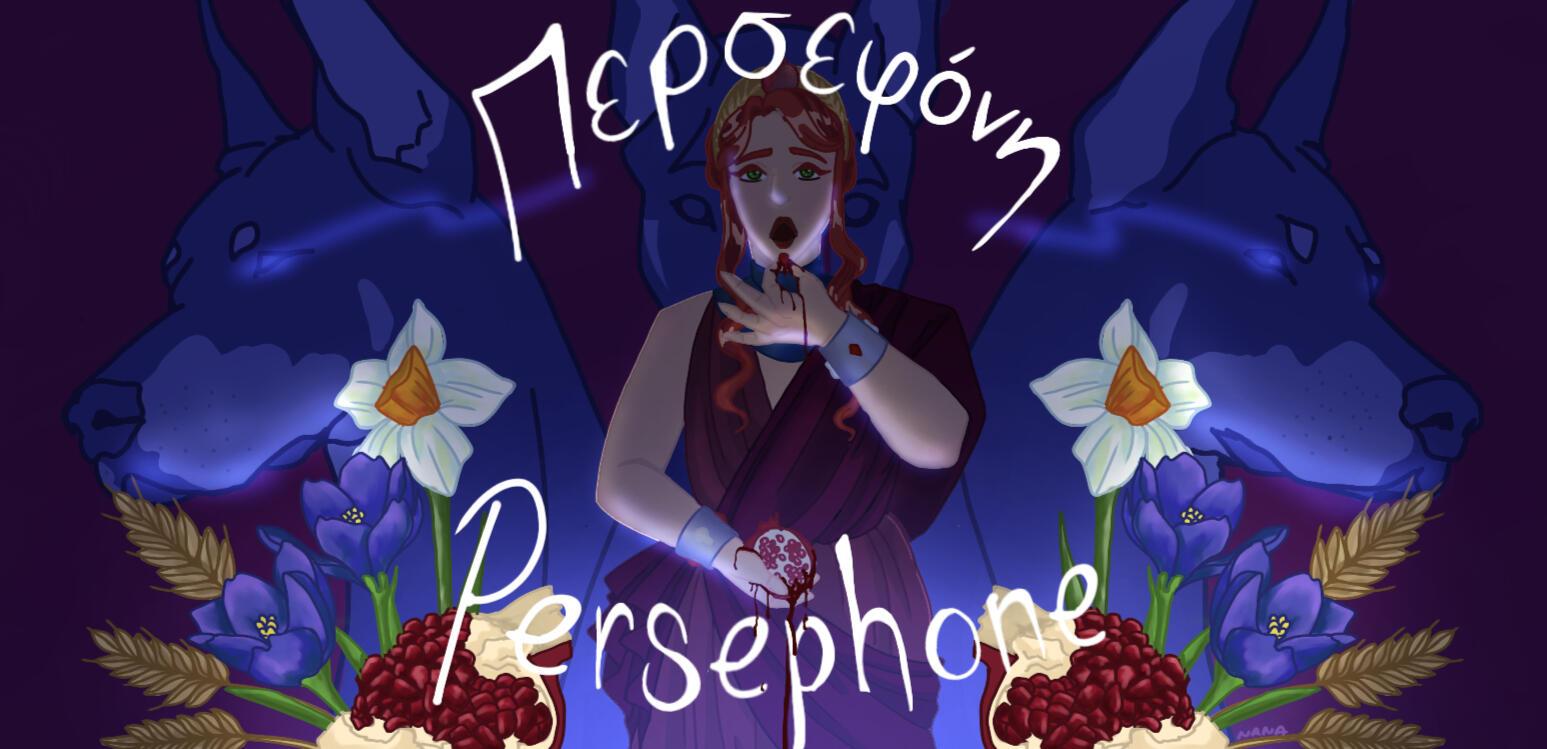
TITLES & EPITHETS
| Greek Name | Transliteration | Translation |
|---|---|---|
| άγαυή | agāuē | "Illustrious" (Od.11.213, 11.226) |
| ἀγέλαστος | agelastos | "unsmiling, gloomy" (11 30.113) |
| άρρητον κουρας | arreton kouras | "unsayable girl" (7 p. 82) |
| Ἀξιόκερσα | Axiokersa | ⮞ Unclear ⮞ Often linked to Greek axios ('worthy' or 'honored) Axiokersa seems to be the feminine form of Axiokersos the epithet for Haides ⮞ Axiokersa appears among the sacred Samothracian names transmitted through mystery traditions. Later Greek writers associated her with Persephone (20 1.917) |
| Ἀζησία | Azesia | ⮞ Unclear ⮞ maybe from “to dry fruits” or “to seek” (Suda, A 597) |
| Βριμω | Brimô | "Angry, Terrible One" (1)(4 pg. 92) |
| Δαειρα | Daeira | ⮞ "Knowing One"(1)(5 Line 710) ⮞ A name for Persephone to conceal her name, like Kore |
| δαΐφρον | daiphron | "wise, prudent" (3 Line 359) |
| Δειονή | Deione | Name for Persephone, marking her as a daughter of Demeter (12) |
| Δέσποινα | Despoina ⮞ Despoena | "Ruling goddess, Mistress" (6 Arcadia Chapter 42 Section 1) ⮞ This seems to be an Arcadian name, associated with the Eleusinian Mysteries as a hidden title for Persephone for those not initiated into the mysteries, and highlighting her Underworld aspects. Here, she is the daughter of Demeter and Poseidon (which may imply Mycenaean origins, when Poseidon was much more closely associated with the goddesses). ⮞ In some interpretations, Despoina is a separate figure altogether, born during Persephone’s absence in the Underworld. |
| έπαινε | epaine | "the fearful, awesome, dread" (12) (Il. 9.457)(Od. 10.491) |
| Έλευσίνια | Eleusinia | ⮞ "Eleusinian, of Eleusis" (12) ⮞ While this is a name associated with a sanctuary, Eleusis was responsible for a very popular and enduring perception of Persephone via the Eleusinian Mysteries, thus its inclusion here. |
| Ένοδια | Enodia | ⮞ "of the road, of the roadside" (21 yr 1993 48) ⮞ A popular Thessalian tomb goddess who was associated with both Hekate and Persephone in Athens. |
| Ἁγνη | Hagnê | "Pure, Holy One"(1)(Od. 11.386) |
| ᾰ̔γνή θείᾱ | Hăgnḗ Thea | "Pure Goddess" (2 pg. 70) |
| Ἑρκυνα | Herkyna | "Of Stone Enclosure"(1) |
| καλυκώπις | kalykōpis | "Flower-Faced, Bud-Faced, having eyes/face like flower buds" (3) |
| Καρποφορος | Karpophoros | "Bringer of Fruit"(1) |
| Χρυσεη ★ χρυσέης | Khruseê ⮞Khryseê ⮞Chruseê ⮞ Chryseê | "Golden" (Suda, K 1843) |
| χρυσοστέφανος | khrysostephanos | "golden-crowned" (13 Line 1085) |
| Χθονια | Khthonia | "Of the Earth, Chthonic"(1)(7 pg. 36) |
| χρυσάνιος ★ χρυσήνιος | khrysanios ⮞ khrysenios | "of the golden reins, with reins of gold" (7, p. 139) |
| κόρη | Kore | ⮞ "Maiden" (3) ⮞ In Eleusinian Mystery Cults she is referenced almost solely as Kore. |
| κυρία | kuria | "lady, mistress" (21 yr 1998 64) |
| κυανώπις | kyanôpis | "blue-eyed or dark-eyed" (19 3.482) |
| Λειμωνια | Leimonia | "goddess of the meadow" (21 yr 2021 15) |
| Λεπτυνις | Leptynis | ⮞Unclear ⮞ Hypothesized to be associated with decay or refinement. (12)(14 Line 49) ⮞ A name for Persephone seemingly derived from leptynousa, “thinning”. Theoi surmises a connection to the phrase “tên leptunousan ta sômata tôn apothnêskontôn”, which roughly translates to “the bodies of the dying do not thin out.” |
| λευκώλενος | leukólenos | "white-armed" (15 Line 913) |
| Μεγαλα Θεα | Megala Thea | "Great Goddess"(1)(2 pg. 70) |
| μελάμπεπλος | melampeplos | "Black-robed" (16 11.60) |
| Μελιβοια | Meliboia | ⮞ "Honey-cow" (10 Ln. 1) ⮞ Referring to Persephone at Hermione as sweet and nurturing (8) |
| Μελιτώδης | Melitodes | "Sweet as honey, Honeyed one" (9 15.94) |
| μουνογενής | mounogenes | "only child, single child" (21 yr 2019, 86) |
| Νεωτέρα | Neotera | ⮞ "younger", inferring “younger Demeter” (21 yr 2013, 110) ⮞ A name associated with Persephone that had documentation of priestesses; information beyond that is contested. It has been proposed that this may be a syncretic epithet with the goddess Isis. |
| νύμφα | nympha | "bride" (21 yr 2019, 86) |
| Ὀβριμὼ | Obrimo | "Strong" (17) |
| περικαλλὴς | perikallēs | "Very beautiful" (3 Line 405) |
| περίφρων | periphron | "Very thoughtful, careful" (3 Line 370) |
| Πλούτω | Plouto | ⮞ "rich one" 21 yr 1998, 64) ⮞ Part of a curse or prayer for justice found in Sicily, J.M. Curbera and the editors of the 1998 EBGR say that this should be understood as an epithet for Persephone, rather than the vocative form of Plouton. |
| Ποτνια | Potnia | "mistress, queen" (7 p. 139) |
| Πραξιδικη | Praxidikê | "Exacter of Justice"(1)(Orph.H. 29.5) |
| Πρωτογονη | Prôtogonê | "First Born"(1) |
| σεμνή | semne | "holy, revered" (21 yr 2002, 54) |
| Σωτειρα | Sôteira | "Saviour"(1)(6 3.13.2) |
| τανίσφυρος | tanisphyros | "Slender-ankled" (18 5.59) |
| Θεά | Thea | ⮞ "goddess" (21 yr 2013, 24) ⮞ A euphemistic name most have concluded refers to at least a facet of Persephone, found in Eleusis and elsewhere. |
| Θεά Παις | Thea Pais | "child goddess" (21 yr 1988, 58) |
| Θεσμοφορος | Thesmophoros ⮞ Thesmophoroi | ⮞ "Bringer of Law"(1) ⮞ "Bringer of Divine Law" (2 pg. 70) |
| τηλύγετος | telugetos | ⮞ "Only-born, cherished" (Suda, T 502) ⮞ Sometimes refers to children of uncertain origin |
| ξανθῆς | xanthis | "Fair-haired, blonde" (16 7.507b) |
CREDITS
SOURCES
Larson, Jennifer - Ancient Greek Cults
Homeric Hymn to Demeter
Kerényi, Karl - Eleusis: Archetypal Image of Mother and Daughter
Lycophron - Alexandra
Pausanias - Description of Greece
Roberts - Underworld Gods in Ancient Greek Religion
MEΛIBOIA: THE CHTHONIA OF HERMIONE AND KORE'S LOST EPITHET IN LASUS FR. 702 PMG
Theocritus - Idylls
Lasos - Hymn to Demeter
Nonnus - Dionysiaca
Euripides - Ion
Lycophron - Alexandra
Hesiod - Theogony
Greek Anthology
Tzetzes - Ad Lycophronem 698
Bacchylides - Epinician Odes
Oppian Halieutica
Apollonius Rhodius - Argonautica
Epigraphic Bulletin for Greek Religion
*The Iliad (Il.), The Odyssey (Od.), Suda, and Orphic Hymns (Orph.H.) are cited ‘in-text’
TITLES & EPITHETS
| Greek Name | Transliteration | Translation |
|---|---|---|
| Αγαθοσ Δαιμον | Agathos Daimon | “The Good Spirit”(1) |
| ἄγριος | Agrios | “Wild”(6 p.272, 275) |
| Αγυιευς | Aguieus ⮞Agyieus | “(Protector) of the Street”(1) |
| Αιγοβολος | Aigobolos | ⮞“Goat-killer”(1)(10) ⮞“Goat-Shooter”(7 p.28) |
| Αισυμνητης | Aisumnêtês | ⮞ “Lord”(1) ⮞ “Ruler”(1) ⮞“Dictator”(1) ⮞“Magistrate”(7 p.28) |
| Ακρατοφορος | Akratophoros | ⮞“by which he was designated as the giver of unmixed wine”(1) ⮞“Bringer of Mixed Wine”(1) |
| Ανδρογυνος | Androgynos | Androgynous (Sexually)(1) |
| Ανθιον | Antheus ⮞Anthion | ⮞“The blooming”(1) ⮞ “Of the Flowers”(1) |
| Ανθροπορραιστος | Anthroporraistos | ⮞“Man-Slayer”(1) ⮞ Could be “render of men” but could also mean more “smiter of men” or “man destroyer”(6 p.49-50) ⮞“Destroyer of Man”(8 p.19) |
| ἀρσενόθηλυς | arsenothilys | "The Man-Womanly, Of Both Sexes, of Unity" (10) |
| Αυξιτης | Auxitês | ⮞“Giver of Increase”(1) ⮞ “conveys the fecund power of a deity who ‘‘increases’’ the gifts of nature”(2 p.271) |
| βασσαρεύς | Bassareus | Could be derived from a long robe that he wore in Thrace, possibly originally made of fox-skins(1) |
| Βακχος ★ Βακχειος | Bakkhos ⮞Bakkheios | ⮞“Of Bacchic Frenzy”(1) ⮞ Refers to the branch that he carries(2 p.327) ⮞‘‘Raving with Bacchic mania’’(2 p.333-4) |
| Βουφαγος | Bouphagos | “Cow-Eater”(1) |
| Βρομιος | Bromios | ⮞ “Noisy, Boisterous”(1)(6 p.343) ⮞ "Of The Din of Bacchic Processions" (10) |
| Δενδρίτης | Dendritês | “God of the tree”(1)(10) "He In The Tree" (10) |
| Διμητωρ | Dimêtôr | “Twice-Born”(1) |
| δίμορφος | Dimorphos | ⮞“Dual-formed”(3 p.21) ⮞‘One explanation given is that drunkenness can produce joy or irascibility’(3 p.21) |
| Δύαλος | Dýalos | "The Hybrid" (10) |
| Ειραφιωτης | Eiraphiôtês | ⮞“Goat-Kid”(1) ⮞“Insewn”(1) |
| Ελευθερευς | Eleuthereus | ⮞May be from Eleuther, or the town Eleutherae, or equivalent to the latin Liber in meaning “deliverer”(1) ⮞ “Of Liberation, Freedom”(1) |
| ἔνδενδροςc | endendros | "He of the Trees, He In The Tree" (10) |
| ἐνόρχης | enorchis | ⮞ "The Betesticled" (10) ⮞ "He-Goat" (10) |
| ἐνυάλιος | Enualios | “Warlike”(1) |
| Ερεβινθινος | Erebinthinos | “Of the Chickpea”(1) |
| ἔριφος | eriphos | "Kid" (10) |
| Ευαστηρ | Euastêr | “Of Ritual Euoi-Cry”(1) |
| εὐβουλεύς | Eubouleus | “Of good council”(1) |
| Εὔιος | Euios | "Of The Shouts of 'Euoi!'" (10) |
| γύννις | gynnis | "The Womaninish" (10) |
| Ἑστιως | Hestiôs | “Of the Feast”(1) |
| Ὕης | Huês | “Moist” or “Fertilizing god”(1) |
| Ιακχος | Iakkhos | ⮞“Of Ritual Iacchic-Cry”(1) ⮞Iakchos was a distinct Eleusinian divinity, the god who personified the ritual cry “Iakche!”(4 p.75)(6 p.345-9)(10) |
| ... | Intonsus ★Ἀ | “Unshorn” - refers to the long uncut hair of young Greek men(1) *Latin version of akersekomes |
| Ἰόβακχος | Iobakkhos | “Of Ritual Bacchic-Cry”(1) |
| ἰσοδαίτης | Isodaitês | “the god who distributes his gifts equally to all”(1) |
| Χθονιος | Khthonios | “Of the Earth, Chthonic”(1) |
| χρῡσοκόμης | khrysokómēs | "golden-haired" (11 Ln. 947) |
| Κισσιος | Kissios | “Of the Ivy”(1)(10) |
| Κιστοφορος | Kistophoros | “Basket-Bearer”(1) |
| Κιττοφορος | Kittophoros | “Ivy-Bearer”(1) |
| Κωλωτης | Kôlôtês | “Spotted Gecko”(1) |
| κρυπτός | Kryptos | “HIdden”(6 p.272) |
| Λαμπτηρος | Lamptêr ⮞Lamptêros | “the shining” or “torch-bearer”(1) |
| Ληναιος | Lenaios | ⮞derived from lênos, the wine-press or the vintage(1) ⮞“Of the Wine-Press”(1) |
| λιμνγένης ★ λιμνήτης | Limnegenes ⮞Limnetes | ⮞“inhabiting or born in a lake or marsh”(1) ⮞a surname of several divinities who were believed either to have sprung from a lake, or had their temples near a lake(1) |
| Λυαιος | Luaios ⮞Lyaios | “the god who frees men from care and anxiety”(1) "The One Who Sets One “Loose”" (9 pg 116) "The Unbinder" (10) |
| Λυσιος | Lusios | ⮞“The Deliverer”(1) ⮞“Of Release, Releasing”(1) ⮞“The Releaser”(2 p.333)(4 p.142)(5 p.258) ⮞“Liberator”(4 p.171) |
| Μαινολης | Mainolês | “Mad, Raging”(1) |
| μειλίχιος | Meilichios | ⮞“the god that can be propitiated”(1) ⮞“the gracious”(1) ⮞“Mild,” or “Sweet”(4 p.129) |
| Μελαναιγις | Melanaigis | ⮞ “armed or clad with a black aegis”(1) ⮞ "With Dark Aegis" |
| Μελπομενος | Melpomenos | ⮞“the singer”(1) ⮞“Singer, Minstrel, Of the Tragedy Play”(1) |
| μαινομένοιο | mainoménoio | "Mad" (Il. 6.130) |
| Μηθυμναῖος | Mêthumnaios | ⮞ derived, according to some, from Methymna, rich in vines(1) ⮞Others derived it from methe (sweet or wine)(1) |
| Μοσχοφαγος | Moskhophagos | “Calf-Eater”(1) |
| Μυστης | mŭ́stēs | ⮞“Of the Mysteries”(1) ⮞‘‘Initiate’’(2 p.272) |
| Νυκτελιος | Nyktelios | “Of the Night”(1)(2 p.317)(10) "Of Festivals Held at Night" (10) |
| Οινοψ | Oinops | “Wine-Dark”(1) |
| ὠμάδιος | Ōmadios | ⮞“the flesh-eater”(1)(10) ⮞‘Related to Ōmêstês’ in “Chios and Tenedos, where there are rumors of human sacrifice.”(4 p.137) ⮞“Raw One”(6 p.50)(8 p.19) |
| ὠμηστής | Ōmêstês | ⮞“Raw-eater”(2 p.337)(4 p.137)(6 p.50) ⮞‘Eater of Raw Meat’(8 p.19) |
| Ομφακιτης | Omphakitês | “Of the Unripe Grape”(1)(10) |
| ὀρθός | orthos | "The Erect" (10) |
| Πατρωιος | Patrôios ⮞Patrôos | ⮞“Paternal, Ancestral (God)”(1) ⮞“Of the Ancestors”(2 p.317) |
| πέλεκυς | pelekus | “(Double) Axe”(6 p.57) |
| Φαλλην | Phallên | “Phallic, Of the Phallus”(1) |
| Φλεων | Phleôn | ⮞“the giver of plenty”(1) ⮞describing the god as promoting the fertility of plants and trees(1)(10) ⮞Luxuriant (Foliage)(1) |
| .. | Phlyus | Similar to Phleôn(1) |
| Πολιτης | Politês | “Citizen”(1)(7 p.28) |
| Προτρυγαιος | Protrygaios | “First of the Vintage”(1) |
| ψευδάνωρ | pseudánōr | ⮞“False Man”(6 p.272)(10) ⮞ "The Man Without True Virility" (10) ⮞The word refers to a “female who imitates a male” and is not derogatory, but a compliment.(6 p.272-3) |
| ψιλᾶς | Psilas | ⮞"the giver of wings"(1) ⮞"the unbearded"(1) |
| Ψιλαξ | Psilax | “(Uplifted on) Wings”(1) |
| Σαωτης | Saôtês | "Saviour"(1) |
| Σωτηριος | Sôtêr ⮞Sôtêrios | ⮞"the Saviour"(1) ⮞“Recovery (from Madness)”(1) |
| Σταφυλιτης | Staphylitês | “Of the Grape”(1) |
| συκίτης | sykitis | "The Fig-God" (10) |
| ταῦρος | Tauros | “The bull”(1) |
| Ταυροφαγος | Taurophagos | “Bull-Eater”(1) |
| Θεοινος | Theoinos | “God of Wine”(1) |
| θυῶνευς | Thuôneus | Formed from thuein, "to be inspired."(1) |
| τρίγονος | trigonos | "The Thrice Born" (10) |
| Ζαγρευς | Zagreus | (Orphic God)(1)(6) |
CREDITS
SOURCES
Ogden, Daniel - A Companion to Greek Religion
Seaford, Richard - Dionysos
Larson, Jennifer - Ancient Greek Cults
Larson, Jennifer - Understanding Greek Religion
Schlesier, Renate - A Different God: Dionysos and Ancient Polytheism
Parker, Robert - Greek Gods Abroad: Names, Natures and Transformations
Bremmer, Jan - Greek Religion
Mikalson, Jon D. - Ancient Greek Religion
Kerenyi, Karl - Gods of the Greeks
Hesiod - Theogony
*The Iliad (Il.), The Odyssey (Od.) and Orphic Hymns (Orph.H.) are cited ‘in-text’
TITLES & EPITHETS
| Greek Name | Transliteration | Translation |
|---|---|---|
| ἀΐδιος | Aidios | "Eternal" (Orph.H. 84.6) |
| άιδοιος | aidoios | "Venerable, regarded with reverence" (4 Line 10) |
| άιδος | aidos | "Pure" (5 Line 21) |
| βασίλεια | Basileia | "Queen" (Orph.H. 84.6)(1) |
| Βουλαία | Boulaia | "of the council" (1)(2) |
| χλοόμορφος | Chloömorphus ⮞ Khlöómorphos | "Verdant"(Orph.H. 84.6) |
| 'ιερα | hiera | "sacred, holy, divine" (6 148.1) |
| χρυσόθρος | khrysothronos | "Golden-throned" (7 14b.1) |
| κούρῃ | koure | "maiden" (5 Line 21) |
| ὀλβοδότειρα | olbodoteira | "giver of wealth, prosperity" (Orph.H. 27.9) |
| Φαμια | Phamia | ⮞ Uncertain (2) ⮞ Potentially high-born, pure, or well-known ⮞ "Famous" (from φαμιστος, phamistos) ⮞ Could have something to do with sacrifices |
| φιλη | philè | "Dear, friendly" (4 Line 10) |
| πολύμορφος | Polymorphos | "Multi-formed" (Orph.H. 84.6) |
| πολύολβος | Polyolbos | ⮞ "Rich In Blessings" (3) ⮞ Pulled from a Byzantine tapestry found in Egypt and not a text |
| Ποθεινοτάτος | Potheinotátos | "Beloved" (Orph.H. 84.6) |
| Πότνια | Potnia | "Queen" (5 Line 24) |
| Πρυτανίτις | Prytanitis | "Of the chief magistrate" (8 4.32) (from πρύτανις, prytanis) |
CREDITS
SOURCES
Homeric Hymn to Hestia and Hermes
Homeric Hymn to Aphrodite
Synesius of Cyrene, Letters
Bacchylides - Epinician Odes
Athenaeus - Deipnosophists
*The Iliad (Il.), The Odyssey (Od.) and Orphic Hymns (Orph.H.) are cited ‘in-text’
TITLES & EPITHETS
| Greek Name | Transliteration | Translation |
|---|---|---|
| ἀγαλλομένην ἐλάφοισιν | agállomai élaphoisin | "she who glorifies deer" (Orph.H. 1 Line 4) |
| Ἀγυιεύς | Agyieus ⮞Agyieus | “Guardian of the crossroads" (7 pg 29) |
| Αιδωναια | Aidônaia | "Of the Underworld" (1) |
| ἀμαιμάκετην βασίλειαν | amaimáketēn băsĭleíān | "irresistible queen" (Orph.H. 1 Line 5) |
| Ανασσα ενεροι | Anassa eneroi | "Queen of the Those Below"(1) |
| Αταλος | Atalos | "Tender, Delicate"(1) |
| Βριμω | Brimô | "Angry, Terrible One" (1) |
| δέσποινα | déspoină | "Mistress (of the house), Queen" (12 Book 7 Chap 126) |
| ἐνάλια | enalia | "Of the Sea" (Orph.H. 1 Line 2) |
| ἐνέροισιν ἄνασσαν | Eneroisin Anassan | ⮞ “Queen of Those Below”(Ap. 3.862) ⮞ Could also be interpreted as ‘Queen of the Dead’ |
| Ενοδια ★ Εινοδια ★Εννοδια | Enodia ⮞ Einodia ⮞ Ennodia | ⮞ "Of the Wayside, Crossroads"(1)(4 p.235) "Of the pathways" (6 p.194) ⮞ "She in the Road" (2 pg. 166) ⮞ Potentially a syncretic epithet with the Thessalian goddess Enodia (2 pg. 166) ⮞ This epithet could have ties to Hekate as patron of magical practitioners because of the association of Thessaly with drugs and witchcraft.(2 pg. 166) |
| ἐραννή | erannē | "Lovely" (Orph.H. 1 Line 1) |
| ἡγεμόνη | Hēgemónē | "Queen" (Orph.H. 1 Line 7) |
| Χθονια | Khthonia ⮞ Chthonia | "Of the Underworld" (2 pg. 167)(3 p.50, 52)(4 p.277)(Ap. 3.862, 4.148) |
| Χθονιη | Khthoniê | "Of the Underworld"(1) |
| Κουρη μουνογενης | Kourê mounogenês | "Only Begotten Maiden"(1) |
| Κουροτροφος | Kourotrophos | ⮞ "Nurse of the Young"(1) ⮞ “Nourisher of young men”(3 p.53) |
| κροκόπεπλος | krokópeplos | "with yellow veil" (Orph.H. 1 Line 2) |
| Λιπαροκρηδεμνος | Liparokrêdemnos | ⮞ "Bright-Coiffed"(1) ⮞ "of the bright headband" (Hom. H. 2 Line 25) |
| νυκτερίδια | nykterídia | "of the night, nocturnal" (Orph.H. 1 Line 5) |
| Νυκτιπολος | ⮞ Nuktipolos ⮞ Nyktipolos | ⮞ "Night Wandering"(1) ⮞ “Roaming by night”(Ap. 4.148, 4.829, 4.1020)(Logeion) |
| νύμφη | nŭ́mphē | "young girl, nymph" (Orph.H. 1 Line 7) |
| οὐράνια | ourắnĭă | "Heavenly" (Orph.H. 1 Line 2) |
| οὐρεσίφοιτις | ouresíphoitis | "mountain-roaming" (Orph.H. 1 Line 7) |
| πανθυρακοστες | Panthupakoustes | ⮞ “The one who really listens to everything”(3 p.183) ⮞ A hapax legomenon (appears only once) |
| ... | Pantrepheousa | ⮞ “The one who nourishes everything”(3 p.183) ⮞ A hapax legomenon (appears only once) |
| ... | Parthenos | “Young Girl/Virgin”(3 p.53) |
| ... | Pasimedeousa | ⮞ “The one who protects completely”(3 p.183) ⮞ A hapax legomenon (appears only once) |
| πέρσεια | perséā | "daughter of Perseus" (Orph.H. 1 Line 3) |
| Περσεις | Perseis | "Destroyer, Child of Perses"(1) |
| ... | Pheraia | ⮞Uncertain ⮞A surname of Hecate, because she was a daughter of Zeus and Pheraea, the daughter of Aeolus, or because she had been brought up by the shepherds of Pheres, or because she was worshipped at Pherae.(1) |
| φιλέρημος | Philerimos | "fond of solitude" (Orph.H. 1 Line 4) |
| φιλοσκύλακος | philoskylos | "Divine friend of dogs" (8 Book 3 Line 74) |
| Φωσφορος | Phôsphoros | "Light-Bringer"(1)(3 p.52)(10 Line 858)(11 Section 71) |
| πολυώνυμος | polyonymous | "Of many names" (8 Book 44 Line 193) |
| ... | Propulaia ⮞ Propylaia | “Before the Gates”(3 p.52) |
| Σκυλακαγετις | Skylakagetis | "Leader of the Dogs"(1) |
| σκυλακῖτις | Skylakitis | "protector of dogs" (Orph.H. 1 Line 5) |
| ... | Strateios | “Of the Army”(5 p.103) |
| Ταρταρόπαις | Tartaropais | "of Tartarus" (9 Line 977) |
| ταυροπόλος | tauropólos | "drawn by yoke of bulls, bull hunter" (Orph.H. 1 Line 6) |
| Τριμορφις | Trimorphis | "Three-Formed, -Bodied"(1) |
| Τριοδιτις | Trioditis | "Of the Crossroads, Three-Ways"(1)(3 p.52)(6 p.194) |
| Ζηρυνθια | Zerynthia | "Of Mt Zerynthia"(1) |
CREDITS
SOURCES
Larson, Jennifer - Ancient Greek Cults
Corinne Bonnet - The Names of the Gods
Burkert, Walter - Greek Religion
Parker, Robert - Greek Gods Abroad: Names, Natures and Transformations (Pages do not have numbersso I used the index page number)
Handbook of Greek Mythology - Robin Hard
LABRYS - Hellenic Polytheism - Household Worship
Nonnus - Dionysiaca
Orphic Argonautica
Aristophanes - Thesmophoriazusae
Plutarch - of Isis and Osiris
Athenaeus - The Deipnosophists
*The Iliad (Il.), The Odyssey (Od.), Apollonios Rhodios’s Argonautica (Ap.), and Orphic Hymns (Orph.H.) are cited ‘in-text’

TITLES & EPITHETS
| Greek Name | Transliteration | Translation |
|---|---|---|
| ἁγνός | Agnós | "holy, pure" (Orph. H 58.1) |
| διφυής | Diphÿís | "of two natures or forms" (Orph. H 58.4) |
| εὐπάλαμος | Efpálamos | "skillful" (Orph. H 58.4) |
| ἐράσμιος | Erasmius | "lovely, beloved" (Orph. H 58.1) |
| εὔδρομος ὁρμῇ | Évdromos ormíi | "He who strikes quickly" (Orph. H 58.2) |
| γλυκιπικρός | Glykypikrós | "Bittersweet" (2) |
| ἡδύς | Idýs | "sweet, pleasant" (Orph. H 58.1) |
| Νικηφόρος | Nikephoros | “Bringer of victory” (Logeion) |
| Πανδημος | Pandêmos | "Common to All People (Love)"(1) |
| πτερόεις | Ptæróeis | "winged" (Orph. H 58.2) |
| πυρίδρομος | Pyrídromos | "Flies on a course of fire" (Orph. H 58.2) |
| τοξαλκής | Toxalkís | "Mighty with the bow" (Orph. H 58.2) |
CREDITS
SOURCES
Sappho, frag. 130 Lobel-Page
*The Iliad (Il.), The Odyssey (Od.) and Orphic Hymns (Orph.H.) are cited ‘in-text’
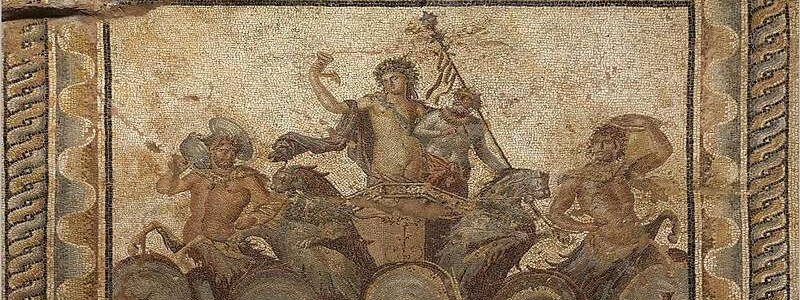
TITLES & EPITHETS
| Greek Name | Transliteration | Translation |
|---|---|---|
| αίνόμορος | ainomoros | "Ill-fated" (5 Book 5.562) |
| άρχέγονος | archegonos | "Original, primeval" (5 Book 44.203) |
| Διόνυσος Χθόνιος | Dionysos Khthonios | "Chthonic Dionysos" (1)(Suda, Z 4) |
| Ευβουληος | Eubouleos | "Well-counseled, wise in counsel" (Orph.H. 30.6) |
| 'Εριβρομος | Eribromos | "Loud-roaring" (Orph.H. 29.7) |
| 'Ισοδαίτες | Isodaetes | "He who distributes his gifts equally to all" (2) |
| Κεροεν Βρέφος | Keroen Brephos | "Horned babe" (5 Book 6.155) |
| Μεγαλος ´Αγρεύς | Megalos Agreus | "Great Hunter" (3) |
| Νυκτέλιος | Nyctelius | "Nocturnal" (2) |
| Νυκτίπολος | Nyctipolos | "Night-wandering" (4) |
| παλαίτερος | palaiteros | "Ancient" (5 Book 27.337) |
| πολύβουλος | polyboulos | "Resourceful, many-minded" (Orph.H. 30.6) |
| Πολύμορφος | Polymorphos | "Many-formed" (Orph.H. 29.8) |
| Σαβάζιος | Sabazios | ⮞ Unclear; decidedly a name for Zagreus (6 4.4.1) ⮞ The name is of a Phrygian god whose mysteries resembled Dionysus’s. Diodorus attributes it as a name for the “much earlier in time” Dionysus that is son of Zeus and Persephone, suggesting he means Zagreus. |
| ταυροφυής | taurophyēs | "Bull-headed, Bull-shaped" (5 Book 6.205) |
CREDITS
Zagreus's Epithets were collected by Salem
SOURCES
Nonnus - Dionysiaca
Diodorus Siculus, Library
*The Iliad (Il.), The Odyssey (Od.), Suda, and Orphic Hymns (Orph.H.) are cited ‘in-text’
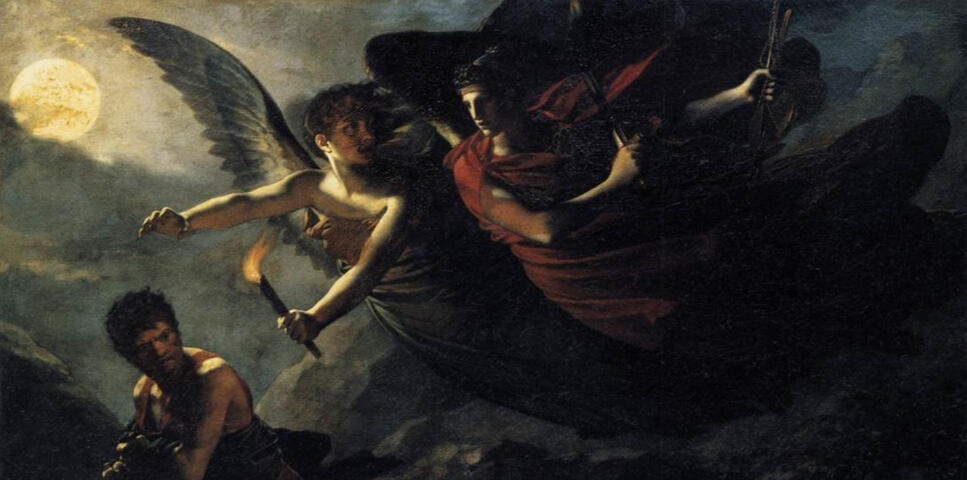
TITLES & EPITHETS
| Greek Name | Transliteration | Translation |
|---|---|---|
| Αδραστεια | Adrasteia | ⮞ "Inescapable" (1) ⮞ Some other practicioners interpret this epithet as a surname of Nemesis about how she was worshipped in the city of Adrasteia, meaning "Nemesis, of Adrasteia". |
CREDITS
Nemesis's Epithet was collected by Anon
SOURCES
Valcken. ad Herod. iii. 40, a note by Lodewijk Caspar Valckenaer of Herodotus' Histories's Book III chapter 4.
*The Iliad (Il.), The Odyssey (Od.) and Orphic Hymns (Orph.H.) are cited ‘in-text’

TITLES & EPITHETS
| Greek Name | Transliteration | Translation |
|---|---|---|
| Παιαν ★ Παιων | Paian ⮞ Paiêôn ⮞ Paiôn ⮞ Paean | ⮞ "Healer" (1 Line 1373) ⮞ "Deliverer from evil" (3) |
| μελάμπεπλος | ... | "Black Robed" (2 Line 843) |
CREDITS
Thanatos Header by Tea
Thanatos's Epithets were collected by Kiwi
SOURCES
Euripides - Hippolytus
Euripides - Alcestis
Theoi
*The Iliad (Il.), The Odyssey (Od.) and Orphic Hymns (Orph.H.) are cited ‘in-text’
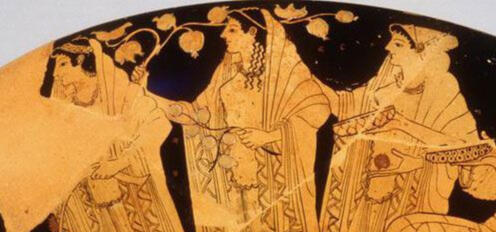
TITLES & EPITHETS
| Greek Name | Transliteration | Translation |
|---|---|---|
| ἀγλαομόρφου | aglaomórfou | "of beautiful form, of radiant form" (Orph.H. 62 Line 1) |
| αἰδοῖος | Aidoîos | "Honored, Respected" (5 Book 2 Line 654) |
| ἀπαραίτητος | Aparaítitos | "Inexorable" (3 Section 11) |
| δῖα | Dîă | "Divine" (Suda ka.1714) |
| εὐπατέρεια | Eupatereia | "High-born" (4 book 11 ch. 380 pg. 251) |
| ἰθεῖα | Ithýs | "Unswerving" (1 ode 15 line 54) |
| καθαρή | Katharí | "Pure" (4 book 7 ch. 697 pg. 370) |
| Χρυσεη ★ χρυσέης | Khruseê ⮞Khryseê ⮞Chruseê ⮞ Chryseê | "Golden" (10 pg. 252) |
| μεταποίνιος | Metapoínios | ⮞ "After-payer" (Suda pi.3092) ⮞ "Punishing afterwards" (LSJ Translantion) |
| μήτηρ | Mḗtēr | "Mother" (4 book 9 ch. 659 pg. 366) |
| Νικηφόρος | Nikephoros | “Bringer of victory” (11 Line 148) |
| παλαίφατος | Palaíphatos | "Spoken of old" (9 Line 1381) |
| πανόψιος | Panóptēs | "Allseeing" (6 Book 40 Line 1)(4 book 9 ch. 362 pg. 196) |
| παρθένος | Parthénos | "Virgin" (7 Line 256)(4 book 11 ch. 380 pg. 251) |
| πότνα | Pótnă | "Lady, mistress" (4 book 5 ch. 5 pg. 287)(4 book 16 ch. 314 pg. 347) |
| πρέσβειρα πολήων | Présveira polḗōn | "Patroness of cities" (4 book 11 ch. 380 pg. 251) |
| σεμνός | Semnós | "Hallowed, revered, holy, august" (3 1 section 11) |
| συγγενῶν αἱμάτων τιμωρὸς | Syngenón aimáton tīmōrós | ⮞ "Avenger of kindred blood" (2 book 9 line 872ε) ⮞ Could possibly be shortened to just "Avenger" or τιμωρὸς Δικη |
| τελεσφόρος | Telesphóros | ⮞ "Fulfilling / The Fullfiller" (8 Line 1391) ⮞ "Able to fulfil or accomplish, all-powerful" (Logeion) |
| θρέπτειρα πολήων | Thrépteira Polḗōn | "Nurse of cities" (5 Book 2 Line 680) |
CREDITS
Dike's epithets were collected by Gray
SOURCES
Bacchylides - Dithyrambs
Plato - Law
Demonsthenes - Against Aristogiton
Greek Anthology
Oppian - Halieutica
Nonnus - Dionysiaca
Hesiod - Works and Days
Sophocles - Ajax
Sophocles - Oedipus in Colonos
Himerius - Orations
Aeschlyus - Libation Bearers
*The Iliad (Il.), The Odyssey (Od.), Suda, and Orphic Hymns (Orph.H.) are cited ‘in-text’

TITLES & EPITHETS
| Greek Name | Transliteration | Translation |
|---|---|---|
| Απτερον | Apteros | "Wingless" (11 1.22.4, 2.30.2, 3.15.7)(16 nu384)(17 Book 9 9.647) ⮞ 'Wingless' Nike was the epithet used in Athens, often syncretized into Athena-Nike, to indicate that Victory was always with Athens (and later Rome)(16 nu384)(15 3.15.7)(17 Book 9 9.647) |
| Ἀρεία | Areia | "Warlike" (2) |
| ἀθάνατος | āthắnătos | "Undying, Immortal" (13 Book 16 Ch. 363) |
| δέσποινα | Déspoină | "Lady; Mistress" (9 Line 317) |
| εὐδύνατη | eudýnati | "mighty, powerful" (Orph.H. 33 Line 1) |
| εὐμενὴς | Eumenḗs | "Kindly, well-disposed" (10 Line 969) |
| γλυκύδωρος | Glykýdōros | "Giver of sweet gifts, With sweet gifts" (8 Ode 11 Line1) |
| καλλίσφυρος | Kallísphyros | "Trim-ankled" (1 Line 384) |
| Χρυσεη ★ χρυσέης | Khruseê ⮞Khryseê ⮞Chruseê ⮞ Chryseê | "Golden" (3 Ode 2 Line 26) |
| κυανοπλόκαμος | Kyanoplókamos | "Dark-haired" (8 Ode 5 Line 33) |
| μεγαλώνυμος | Megalṓnymos | "Of Glorious Name, Giving Glory" (4 Line 148) |
| μέγα σεμνὴ | Mégă semní | "Greatly glorious" (5 Line 1691)(6 Line 1764) |
| μᾰ́κᾰρ | Mắkăr | "Blessed" (7 Line 457) |
| παρθένος | Parthénos | "Virgin" (10 Line 968) |
| Φιλομμειδης ★ Φιλομειδης | Philommeidês ⮞ Philomeidês | "Lover of Laughter" (10 Line 968) |
| πότνια | Pótnĭă | "Mistress, Lady" (13 Book 6 Ch. 313) |
| θνητοῖσι ποθεινήν | thnētoîsĭ potheinēn | "beloved by mortals" (Orph.H. 33 Line 1) |
| ὑπέροχος | Ypérochos | "Majestic, Mighty" (8 Ode 3 Line 5) |
| ... | ... | "Golden-winged" (14) |
CREDITS
SOURCES
Hesiod - Theogony
Homeric Hymn to Ares 2-3
Pindar - Isthmian Odes
Sophocles - Antigone
Euripides - Orestes
Euripides - Phoenissae
Euripides - Ion
Bacchylides - Epinician Odes
Aristophanes - Lysistrata
Menander - Dyskolos (the Grouch)
Pausanias, Description of Greece
Suda Encyclopedia
Greek Anthology
Himerius, Orations 65.3
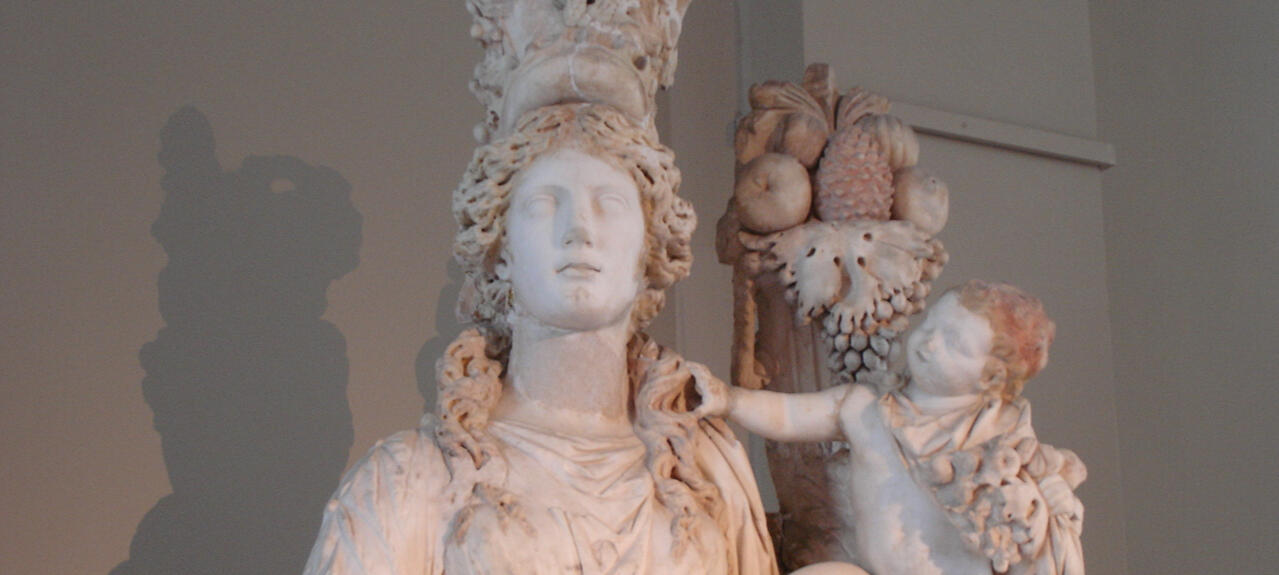
TITLES & EPITHETS
| Greek Name | Transliteration | Translation |
|---|---|---|
| Αγαθη Τύχη | Agathê Tyche | ⮞ "Good fortune" (2) ⮞ Describes a specific side of Tyche (the Good fortune or good luck) to pray to Tyche for good luck and fortune. |
| Ακραιη | Akraie | "Of the heights" (3) |
| Αυτοματια | Automatia | ⮞ "Self-Animate" (4) ⮞ In reference to Tyche being a 'goddess who manages things according to her own will, without any regard to the merit of man' (4) |
| Ευτυχια | Eutykhia | "Good Fortune" (4) |
| Μειλιχιος | Meilikhios | "Gentle, Soothing" (4) |
| πολύπλαγκτον | polýplankton | "widely-wandering" (Orph.H. 72) |
| Σωτηερια | Sôtêria | "Saviour" (1) |
CREDITS
SOURCES
Aeschylus, Agamemnon, line 661 ff.
Plato, Laws, 757e.
Pausanias Book II, section 7.5
Theoi
*The Iliad (Il.), The Odyssey (Od.) and Orphic Hymns (Orph.H.) are cited ‘in-text’
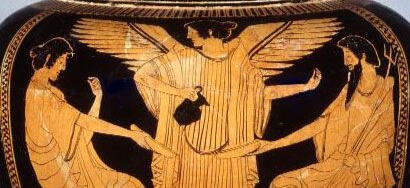
TITLES & EPITHETS
| Greek Name | Transliteration | Translation |
|---|---|---|
| Βασιλεια | Basileia | "Princess" (1) |
| Δια | Dia | "Daughter of Zeus" (2) |
| Γανυμηδα | Ganymêda | "Gladdening Princess" (2) |
| καλλίσφυρος | Kallísphyros | "Fair-ankled" (Od. Book 11 Line 604) |
CREDITS
SOURCES
Bacchylides, Fragment 41
Theoi
*The Iliad (Il.), The Odyssey (Od.) and Orphic Hymns (Orph.H.) are cited ‘in-text’
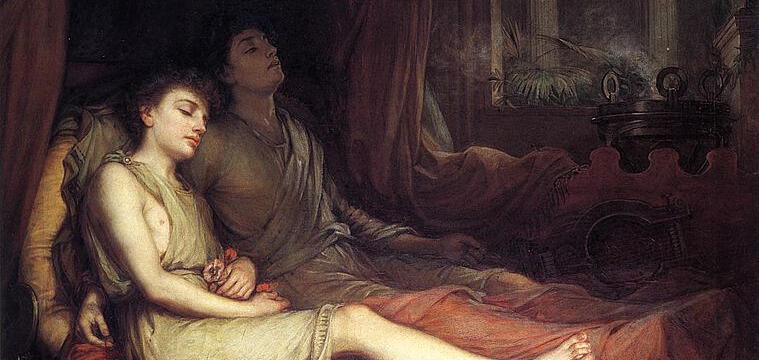
TITLES & EPITHETS
| Greek Name | Transliteration | Translation |
|---|---|---|
| ἀλήτης | Alḗtēs | "Vagabond" (1 Book 33 Line 38) |
| ἡδέος | Hēdŭ́s | "Sweet, Pleasant" (1 Book 33 Line 318) |
| μελαίνης Νυκτὸς ἐκπαίδευμ᾽ | Mélās Nŭ́x Ekpaídeuma | "Child of Black Night" (3 Line 601) |
| νήδῠμος | Nḗdŭmos | "Sweet" (Il. 14.240)(1 Book 15 Line 88) |
| παντ' ἀγρεύων | Pắnt’ ăgreúō | "The All Hunting" (4 Line 606) ⮞ Topotext will also translate this as "the all-ensnaring" |
| πανδαμάτωρ | Pandamátōr | ⮞ "The all-subduer, all-tamer" (1 Book 31 Line 143) ⮞ Topotext will also translate this as "All vanquisher" |
| παγκρᾰτής | Pankrătḗs | "All-powerful" (2 Line 675) |
| φίλος | Phĭ́los | "Beloved" (1 Book 47 Line 336) |
| σκιόεντι | Skĭóeis | "Shadowy" (1 Book 31 Line 108) |
CREDITS
SOURCES
Nonnus - Dionysiaca
Sophocles - Ajax
Euripides - Cyclops
Sophocles - Antigone
*The Iliad (Il.), The Odyssey (Od.) and Orphic Hymns (Orph.H.) are cited ‘in-text’
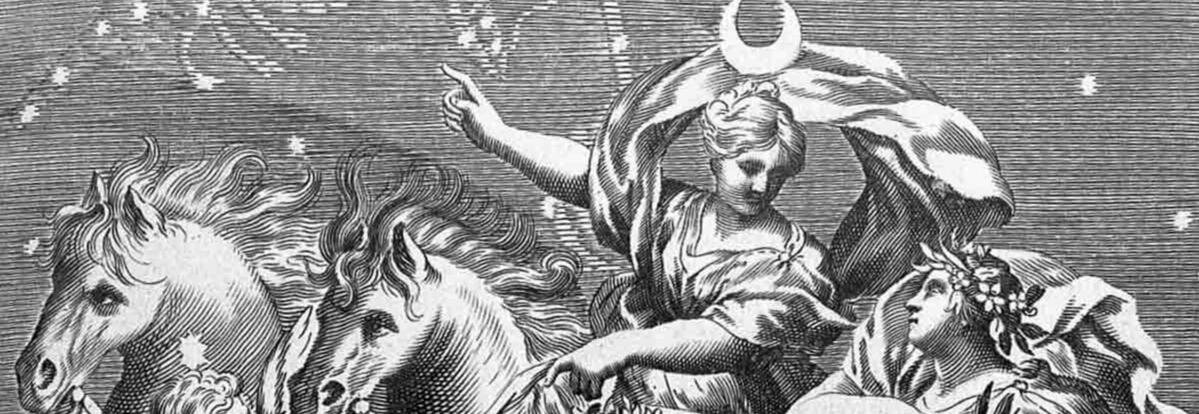
TITLES & EPITHETS
| Greek Name | Transliteration | Translation |
|---|---|---|
| thriαυξομένη καὶ λειπομένη | Af̱xánomai kai leipómenos | "Waxing & Waning" (Orph. H 9 Line 40) |
| ἠεροφοῖτι | Aierophoiti | "Wanderer of Air" (Orph. H 9 Line 2) |
| Αιγλη | Aiglê | "Gleam, Radiance" (1) |
| Ἀκτιοφίς | Aktiophis | ⮞ Unknown (PGM IV. 2622-2707) ⮞ Most likely a goddess syncretized with Selene |
| ἀωροβόρε | aōrobóre | "devourer of the untimely dead" (PGM IV. 2785-2890) |
| ἀστράρχη | Astrárchē | "Queen of Stars" (Orph. H. 9 Line 10) |
| ᾰ̓́στρᾰσῐν κωμάζουσα | ắstrăsĭn kōmázousa | "reveling with the stars" (PGM IV. 2785-2890) |
| αὐγάστειρα | Augásteira | "Giver of Light" |
| Βάκχαι | Bakkhante | "Frenzied, Wild, Possessed woman/follower of Bakkhos (Mainad)" (5) |
| Βᾰ́κχος | Bakkhic (Mene) | "Frenzied, wild/Moon Possessed" (5) |
| βασίλεια | băsĭ́leiă | "Queen" (PGM IV. 2785-2890) |
| βοῶπις | boôpis | "Cow-eyed" (11)(12) |
| χρόνου μῆτερ | Chrónou Mêter | "Mother of Time" (Orph. H 9 Line 5) |
| Δαμασάνδρα | Damasandra | "Subduer of men" (PGM IV. 2785-2890) |
| δῖα | dîă | "Heavenly, bright" (Hom.H. 4 Line 99) |
| Ειλειθυια | Eileithyia | ⮞ "Aid, Relieve" (1) ⮞Referencing her aiding in childbirth |
| ἐυπλόκαμόν | e̓iplókamón | "Fair-haired" (Hom.H. 31) |
| είσαι πλήρης καλώς άστρων | Eísai plḗrēs kā̆lôs ástron | "Who is full of lovely stars" (Orph. H 9 Line 7) |
| Ενοδια ★ Εινοδια ★Εννοδια | Enodia ⮞ Einodia ⮞ Ennodia | ⮞ "Of the Wayside, Crossroads" ⮞ "Of the pathways" ⮞ "She in the Road" ⮞ A syncretic epithet with the Thessalian goddess Enodia |
| ἠριγένεια | ērĭgéneiă | "child of morning, early-born" (PGM IV. 2785-2890) |
| Ἐρινύς | Erinys | "Fury, Wrathful, Vengeful" (PGM IV. 2785-2890) |
| ἠϋκόμοιο | ēükómoio | "Lovely haired" (8) |
| εὐμενέως | Eumenes | "Well disposed, Kind, Gracious, Soothed" (PGM IV. 2785-2890) |
| ἐυπλόκαμόν | Euplokamos | "Rich-tressed, Fair-tressed, Bright-tressed" (Hom.H 31 Line 6) |
| γλαυκὰ | Glaukà | "Silvery grey, pale" (10 Line 15) |
| γλαυκῶπις | Glaukōpis | ⮞ “Bright-eyed” (4 Book 10 Line 337) ⮞“Grey-eyed”(4 Book 10 Line 337) |
| αἱμοπότι | haimopoti | "blood-drinker" (PGM IV. 2785-2890) |
| καλλιγένεια | kalligéneia | "with beautiful offspring" (PGM IV. 2785-2890) |
| καπετόκτυπε | kapetóktype | "who tramples graves, grave-striking" (PGM IV. 2785-2890) |
| καρδιόδαιτε | kardiódaite | "heart-devourer" (PGM IV. 2785-2890) |
| καταυγάστειρα | Kataugásteira | "Illuminator" (Orph. H 9 Line 6) |
| κυδιάνειρα θεά | kūdĭắneiră theá | "renowned goddess" (PGM IV. 2785-2890) |
| κυανῶπις | Kyanṓpis | "Dark-eyed" (9) |
| λαμπρός | Lămprós | "Bright One" (2 Line 19)(Hom.H. 4)(Hom.H. 32) |
| λευκώλενος | Leukṓlenos | "White-Armed" (Hom.H. 32) |
| μήνη | mēnē | "Month" (Orph.H. 0) |
| νέα | néa | "Youthful" (PGM IV. 2785-2890) |
| νυκτιδρόμος | Nyktidrómos | "Running by night" (Orph. H 9 Line 2) |
| νυκτιβόη | Nyctivoe | "calling by night, night-crier" (PGM IV. 2785-2890) |
| νυκτὸς ἄγαλμα | nyktós ắgălmă | "Night's ornament, Glory of Night" (PGM IV. 2785-2890) |
| οἰστροπλάνεια | oistropláneia | "instill wanderlust, spreader of madness" (PGM IV. 2785-2890) |
| φαεσίμβροτε | phaesimbrotos | "shining upon mortals" (PGM IV. 2785-2890) |
| πανδερκής | Panderkḗs | "All-seeing" (Orph. H 9 Line 7) |
| Πανδία | Pandia | ⮞ "All-gifts" (Hom.H. 32) ⮞ to represent her as the Full Moon |
| Πασιφαε | Pasiphae | "All-Shining" (1)(13) |
| φαεσφόρε | Phaesphore | "Torch-bearing, light-bringing" (Orph. H 9 Line 1) |
| φερέκαρπε | Pherékarpos | "Fruit-bearing" (Orph. H 9 Line 5) |
| φιλάγρυπνε | Philágrypnos | "Wakeful, Sleepless" (Orph. H 9 Line 7) |
| φίλιππε | Phĭ́lĭppe | "Friend of Horses" (Orph. H 9 Line 5) |
| φιλήρεμε | philíremos | "isolation-loving, loving solitude" (PGM IV. 2785-2890) |
| Φοίβη | Phoíbē | "Bright" (6)(7) |
| φθορηγενές | phthorēgenḗs | "destruction-breeder" (PGM IV. 2785-2890) |
| ποίμαινε | Poimainō | "Shephard, cattle-driver" (5 Book 1 Line 330) |
| πολυώνυμε | polyṓnymos | "many-named" (PGM IV. 2785-2890) |
| ποθοβλήτοιο | ... | "struck by longing," "pierced by desire," or "lovesick." (5 32. 22 ff) |
| σαρκοφάγε | sarkofága | "flesh-eater" (PGM IV. 2785-2890) |
| τανυσίπτερον | Tanysípteros | ⮞ "Long-winged" (Hom.H. 32) ⮞ 'It may merely indicate her passage, like a bird, through the air, or mean “far-flying.”(3) |
| ταυροκάρηνε | taurokarene | "bull-headed" (PGM IV. 2785-2890) |
| ταυρόκερως | Taurókerōs | "Bull-horned" (Orph. H 9 Line 2) |
| ταυρῶπι | Tauropos | "Bull-faced" (PGM IV. 2785-2890) |
| θανατηγέ | thanatēgós | "death-bringer" (PGM IV. 2785-2890) |
| θεὰ βασίλεια | Theā́ băsĭ́leiă | "Goddess Queen" (Orph. H. 9 Line 1) |
| θῆλῠς καὶ ἄρσην | Thêlŭs kaí ắrsēn | "Female & Male, Feminine & Masculine" (Orph. H 9 Line 4) |
| τρικάρανε | trikárane | "triple-headed" (PGM IV. 2785-2890) |
| τρίκτυπε | tríktupe | "triply sounding" (PGM IV. 2785-2890) |
| τριώνυμε | triónymo | "thrice-named" (PGM IV. 2785-2890) |
| τρίφθογγε, | triphthong | "three-voiced" (PGM IV. 2785-2890) |
| τριπρόσωπε | triprósope | "Triple-faced" (PGM IV. 2785-2890) |
CREDITS
Selene's epithets were collected by Anahita Mene, Ace & Phoebe
SOURCES
Hesiod - Theogony
Quintus Smyrnaeus - Fall of Troy
Nonnus - Dionysiaca
Smith, William - A Dictionary of Greek and Roman biography and mythology
Morford, Mark - Classical Mythology
Aelian - Characteristics of Animals
Select Papyri. Poetry. Hexameter Poems
Mesomedes - Hymn to the Sun
Select Papyri III, No. 140
Greek poetry C4th A.D
Pausanias - Description of Greece
*The Iliad (Il.), The Odyssey (Od.), Homeric Hymns (Hom.H.), Greek Magical Papyri (PGM), and Orphic Hymns (Orph.H.) are cited ‘in-text’

TITLES & EPITHETS
| Greek Name | Transliteration | Translation |
|---|---|---|
| ἀγλαέθειρος | aglaetheiros | "bright-haired" (3 Line 5) |
| Αγρευς | Agreus | "Hunter" (1) |
| Αγροτας | Agrotas | "Giver of Pasture" (1) |
| αἰγιβάτας | aigibatas | "mounting she-goats" (2 Book 12.128) |
| αἰγίβοτος | aigibotos | "feeding goats, goatherd" (4 1.368) |
| αἰγιπόδης | aigipodes | "goat-footed" (3 Line 2) |
| αιγόκερως | aigokeros | "Goat-horned" (1) |
| Aἰγομελές | aigomeles | "Goat-limbed" (Orph.H. 11.5) |
| αὐξητής | aixetēs | "increaser" (Orph.H. 11.11) |
| ἀκρολοφίτης | akrolophites | "mountaineer, of the mountain peaks" (2 Bk. 6.221) |
| ἀληθὴς | alethēs | "true, veritable" (Orph.H. 11.12) |
| ἀνίκητος | aniketos | "invincible, unconquerable" (4 36.196) |
| ἀντροχαρές | antrokhares | "cave-loving" (Orph.H. 11.12) |
| ἀστροδίαιτος | astrodiaitos | "star-gazing" (Orph.H. 11.5) |
| αὐχμηρός | aukhmeros | "dusty, rough, squalid" (3 Line 6) |
| βαβάκτης | babaktes | "reveller" (Suda, B 4) |
| Βακχευτής | bakkheutes | "reveler, frenzied one" (Orph.H. 11.5) |
| Βαρύμηνις | barymenis | "wrathful" (Orph.H. 11.12) |
| βοόκραιρος | bookrairos | "ox-horned" (4 36.150) |
| βουνίτης | bounites | "dweller in the hills" (2 Bk. 6.106) |
| δίκερως | dikeros | "two-horned" (3 ln. 2) |
| δυσίμερος | dusimeros | "lustful, tormented by love" (4 2.117) |
| ἡδύγελως | edygelos | "sweetly laughing" (3 ln. 37) |
| ἡγήτωρ Νυμφῶν | egetor Nymphon | "leader of the Nymphs" (2 Bk. 9.142) |
| εὔσκοπος | eiskopos | "sharp-sighted" (Orph.H. 11.9) |
| ἐρημονόμος | erimonomos | "haunting the wilds" (4 14.68) |
| γενέτωρ πάντων | genétor panton | "father of all" (Orph.H. 11.10) |
| ´Αλιπλανκτος | Haliplanktos | "sea-roaming" (1) |
| ὑμνοπόλος | imnopolos | "melodious, busied with songs of praise" (4 11.111) |
| ὑψίκερως | ipsikeros | "high-horned" (4 16.187) |
| κεραελκής | keraelkēs | "drawing by the horns (4 24.87) |
| κάρπιμος | kárpimos | "fruitful, bountiful" (Orph.H. 11.11) |
| κεροβάτης | kerobates | "horn-footed, hoofed" (Suda, K 1350) |
| κομήτης | komētes | "hairy" (4 24.87) |
| κοσμοκράτωρ | kosmokrátor | "Lord of the cosmos" (Orph.H. 11.11) |
| Κρονίου | Kronion | "of Kronos" (5 ln. 36) |
| Κυλλήνιος | Kyllenios | ⮞ "of Mount Cyllene, Cyllenian" (2 Bk 6.97) (Suda, K 2660) ⮞ Relating to Hermes, who was born on Mount Cyllene. The scholarly footnotes in the Suda On Line state that it was actually a more common name for Pan (D 1439 (3)). |
| Λιμενοσκοπος | Limenoskopos | "Protector of the Harbor" (1) |
| Λιμένως | Limenos | "Of the harbor, of the shore"(1)(2 Book 10.10) |
| λοφιήτης | lophiētes | "dwelling in the hills" (2 Bk. 6.79) |
| Λυτηριος | Lytêrios | "the deliverer, releasing" (1) |
| Λυτιερσές | Lytierses | ⮞ Uncertain (1) ⮞ May mean something similar to "releaser" |
| μάκαρ | makar | "blessed" (Orph.H. 11.4) |
| μηλονόμος | melonomos | "shepherd, sheep-tender" (4 5.297) |
| νόμιος | nomios | "of the pastures" (1) (Orph.H. 11.1) |
| νόμιον θεός | nomion theos | "shepherd god" (3 ln. 5) |
| ὀρεσσιβάτης | oressibates | "hill-roamer, mountain-roaming" (6 ln. 1080) |
| ὀρεσίδρομος | oresidromos | "mountain-wandering" (4 36.449) |
| Παιάν | Paian | "healer" (Orph.H. 11.11) |
| παντοφυής | pantophyēs | "all-producing, all-growing" (Orph.H. 11.10) |
| περίδρομος | peridromos | "roving, roaming" (Orph.H. 11.4) |
| Φιλένθεος | Philentheos | "Lover of inspired frenzy" (Orph.H. 11.5) |
| φαεσφόρος | phaesphoros | "light-bringer" (Orph.H. 11.11) |
| φιλάγραυλος | philagraulos | "rustic, fond of the countryside" (2 Bk. 6.73) |
| φιλένθεος | philentheos | "filled with divine influence" (Orph.H. 11.5) |
| φιλόκροτος | philokrotos | "lover of noise" (3 ln. 2) |
| φιλωρείτης | philoreites | "lover of mountains" (2 Bk. 6.96) |
| φίλος | philos | "dear, beloved" (3 ln. 1) |
| φιλοσκόπελος | philoskopelos | "rock-loving" (4 43.332) |
| Φορβας | Phorbas | "terrifying one" (1) |
| φριξοκόμης | phrixokomes | "with bristling hair" (2 Bk. 16.291) |
| πολυώνυμος | polyonymos | "many-named" (Orph.H. 11.10) |
| Σινοεις | Sinoeis | ⮞ "mischief, bane" (1)(7 8.30.3) ⮞ Pausanias posits that the surname Sinoeis comes from the nymph Sinoe, who was one of many nymphs to nurse the infant Pan. |
| σκυλακοτρόφος | skilakotrophos | "breeder of hounds" (4 16.187) |
| σκιρτητής | skirtetēs | "frolicsome, leaping" (Orph.H. 11.4) |
| Σκολειτας | Skoleitas | "crooked" (1)(7 8.30.6) |
| σκοπιήτης | skopintes | "highlander" (2 Bk. 6.16) |
| συριστής | suristēs | "piper" (2 Bk. 9.341) |
| θηρευτής | thereutēs | "hunter, pursuer, loving the chase" (Orph.H. 11.9)(2 Bk 6.107) |
| Ζεὺς ὁ κεράστης | Zeus ho kerastes | "horned Zeus" (Orph.H. 11.12) |
CREDITS
Pan's epithets were collected by Salem
SOURCES
Greek Anthology
Homeric Hymn to Pan
Nonnus - Dionysiaca
Euripides - Rhesus
Euripides - Oedipus Tyrannus
Pausanias - Description of Greece,
*The Iliad (Il.), The Odyssey (Od.), Suda, and Orphic Hymns (Orph.H.) are cited ‘in-text’
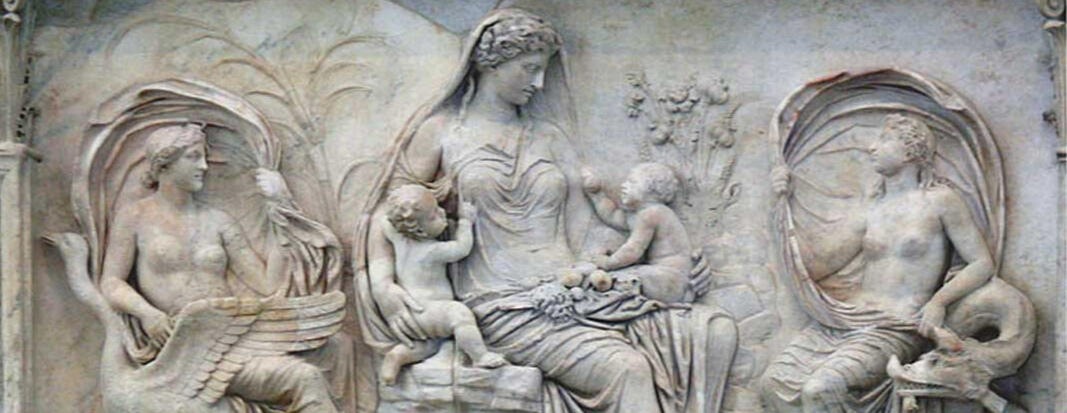
TITLES & EPITHETS
| Greek Name | Transliteration | Translation |
|---|---|---|
| ἀκάματος | ā̆kắmătos | "Tireless, Unwearied" (12 Ln. 338) |
| ἀχεύω | akheúō | "Grieving" (15 Book 2 Ln. 555) |
| ἄνασσα | ánassa | "Queen" (11 Ln. 678) |
| Ανησιδωρα | Anêsidôra | "She who Sends Forth Gifts"(19) |
| ἄφθιτος | áphthitos | "Immortal" (12 Ln. 338) |
| ἄφθονε δαῖμον | áphthonos daímōn | "Bountiful Spirit" (Hom.H. 30 Ln. 16) |
| ἀτέρμονα | atérmon | "Boundless, endless" (15 Book 17 Ln. 284) |
| βαθύκολπος | Băthŭ́kolpos | "Deep-bosomed" (4 Ode 9 Line 101) |
| εὐρυεδεύς | Euryedeus | "broad seated" (7 pg 179) |
| εὐρύστερνος | Eurýsternos | "Broad-breasted" (1 Line 117)(17 Sec.178b)(19) |
| ἠυθέμεθλον | ēuthemethlon | "Well-founded" (Hom. H. 30 Ln. 1) |
| Γασηπτον | Gasêpton | "August Earth" (19) |
| καλλιγένεια | Kalligeneia | ➤ “bearer of a fair offspring” (Logeion) ➤ Surname of Gaia. (19) |
| Καρποφορος | Karpophoros | "Fruit Bearing" (15 Book 21 Ln. 26) |
| Χθονιη | Khthoniê | "Earth" (19) |
| κουροτρόφος | Kourotrophos | "child nurturer" (8 1.22.3)(14 Ἀττικά Ch. 122 Sec. 3) "Nurse of the Young" (19) |
| Μεγάλην θεὸν | megắlēn theón | "Great Goddess" (14 Ἀττικά Ch. 31 Sec. 4)(19) |
| μέλας | mélās | "Black" (16 Ch. 12 Sec. 4) |
| μήτηρ | Mḗtēr | "Mother" (5 Ode 7 Line 38)(Hom.H. 30 Ln. 17) |
| Μητηρ Παντων | Metêr Pantôn | "Mother of All" (2 Line 363)(Hom. H. 30 Ln. 1)(19) |
| Ὀλυμπίας | Olympia | ➤ "Of Olympia" (19) ➤ Surname of Gaia. (13 Ch. 27 Sec. 4)(14 Ἀττικά Ch. 18 Sec.7) |
| παμβῶτι | Pambῶtis | "All-nourishing" (4 Line 393) |
| πάνδωρος | Pandôros | ➤ “giver of all/all-bounteous” (20)(21 Book 1 Line 12) ➤ Surname of Gaia. (19) |
| παντρόφε | pantróphos | "all-nurturing" (18 Book 7 Ch. 476) |
| πελώρη | Pélōros | "Vast, huge" (1 Line 173)(1 Line 479) |
| φερέσβιος | pherésbios | "Life-giving" (15 Book 22 Ln. 284) |
| πότνια | pótnĭă | "Mistress, Lady" (Hom.H. 30 Ln.6)(10 Ln. 70) |
| πρέσβυς | présbŭs | "Eldest" (Hom.H. 30 Ln. 2) |
| σεμνὴ θεά | semní theā́ | "Holy Goddess" (Hom.H. 30 Ln.16) |
| Θέμις | Themis | ➤ "Divine Law, Custom" (6 p. 458) ➤ A rare Attic cult epithet of Gaia, attested as Ge-Themis. It reflects Gaia's association with prophecy and divine order, and may represent a local fusion of the two goddesses |
| θεῶν μήτηρ | theôn mḗtēr | "Mother of the Gods" (Hom.H. 30 Ln. 17)(9 Book 3 Ln. 716) |
| ὑπέρτατος | ypértatos | ➤ "Eldest of the gods" (12 Ln. 337) ➤ "Supreme" (Logeion) ➤ Translated texts will show this as "Eldest of the Gods" while translating the word separately will get the translation of "Supreme" |
CREDITS
SOURCES
Hesiod - Theogony
Hesiod - Works and Days
Sophocles - Philoctetes
Pindar - Pythian Odes
Pindar - Olympian Odes
Nilsson Vol. 1
West, Martin - Indo-european poetry and myth
Pausanias - Descriptions of Greece
Apollonius Rhodius - Argonautica
Euripides - Hecuba
Euripides - Electra
Sophocles - Antigone
Plutarch - Theseus
Pausanias - Description of Greece
Nonnus - Dionysiaca
Aristotle - Athenian Constitution
Plato - Symposium
Greek Anthology
Homeric Epigram 7
Oppian of Apamea - Cynegetica or The Chase
*The Iliad (Il.), The Odyssey (Od.) and Orphic Hymns (Orph.H.) are cited ‘in-text’

TITLES & EPITHETS
| Greek Name | Transliteration | Translation |
|---|---|---|
| Ἀνταία | Antaia | ⮞ Unclear (Suda, A 2618) ⮞ Hypothesized to be a name for a goddess man could approach in prayer |
| ἀερόμορφος | aeromorphos | "ethereal" (Orph.H. 14.11) |
| ἀγλαόμορφος | aglaomorphos | "of beauteous form" (Orph.H. 14.5) |
| ἀρχέγονος | arkhegonos | "original, primal, primeval " (Orph.H. 14.8)(1 13.292) |
| ἀθάνατος | athanatos | "immortal" (1 Bk. 9.191) |
| βιοθρέπτειρα | biothrepteira | "nurturer of life" (Orph.H. 27.13) |
| ἠΰκομος | eikonos | "lovely-haired, bright-haired" (2 ln. 625, 634) (3 ln. 75, 440) |
| χαλκόκροτος | khalkokrotos | "bronze-sounding" (Orph.H. 14.3) |
| κλεινός | kleinos | "illustrious" (Orph.H. 27.4) |
| κούρη | koure | "maiden" (Orph.H. 14.3) |
| Κυβηλη | Kybele | ⮞ A name for Rhea, noting syncretization with the Phrygian mother-goddess named Kybele or Cybele (Suda, K 2586) ⮞ Sometimes both names became the hyphenate goddess Rhea-Kybele. |
| λεοντοβότος | leontobotos | "feeding lions, caring for lions, nurse of lions" (1 1.21, 9.147) |
| λεοντόδιφρος | leontodiphros | "of the lion chariot" (4 6.91) |
| λιπαροκρήδεμνος | liparokredemnos | "with bright head-band" (3 ln. 459) |
| λυτήριος | lyterios | "redeemer, releaser" (Orph.H. 14.8) |
| μάκαρ | makar | "blessed, happy" (Orph.H. 14.5, 14.11) |
| μήτηρ ★ μητερ | mêtêr | mother (5) (Orph.H. 14.4) (2 11.241) |
| Mήτηρ Θεῶν | Mêtêr Theôn | ⮞ "mother of the gods" (5) (Orph.H. 27.1) ⮞ A name held in conjunction with Kybele and the Samothrakian Mother Goddess. |
| Μητηρ Μεγαλη | Mêtêr Megalê | "Great Mother" (5) |
| Μητηρ Παντων | Mêtêr Pantôn | "Mother of All" (5) |
| ὀβριμόθυμος | obrimothumos | "strong-spirited, strong-minded" (Orph.H. 14.7) |
| ὀρεοπόλος | oreopolos | ⮞ "haunting the mountains" (1 13.137) ⮞ Appears in the text as a form of ὀρεσσιπόλος, which is best interpreted as a form of ὀρεοπόλος |
| παμβασίλεια | pambasileia | "queen of all" (Orph.H. 14.7) |
| πανδαμάτωρ | pandamator | "all-tamer" (Orph.H. 27.12) |
| παμμήτωρ | pammetor | "all-mother, mother of all" (1 13.36) |
| πολεμόκλονος | polemoklonos | "raising the din of war, lover of the battle din" (Orph.H. 14.7) |
| πότνια | potnia | "queen" (Orph.H. 14.1) |
| φιλόδρομος | philodromos | "loving the course" (Orph.H. 14.11) |
| φίλοιστρος | philoistros | "frenzy-loving" (Orph.H. 14.3, 27.13) |
| φιλοσκόπελος | philokopelos | "rock-loving" (2 Bk. 9.200) |
| πολυώνυμος | polyonymos | "many-named" (Orph.H. 27.4) |
| ψευδόμενος | pseudomenos | "liar, cheating by lies" (Orph.H. 14.8) |
| πυργοφόρος | purgophoros | "tower-bearing" (Suda, P 3203) |
| Σεμίραμις | Semiramis | ⮞ A name for an Assyrian queen who seems to be syncretized with Rhea (Suda, S 220) ⮞ In the first book of Malalas's Chronography, a version of Assyrian mythical history is told where Kronos and Rhea are giant-born gods from the tribe of Shem who invented royalty. He says that Semiramis or Rhea “was proud and arrogant.” |
| σώτειρα | soteira | "savior" (Orph.H. 14.8) |
| σύλλεκτρος | syllektros | "consort, bed-partner" (Orph.H. 14.5) |
| συνόμευνος | synomeinos | "bed-fellow" (Orph.H. 27.12) |
| τροφὲ πάντων | trophe panton | "nurse of all" (Orph.H. 27.1) |
| τυμπανόδουπος | tumpanodoupos | "drum-sounding" (Orph.H. 14.3) |
| τυμπανοτερπής | tumpanoterpes | "delighting in drums" (Orph.H. 27.11) |
CREDITS
Rhea's epithets were collected by Salem
SOURCES
Nonnus - Dionysiaca
Hesiod - Theogony
HH to Demeter
Greek Anthology
Kybele's Page Theoi
*The Iliad (Il.), The Odyssey (Od.) and Orphic Hymns (Orph.H.) are cited ‘in-text’
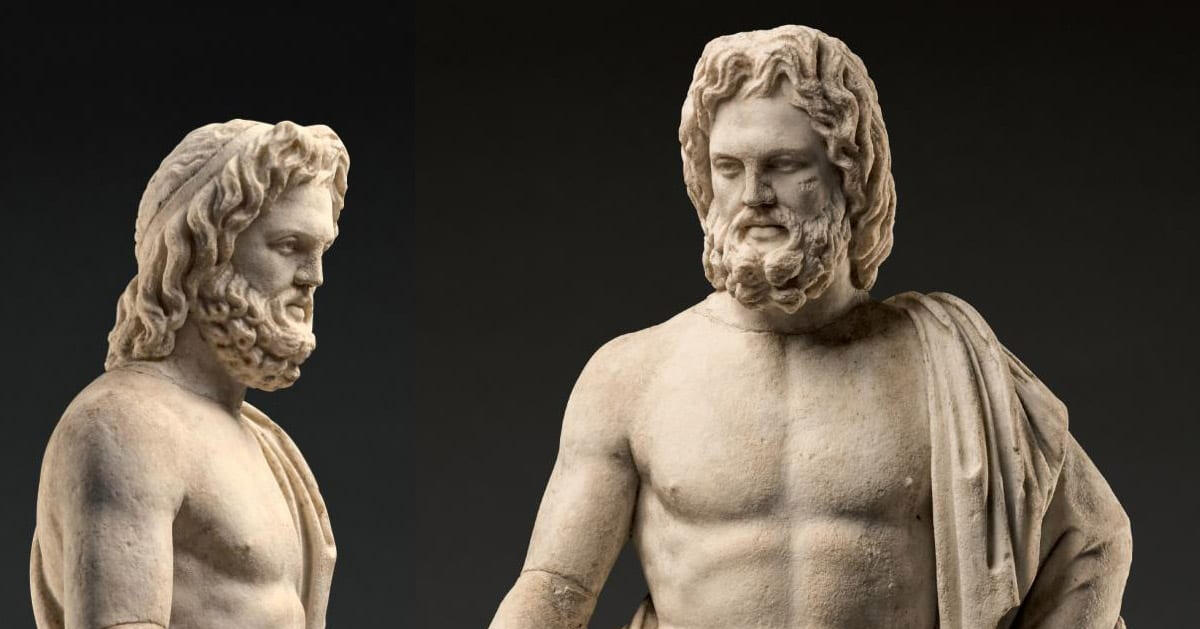
TITLES & EPITHETS
| Greek Name | Transliteration | Translation |
|---|---|---|
| Ἀγνίτας | Agnitas | ⮞ "Of the Chaste-Tree" (3) ⮞ Used in Sparta as it refers to the agnus tree his icon was carved from (2 Book 3 Chapter 14 Section 7) |
| ἀλεξίκακος | alexikakos | "keeping away ills" (Orph.H. 67 Line 5) |
| ἀρχηγέτης | Arkhagetas | "Founder" (2 Book 10 Chapter 32 Section 12)(3) |
| δέσποτα | déspotă | "Master, Lord" (4) |
| δέσποτην Παιάν | despótēn paiā́n | "lord Paian" (Orph.H. 67 Line 1) |
| ἐχθρὲ νόσων | ekhthré nósōn | "enemy of disease" (Orph.H. 67 Line 7) |
| ἠπιόδωρος | ēpiódōros | "soothing by gifts, bountiful" (Orph.H. 67 Line 3) |
| Ηπιος | Êpios | "Soothing" (3) |
| Ὑγίειαν σύλλεκτρον | hygieia synlektron | "consort of Hygieia" (Orph.H. 67 Line 7) |
| ἰατήρ πάντων | iatḗr pắntōn | "healer of all" (Orph.H. 67 Line 1) |
| Ἰατρὸς | Iatros | "Doctor/healer" (2 Book 2 Chapter 26 Section 9)(3) |
| Κοτυλέως | Kotyleôs | ⮞ "Of the hip joint" (2 Book 3 Chapter 19 Section 7)(3) ⮞ Story goes when Heracles made a sanctuary of Asklepios near Sparta, he gave him the epithet in reference to a hip injury Asklepios had healed |
| κραταιά | krataia | "mighty, powerful" (Orph.H. 67 Line 3) |
| Κυρος | Kyros | "Supreme Authority" (3) |
| μάκαρ | mákar | "blessed" (Orph.H. 67 Line 8) |
| ὀλβιοδαίμων | olbiodaímōn | "of blessed lot" (Orph.H 67 Line 6) |
| Παιδος | Paidos | "Boy, child" (2 Book 8 Chapter 25 Section 11)(3) |
| Φιλολαος | Philolaos | "Lover of the People" (3) |
| Σωτῆρι | Sōtêr | "Savior" (1 Section 128 Line 5) |
CREDITS
Asklêpios' epithets were collected by Gray
SOURCES
Priests of Asclepius - Epidaurus Cure Inscriptions
Pausanias - Descriptions of Greece
Aelius Aristides 26 Sacred Tales 337
*The Iliad (Il.), The Odyssey (Od.) and Orphic Hymns (Orph.H.) are cited ‘in-text’
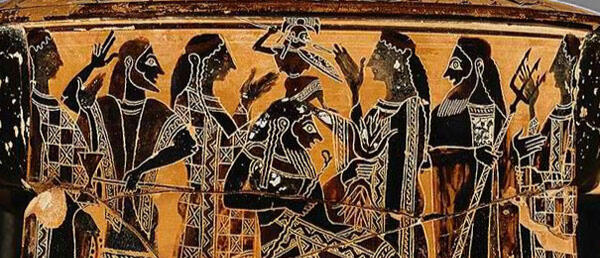
TITLES & EPITHETS
| Greek Name | Transliteration | Translation |
|---|---|---|
| Γενετυλλις | Genetyllis | "the protectress of births" (6) |
| κουροσόος | Kourosóos | "Savior of youths" (5 Book 6 Chap 274) |
| Λυσίζωνος | Lusizônê | "the goddess who loosens the girdle" (6) |
| μογοστόκος | mogostókos | "of birth pangs" (3 Ch. 5) |
| ὄλβιος | ólbĭos | "Blest, happy" (5 Book 6 Chap 274) |
| Ὀλυμπία | Olumpĭ́ā | "Olympian" (4 Book 8 Chapter 21 Section 3) |
| πότνια | Pótnĭă | "Mistress, Queen" (1 Line 369)(2 Line 741)(Suda O688) |
| Προθυραία | Prothyraia | "She Before the Door" (Orph. H. 2) |
CREDITS
SOURCES
Aristophanes - Ecclesiazusae
Aristophanes - Lysistrata
Dionysius of Halicarnassus On Literary Composition
Pausanias - Descriptions of Greece
Greek Anthology
Theoi
*The Iliad (Il.), The Odyssey (Od.), the Suda and Orphic Hymns (Orph.H.) are cited ‘in-text’

TITLES & EPITHETS
| Greek Name | Transliteration | Translation |
|---|---|---|
| αἰδοῖος | aidoîos | "Reverend, Venerable" (2 Line 16)(13) |
| εὔβουλος | eúboulos | "Right-counselling" (6 Ode 13 Line 8)(7 Ode 8 Line 33)(13) |
| εὐγενής | eugenḗs | "Well-born, noble" (3 Line 94)(13) |
| εὐπατέρεια | eupatereia | "Daughter of noble sire, Of noble birth" (Orph.H. 78 Line 1) |
| Γαίης βλάστημα | gaíēs blástēmă | "Offspring of the Earth" (Orph.H. 78 Line 2) |
| ἱερὰ | hī̆erā́ | "Holy" (5 Ode 12 Line 9)(13) |
| καλλιπάρηος | kăllĭpắrēios | "Fair-cheeked" (Il. Book 15 Line 87) |
| καλυκώπιδα κορὴν | kalykōpida kore | "Blushing maiden" (Orph.H. 78 Line 2) |
| λιπαρός | lĭpărós | ➤ "Shining, Bright, Oily" (2 Line 901) ➤ Literally means oily. Oil was used for cleanliness and for anointing, but “shining” is the intended meaning |
| μεγάλα | megắlā | "Great" (9 Line 160) |
| μήτηρ | mḗtēr | "Mother" (1 Line 873) |
| οὐρανία | Ourănĭ́ā | "Heavenly" (8 Line 1064) |
| οὐρανόπαις | ouranópais | "Child of Ouranos" (Orph.H. 78 Line 1) |
| Οὐρανοῦ θυγατέρας | ourănoû thūgătérăs | "Daughter of the sky" (10 Book 1 Chap 3 Section 1) |
| Ορθοβουλος | Orthoboulos | "Right-counselling" (1 Line 18)(13) |
| παλαιγενής | pălaigenḗs | "Ancient Born" (1 Line 873) |
| πινυτή | pĭnŭtós | "Prudent" (4 Line 55) |
| πρέσβειρα | présveira | "Old" (11 Line 800) |
| καθαρὴν | proschéō | "Pure, Clear, Clean" (12 Book 31 Line 62) |
| σώτειρα | sṓteiră | "Savior" (6 Ode 8 Line 21)(13) |
| θεὰ | theā́ | "Goddess" (Il. Book 15 Line 93) |
| Τιτανίς | Tītānĭ́s | "Titaness" (1 Line 874)(13) |
CREDITS
Themis's epithets were collected by Gray
SOURCES
Aeschylus - Prometheus Bound
Hesiod - Theogony
Homeric Hymn 5 to Aphrodite
Bacchylides - Dithyrambs
Pindar - Pythian Odes
Pindar - Olympian Odes
Pindar - Nemean Odes
Sophocles - Electra
Euripides - Medea
Apollodorus - Bibliotheca
Apollonius of Rhodes - Argonautica
Nonnus - Dionysiaca
Theoi
*The Iliad (Il.), The Odyssey (Od.), the Suda and Orphic Hymns (Orph.H.) are cited ‘in-text’
TITLES & EPITHETS
| Greek Name | Transliteration | Translation |
|---|---|---|
| βασίλεια | basileia | "queen" (1 ln. 974) |
| βοτρυόδωρος | botruodoros | "grape-producing" (1 ln. 520) |
| δέσποινα | despoina | ➤ "mistress" (1 ln. 976) ➤ Delineates her in this section of the play as presiding over choruses and marriages. |
| κάλλιστης | kallistes | "beautiful, noble, gracious" (2 ln. 1682) |
| κουροτρόφος | kourotrophos | "nurse of children" (3 ln. 228) |
| Ὀπώρα | Opora | A name referencing the season towards the end of summer (1 ln. 523) |
| φίλη | phile | "dear, sweet" (1 ln. 294) |
| πολύολβος | polyolbos | "very wealthy" (Orph.H. 43.2) |
| πολυτίμητος | polytimetos | "highly-honored" (1 ln. 978) |
| πότνια | potnia | "queen, mighty one" (1 ln. 520) |
| σεμνός | semnos | "honored, revered" (1 ln. 974) |
| τεθαλώς | tethalos | "blooming, kind" (4 ln. 902) |
| Θεωρία | Theoria | Another name seeming to apply to Eirene; LSJ calls it a “personification of religious embassies”. (1 ln. 523) |
CREDITS
Eirene's epithets were collected by Salem
SOURCES
Aristophanes - Peace
Euripides - Orestes
Hesiod - Works and Days
Hesiod - Theogony
*The Iliad (Il.), The Odyssey (Od.), the Suda and Orphic Hymns (Orph.H.) are cited ‘in-text’
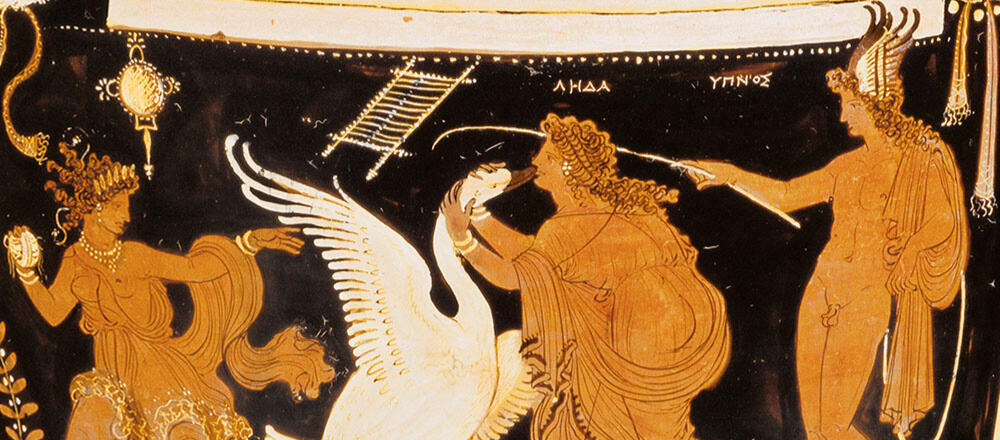
TITLES & EPITHETS
| Greek Name | Transliteration | Translation |
|---|---|---|
| ἀγανοβλέφαρος | aganoblefaros | "Tender-eyed, mild-eyed" (5 Book 13 Chap 17) |
| Ἁρμονίης θαλαμηπόλος | harmonía thălămēpólos | "Lady of the bride-chamber" (3 Book 3 Line 77) |
| ἡδυεπὴς | hēdyepḗs | "Sweet-speaking, silvertongued" (3 Book 41 Line 252) |
| χρυσάμπυξ | khrūsắmpŭx | "With golden fillet, frontlet" (3 Book 48 Line 692) |
| μυρόπνους | myrópnous | "Sweet-breathed" (6 Book 12 Chap 95) |
| νεᾶνις | neânĭs | "Maiden, girl" (5 Book 13 Chap 33) |
| νοήμων | noḯmon | "Thoughtful, intelligent" (6 Book 2 Line 1) |
| φιλοτήσιε | philotes | "of friendship" (3 Book 10 Line 280) |
| πορθμὸν Ἐρώτων | porthmós erṓtōn | "The ferry of Loves, Ferry of Eros" (3 Book 4 Line 139) |
| πότνια | pótnĭă | "Queen, Mistress" (1 Line 73) |
| ῥοδοδάκτυλος | rhododắktŭlos | "Rosy-fingered" (3 Book 34 Line 292) |
| θελκτήρ | thelktḗr | "Soother, Charmer" (2 Line 1040) |
| τύραννον ἀνθρώποις | tŭ́rănnon ănthrṓpois | "Tyrant over (hu)man(s)" (4 Line 816) |
CREDITS
Peitho's epithets were collected by Gray
SOURCES
Hesiod - Works and Days
Aeschylus - Suppliant Maidens
Nonnus - Dionysiaca
Euripides - Hecuba
Athenaeus - Deipnosophists
Greek Anthology
*The Iliad (Il.), The Odyssey (Od.), the Suda and Orphic Hymns (Orph.H.) are cited ‘in-text’

TITLES & EPITHETS
| Greek Name | Transliteration | Translation |
|---|---|---|
| ἄμβροτος | ắmbrotos | "Immortal, Divine" (3 Book 2 Line 652) |
| ἀργέτις | argéti | "Shining" (6 Book 5 Line 516)(6 Book 16 Line 124) |
| βοῶπις | boôpĭs | "Ox-eyed" (3 Book 2 Line 643) |
| δῖος | dîos | "God-like, Divine" (Il.Book 9 Line 662) |
| δυσίμερος | dysímeros | "Tormented by love, Lovesick" (6 Book 33 Line 44) |
| ἐγερσίμοθος | egersimos | "War-inciter" (6 Book 2 Line 169) |
| ἠριγένεια | ērĭgéneiă | ➤ "Early born" (Od. Book 2 Line 1)(Hom. H. 4 Line 185)(8) ➤ Eos is often referred to as just this epithet, similarly to Phoebus for Apollon or Pallas for Athena. |
| ἐυσμήριγγος | eusmēringos | "With beautiful hair, beautiful tressed" (6 Book 11 Line 389) |
| εὐπλόκαμος | eüplókămos | "Fair haired" (Od. Book 5 Line 390) |
| εὔθρονος | eúthronos | "With beautiful throne, Beautiful throned" (Il. Book 8 Line 565)(3 Book 3 Line 1) |
| Ἡμερα | Hêmera | "Day"(8) |
| καλλιφεγγὴς | kalliphengēs | "Beautifully shining" (5 Line 455) |
| χρυσόθρονος | khrūsóthronos | "With gold throne, Golden throned" (Od. Book 15 Line 250)(Hom. H. 4 Line 326)(Hom. H. 5 Line 218) |
| χρυσήνιος | khrysênios | "With reins of gold" (3 Book 5 Line 395) |
| χρυσόπαχυς | khrysópachys | "Golden-armed" (7 Ode 5 Line 40)(8) |
| κροκόπεπλος | krokópeplos | ➤ "With the yellow veil, Yellow veiled" (Il. Book 8 Line 1)(2 Book 9 Chap 651) ➤ "Saffron-Robed" (8) |
| μαχήμων | mákhomai | "Warlike" (6 Book 26 Line 293) |
| Ορθρια | Orthria | "Morning-Twilight" (8) |
| φαέσφορος | phaesphóros | "Light-bringing, Lightbringer" (6 Book 15 Line 280)(8) |
| φαεσίμβροτος | phausímbrotos | "Bringing light to mortals" (7 Ode 12 Line 129) |
| φθονερός | phthonerós | "Envious" (2 Book 5 Chapter 3) |
| πολεμητόκος | polemetocus | "War-bringing, Warbringer" (6 Book 27 Line 2) |
| πολυδερκής | Polydeúkēs | "All-seeing, Far-seeing" (4 Line 451) |
| ῥοδοδάκτυλος | rhododắktŭlos | "Rosy-fingered" (Il. Book 1 Line 477)(1 Line 610)(Hom. H. 31 Line 6)(8) |
| ῥοδοπαχυς | rhodopakhus | "Rosy-armed" (8) |
| ῥοδοστεφέος | rhodostephéos | "Rose-crowned" (6 Book 48 Line 481) |
| θαλερῶπις | thalerosopis | "Bright-eyed" (2 Book 7 Chapter 204) |
| Τιτω | Titô | "Day" (8) |
CREDITS
SOURCES
Hesiod - Works and Days
Greek Anthology
Quintus Smymaeus - Posthomerica
Hesiod - Theogony
Euripides - Hippolytus
Nonnus - Dionysiaca
Bacchylides Odes
Theoi
*The Iliad (Il.), The Odyssey (Od.), the Suda, Homeric Hymns (Hom. H) and Orphic Hymns (Orph.H.) are cited ‘in-text’
TITLES & EPITHETS
| Greek Name | Transliteration | Translation |
|---|---|---|
| ἄνασσα | ánassa | "Queen" (Orph.H. 77 Line 1) |
| εὐδύνατος | eudýnatos | "mighty" (Orph.H. 77 Line 5) |
| ἡδυτάτη | hēdytátē | "sweetest" (Orph.H. 77 Line 6) |
| ὁσία | hosia | "hallowed" (Orph.H. 77 Line 2) |
| καλλίκομος | kallíkomos | "Beautiful-haired" (1 Ln. 915) |
| χρυσόπεπλος | khrysopeplos | "Golden-robed, with robe of gold" (3 Ode 6 Ln. 75) |
| κρατερός | krăterós | "fierce" (Orph.H. 77 Line 5) |
| λιγυφόνους | ligyphónous | "of the clear-voiced, loud-voiced, screaming" (Orph.H. 77 Line 2) |
| λιπαράμπυξ | liparampyx | "With bright headband" (2 Ode 7 Ln. 15) |
| μάκαιρα | mákaira | "blessed" (Orph.H. 76 Line 9) |
| μητέρα Μουσάων | mḗtēr Moûsă | "Mother of the Muses" (Hom.H. 4 Ln. 429) |
| Μουσᾶς τέκνωσις ἱεράς | Moûsă teknosis hieras | "who bore the holy Muses" (Orph.H. 77 Line 2) |
| παρεκβαίνουσα | paremvaínousa | "who no one transgresses against" (Orph.H. 77 Line 8) |
| φιλάγρυπνος | philágrypnos | "fond of waking, wakeful" (Orph.H. 77 Line 6) |
| σύλλεκτρος | sýllektros | "consort" (Orph.H. 77 Line 1) |
| ὑπομνήκουσα πάντα | ... | "who reminds all" (Orph.H. 77 Line 6) |
CREDITS
SOURCES
Hesiod - Theogony
Pindar - Nemean Odes
Pindar - Isthmean Odes
*The Iliad (Il.), The Odyssey (Od.), the Suda, Homeric Hymns (Hom. H) and Orphic Hymns (Orph.H.) are cited ‘in-text’
TITLES & EPITHETS
| Greek Name | Transliteration | Translation |
|---|---|---|
| ἀρχεγόνοιο | archegonoio | "Original, primeval" (4 Book 8 Ln. 160) |
| ἐρᾰτεινός | erăteinós | "Lovely" (2 Ln. 136) |
| ἥλικος Ὠκεανοῦ | hḗlĭkos Ōkeănoû | "Age-mate of Okeanos" (4 Book 23 Line 284) |
| μήτηρ | mḗtēr | "Mother" (Il. Book 4 Ln. 201, 302) |
| Ὠκεανοῦ νύμφην | Ōkeănoû nŭ́mphē | ➤ "Nymph of Okeanos, Bride of Okeanos" (Orph.H. 22 Line 1) ➤ The literal word used is Nymph but is used to refer to a young wife |
| παρευνέτις Ὠκεανοῦ | pareunétis Ōkeănoû | "Bed-mate of Okeanos" (4 Book 23 Line 284) |
| πολύτεκνος | polýteknos | "Fruitful, having many children" (1 Ln. 137) |
| πότνια | pótnĭă | "Mistress, Lady" (2 Ln. 368) |
| Τιτανίς | Tītānĭ́s | "Titaness" (3 Ln. 17) |
CREDITS
SOURCES
Aeschylus - Prometheus Bound
Hesiod - Theogony
Callimachus - Hymn to Delos
Nonnus - Dionysiaca
*The Iliad (Il.), The Odyssey (Od.), the Suda, Homeric Hymns (Hom. H) and Orphic Hymns (Orph.H.) are cited ‘in-text’
TITLES & EPITHETS
| Greek Name | Transliteration | Translation |
|---|---|---|
| ἐρικυδής | erĭkūdḗs | "Glorious, splendid" (Il. Book 14 Ln. 327)(Hom.H. 4 Ln. 416) |
| ἠΰκομος | ēǘkomos | "Fair-haired" (Il. Book 1 Ln. 36, Book 19 Ln. 413)(Hom.H. 3 Ln. 178) |
| καλλιπάρηος | kallipárēos | "Beautiful-cheeked" (Il. Book 24 Ln. 607) |
| καλλίσφυρος | kallísphyros | "Beautiful - ankled" (Hom.H. 27 Ln. 19) |
| χρύσεος | khrýseos | "Golden" (4 Ln. 39) |
| Κοιηις | Koiêis | "Daughter of Koios" (1) |
| Κοιογενεια ★ Κοιογενης | Koiogeneia ➤ Koiogenês | "Born of Koios" (1)(5 Book 2 Ln. 710) |
| κυανόπεπλος | kyanópeplos | "Dark-veiled" (2 Ln. 406) |
| φίλος | phĭ́los | "Beloved" (3 Ln. 460) |
| Φυστιη | Phystiê | "Grafter" (1) |
| πολύτεκνος | polýteknos | "Mother of many children" (6 Book 16 Ch. 133) |
CREDITS
Leto's epithets were collected by Ace
SOURCES
Hesiod - Theogony
Euripides - Hecuba
Callimachus - Hymn to Delos
Apollonius Rhodius - Argonautica
Greek Anthology
*The Iliad (Il.), The Odyssey (Od.), the Suda, Homeric Hymns (Hom. H) and Orphic Hymns (Orph.H.) are cited ‘in-text’
TITLES & EPITHETS
| Greek Name | Transliteration | Translation |
|---|---|---|
| Αει Παρθενους | Aei Parthenous | "Eternal-Virgins" (1) |
| Αραι | Arai | "Curses" (1) |
| Δασπληται | Dasplêtai | "Horrid, Frightful" (1) |
| Ευμένιδες | Eumenides | ➤ "Kindly, Forgiving" (1)(2) ➤ Used to calm their fury, not to invoke it |
| Κυνης Εγκοτοι | Kynês Enkotoi | Hounds of Wrath" (1) |
| Μανιαι | Maniai | "Madnesses" (1) |
| Μειλιχιοι | Meilikhioi | "Gentle, Soothing, Mild" (1) |
| Ποιναι | Poinai | "Retributions" (1) |
| Πραξιδικαι | Praxidikai | "Exacters of Justice"(1) |
| Σεμναι | Semai | "Revered, August, Holy" (1) |
| Τελφουσια | Telphousia | "Bring-Forth Dues" (1) |
| Τιλφουσσα | Tilphoussa | "Bring-Forth Dues" (1) |
CREDITS
SOURCES
Oresteia - Aeschylus
*The Iliad (Il.), The Odyssey (Od.), the Suda, Homeric Hymns (Hom. H) and Orphic Hymns (Orph.H.) are cited ‘in-text’
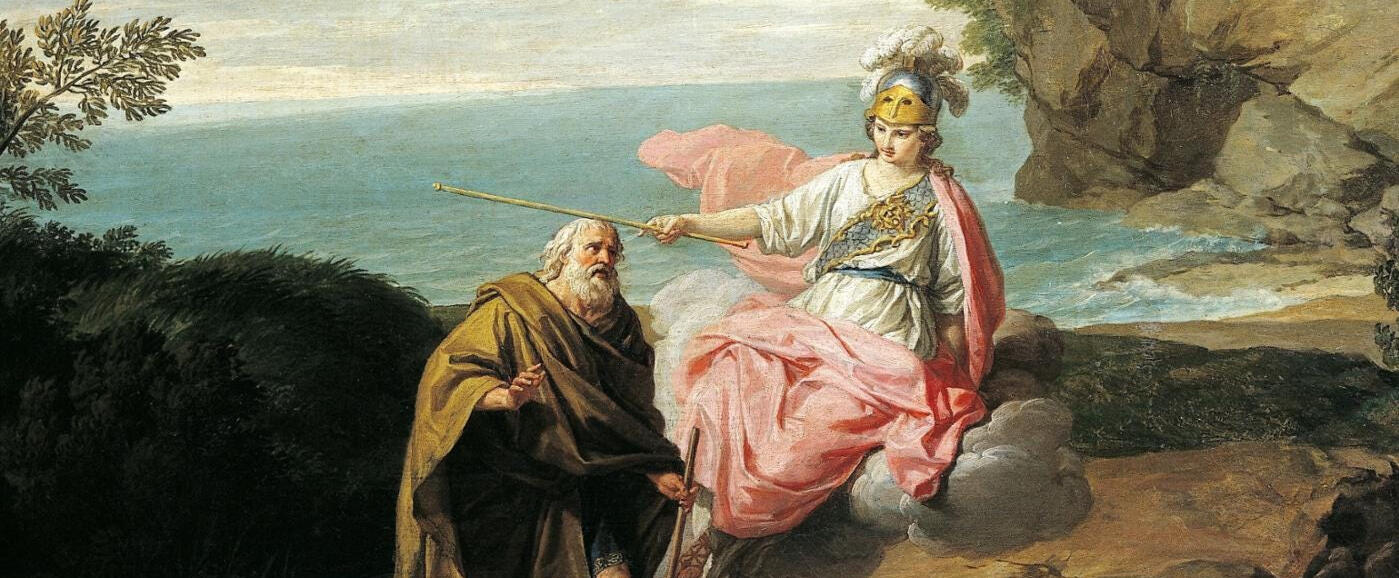
TITLES & EPITHETS
| Greek Name | Transliteration | Translation |
|---|---|---|
| δεινός | deinós | "Fearsome, marvellous" (Od. Book 7 Line 246) |
| δῖος | dîos | "Divine" (Od. Book 1 Line 14) |
| δῖος θεᾱ́ | dîos theā́ | "Divine goddess" (Od. Book 1 Line 14) |
| δολόεις | dolóeis | "Subtle, wily, craft" (Od. Book 7 Line 245) |
| εὐπλόκαμος | eüplókămos | "Fair-haired" (Od. Book 7 Line 246) |
| ἱμερόεις | himeróeis | "Lovely, charming" (1 Line 359)(Hom.H. 2 Line 422) |
| κρείουσα | kreíousa | "Lady, Mistress, Ruler" (2 Book 4 Line 574) |
| νύμφη | nŭ́mphē | "Nymph" (Od. Book 4 Line 557) |
| πότνια | Pótnĭă | "Mistress, lady, queen" (4 Ln. 31) |
| θεράπαινα | therắpaină | "Handmaid" (3 Section 50) |
CREDITS
Calypso's epithets were collected by Gray
SOURCES
Hesiod - Theogony
Apollonius Rhodius - Argonautica
Lucian - Alexander
Hesiod Fragments - Catalogue of Women
*The Iliad (Il.), The Odyssey (Od.), the Suda, Homeric Hymns (Hom. H) and Orphic Hymns (Orph.H.) are cited ‘in-text’
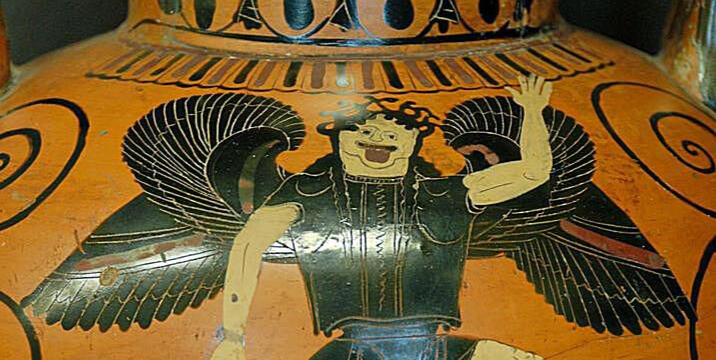
TITLES & EPITHETS
| Greek Name | Transliteration | Translation |
|---|---|---|
| βλοσυρῶπις | blosyrō̂pis | "Grim-looking" (Il. Book 11 Line 36) |
| δεινός πέλωρον | deinós pélōron | ➤ "Fearsome monster" (Od. Book 11 Line 634) ➤ This form of “Monster” (πέλωρον) seems to be used specifically for Gorgons |
| δεινὸν τέρας | deinós térăs | ➤ "Fearsome monster" (1 Line 989) ➤ This form of “Monster” (τέρας) seems to be used for any monsters. |
| ἐχιδνόκομος | echidnókomos | "Snaky-haired" (6 Book 30 Line 267) |
| εὐπάρειος | eupáreios | "Fair-cheeked" (3 Ode 16 Line 12) |
| Γοργώ | Gorgṓ | "Gorgon" (6 Book 8 Line 101)(7 Line 574)(8 Book 1 Chapter 21 Section 3 ) |
| ἱπποτόκος | hippotókos | "Horse-bearing" (6 Book 47 Line 693) |
| μαρμαρῶπις γαλῆ | marmarōpis galê | "Weasel who turns (others) to stone by glance" (5 Line 842) |
| Νυκτὸς | nŭktós | "Of the night" (4 Line 883) |
| ὀφιώδης | opheṓdēs | "Snakelike" (2 Ode 13 Line 63) |
CREDITS
Medousa's epithets were collected by Gray
SOURCES
Euripides - Ion
Pindar - Olympian Odes
Pindar - Pythian Odes
Euripides - Heracles
Lycophron - Alexandra
Nonnus - Dionysiaca
Aristophanes - Acharnians
Pausanias - Descriptions of Greece
*The Iliad (Il.), The Odyssey (Od.), the Suda, Homeric Hymns (Hom. H) and Orphic Hymns (Orph.H.) are cited ‘in-text’
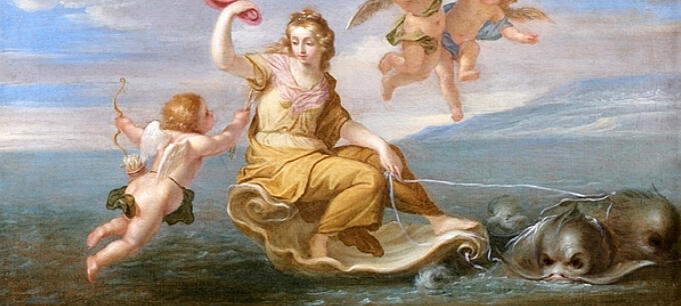
TITLES & EPITHETS
| Greek Name | Transliteration | Translation |
|---|---|---|
| ἀγάστονος | agástonos | "Much groaning, loud-wailing" (Od. Book 12 Line 97)(Hom.H. 3 Line 94) |
| βοῶπις | boō̂pis | "Ox-eyed" (1 Line 110) |
| Ἁλοσυδνη | Halosydnê | "Sea-Born" (6) |
| χρυσᾱλάκατος | khrysalákatos | "with arrow of gold" (2 Ode 6 Line 104) |
| κλυτὸς | klŭtós | "Renowned, glorius" (Od. Book 5 Line 422) |
| κυανώπιδος | kyanópidos | "Dark-eyed, Blue-eyed" (Od. Book 12 Line 60)(4 Book 9 Ch. 16 Sec.1)(5 Sec. 112) |
| Ὠκεανοῦ | Ōkeanoû | "of the Ocean" (3 Book 1 Ch. 4 Sec. 5) |
| σεμνός | semnós | "Revered, Holy" (1 Line 109) |
CREDITS
Amphitrite's epithets were collected by Ace
SOURCES
Bacchylides - Dithyrambs
Pindar - Olympian Odes
Apollodorus - Library
Diodorus Siculus - Library
Aeschines - Against Ctesiphon
Theoi
*The Iliad (Il.), The Odyssey (Od.), the Suda, Homeric Hymns (Hom. H) and Orphic Hymns (Orph.H.) are cited ‘in-text’
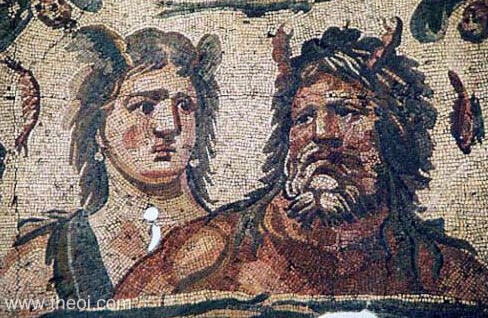
TITLES & EPITHETS
| Greek Name | Transliteration | Translation |
|---|---|---|
| ἀέναος | ἀέναος | "Ever-flowing" (4 Book 48 Line 313) |
| ἀκαλαρρείτης | akalarreítēs | "Soft-flowing" (Il. Book 7 Line 422) |
| ἀψόρροος | ápsorrhos | "Back-flowing, Refluent" (Il. Book 18 Line 399)(1 Line 777) |
| βαθυδίνης | băthŭdī́nēs | "Deep-eddying" (1 Line 133) |
| βαθύρροος | băthŭ́rrhoos | "Deep-flowing, Brimming" (Il. Book 7 Line 422)(1 Line 242) |
| κέλαδος | kélădos | ➤ "Sounding" (4 Book 38 Line 108) ➤ Referencing the sound of rushing water |
| κλυτός | klŭtós | "Renowned, Famous" (1 Ln. 274) |
| μέγας | mégăs | "Great, Mighty" (1 Line 20) |
| ταυρόκρανος | taurókranos | "Bull-headed" (3 Line 1377) |
| τελήεις ποταμός | telḗeis potămós | "Perfect river" (1 Ln. 242) |
| θεῶν γένεσιν | theôn génesin | "From whom the gods were born, Source of the gods" (Il. Book 14 Line 201)(2 Book 1 Chap 12 Sect 5) |
CREDITS
SOURCES
Hesiod - Theogony
Diodorus Siculus Library
Euripides - Orestes
Nonnus - Dionysiaca
*The Iliad (Il.), The Odyssey (Od.), the Suda, Homeric Hymns (Hom. H) and Orphic Hymns (Orph.H.) are cited ‘in-text’
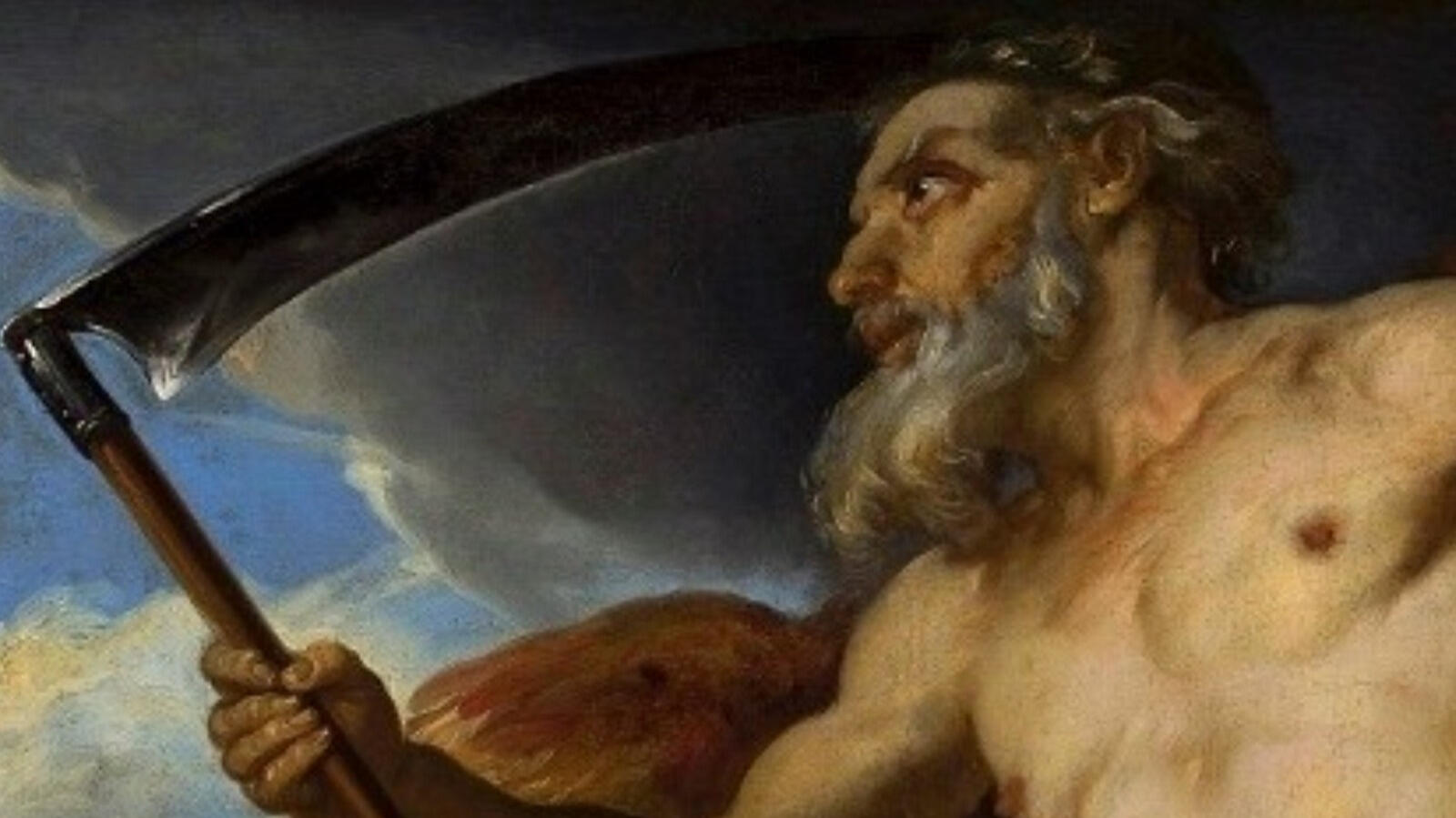
TITLES & EPITHETS
| Greek Name | Transliteration | Translation |
|---|---|---|
| ἀγκυλομήτης | ankŭlomḗtēs | "Crooked-counselling, wily" (Il. Book 2 Line 205)(2 Line 18) |
| βαρύγουνος | barýgounos | "Heavy-kneed, lazy" (3 Book 6 Line 179) |
| εὐρυγένειος | eurygeneios | "Broad-chinned, Broad-bearded" (3 Book 24 Line 233) |
| γέρων | gérōn | "Old, Old man" (3 Book 1 Line 384) |
| μέγας | mégăs | "Great, Mighty" (Il. Book 5 Line 721)(2 Line 168) |
| ὠμηστής | ōmēstēs | "Eating raw flesh, Savage, brutal" (3 Book 2 Line 337) |
| παλαιγενής | pălaigenḗs | "Born long ago, Full of years, Ancient" (1 Line 220) |
| ταχύπους | takhúpous | "Swift-footed" (4 Book 7 Section 421) |
CREDITS
Kronos' epithets were collected by Gray
SOURCES
Aeschylus - Prometheus Bound
Hesiod - Theogony
Nonnus - Dionysiaca
Greek Anthology
*The Iliad (Il.), The Odyssey (Od.), the Suda, Homeric Hymns (Hom. H) and Orphic Hymns (Orph.H.) are cited ‘in-text’
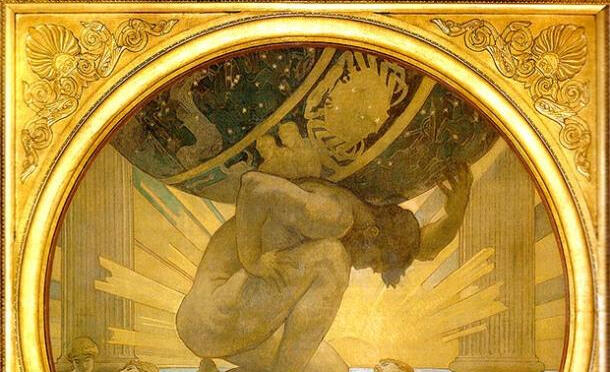
TITLES & EPITHETS
| Greek Name | Transliteration | Translation |
|---|---|---|
| γέρων | gérōn | "Old" (2 Book 3 Line 349) |
| κρατερόφρων | krateróphron | "Stout-hearted, dauntless" (1 Line 509) |
| Τιτήνιος | titánios | "Titan" (2 Book 4 Line 86) |
CREDITS
Atlas' epithets were collected by Gray
SOURCES
Hesiod - Theogony
Nonnus - Dionysiaca
*The Iliad (Il.), The Odyssey (Od.), the Suda, Homeric Hymns (Hom. H) and Orphic Hymns (Orph.H.) are cited ‘in-text’
Khaire! Hello!Thank you so much for helping us complete our database! This is a submission form for you to share any epithets we may have missed! Before you fill out this form, please read over some guidelines.
This form is for historical epithets only. We understand some practitioners create their own epithets but we are only collecting epithets found in historical text / academic sources.
Please do NOT use this form to request a deity for the site. We are working hard to add as many gods as we can but we are a small team and there are a lot of epithets and texts to comb through.
Do not spam this form. Only submit the form once per epithet.
We'd love to credit people for contributing but it is not required. This form can be anonymous if you wish to stay anonymous.
If you have any questions, please contact us! If you are over 18, please do not hesitate to join the server! If you are under 18, please contact the server owner & site manager on their Tumblr or Strawpage.
Sources are required for submission. We want users to be able to trace back where an epithet came from so they can double check if they wish. Any submissions without a source will be discarded.
You may submit more then one epithet in one submission but please separate the information in some way so that we can put the correct info with the correct epithet.
Got a question? Find us here!
Made with ♥ by zite